If you’re a freelancer with a health story idea to pitch, you may consider reaching out to the usual suspects — health publications like Medscape and STAT, or health sections of outlets like AARP or NPR.
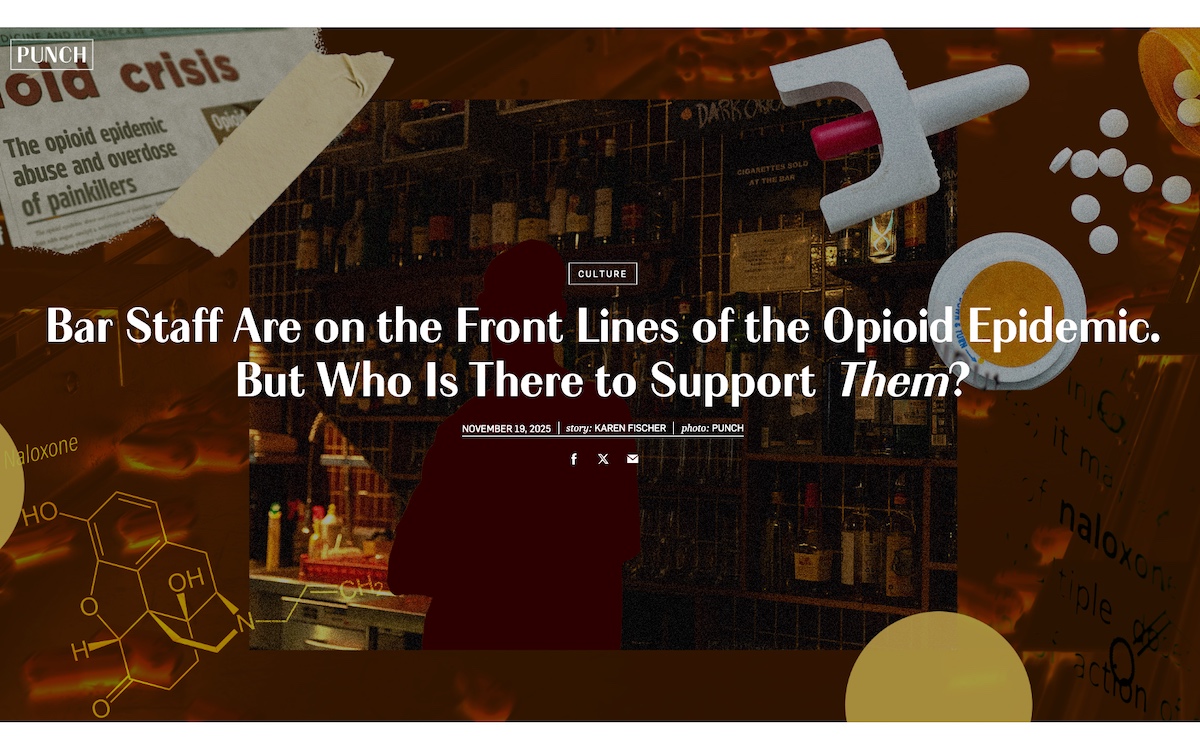
But it can pay, literally, to think outside of the box, freelancer Karen Fischer’s experience shows. The digital nomad, whose business is based in New Mexico, successfully landed a pitch related to the opioid epidemic in Punch, a digital media brand dedicated to drinking culture.
For this month’s “How I Pitched It” interview, Fischer shared the precise pitch that secured the assignment and other takeaways from the process. Check out the highlighted sections in her pitch, too, for my insights on what she did well. Here’s the pitch:
PITCH: The restaurant industry is on the front lines of the opioid epidemic. Who’s looking out for workers?
I have a good friend in Asheville, North Carolina who has been a chef for years. He’s talented and hardworking, and as can be expected knows many other restaurant workers. He texted me today because one of his friends was working at a kava bar when a client in the cafe had to be resuscitated with Narcan. No matter their best efforts, that individual ended up passing away, and now the worker who administered the Narcan is traumatized.
Medaris: Fischer opens with something personal (her friend), timely (texted today), and alarming (someone died). All three elements grab the reader or editor right away, and it’s hard not to continue on. Plus, she shares this in a conversational tone, which matches the publication’s voice and can help the editor see her as a real person, not just another email.
This friend in question who texted me about this, not unlike Anthony Bourdain, has struggled with substance abuse, specifically with heroin, for years. Between substance use in the restaurant industry and interfacing with the public, this situation left me wondering: Who is keeping an eye out for restaurant workers? Is this worker who administered Narcan to someone who ultimately died going to get any mental health support from here? Where did they get the Narcan that they administered? Are there any current statistics on substance abuse and restaurant workers today?
Medaris: Here, Fischer pivots away from the anecdote and raises several questions that are of top concern for readers of Punch, many of whom surely work in hospitality.
My pitch is to connect with the individual that administered Narcan so that they can tell their story and connect with 1-2 more contacts to talk about harm prevention efforts that intersect with hospitality workers.
Medaris: The ability to connect with “real” people sources and not just experts is often critical to sell a strong story.
Mybylines include other publications like Offrange, The Verge, Biospace, Outrider Foundation, Eater, New Mexico Magazine, MarketWatch Picks, Business Insider, and FierceNetwork, among others on my website here. I also produce The Gumbo Pot, a weekly Substack on education, health, culture, food, infrastructure, and energy.
Thank you for taking the time to consider this pitch. I look forward to hearing from you soon!
Sincerely,
Karen Fischer
Besides your friend texting you, what led up to this pitch?
I attended AHCJ’s annual conference in 2025. During the session Stigma-Proofing Coverage on Homelessness and Addiction, I was intrigued by a statistic on how including a real person struggling with addiction in reportage made double-digit positive impacts on the reader’s support for harm reduction, like Narcan access.
I found that fascinating, and my friend Andy, a restaurant worker in the Smoky Mountains, came to mind. Though he was clean when I first met him in 2018, he struggled with heroin addiction for well over a decade before that. After the conference, I kept thinking about how sharing his story could potentially swing one’s opinion of harm reduction.
So I featured Andy in a project on my Substack, The Gumbo Pot, to explore if there was political momentum to push harm reduction efforts further. He was really thankful to be able to tell his story, and texted me after the piece went live about the friend who had administered Narcan to a customer who ultimately died.
The situation sounded so tragic, and I immediately wondered how Andy’s friend was coping, and how restaurant workers can tangibly manage addiction when they recognize it in their workplaces — and in themselves. That tip ultimately inspired the pitch.
Why did you think Punch was the right home?
I subscribe to [the freelance hub] Study Hall, and a few months prior to pitching, it published a call-out for ideas for this newsletter called Pre-Shift that’s oriented for restaurant workers. The newsletter is a collaboration between the publications Eater and Punch.
I didn’t have any ideas when I initially saw the call-out, but I remembered it when the idea came to me, so I pitched this story their way.
Was the pitch accepted right away?
This was one of those very unique situations where I pitched the story and the editor accepted it within five days. I didn’t pitch it elsewhere, and edits were swift and workable for both parties.
Why do you think your pitch was so successful?
The pre-reporting with Andy and addiction experts helped a lot. Addiction is a sensitive issue to report on, and I felt more comfortable and confident with this project after writing the first one for The Gumbo Pot.
I also really loved that I was able to dig into structural resources and limitations for workers, like health insurance and mental health providers. Only 32% of food service workers have access to employee-sponsored health insurance, and in Denver, for instance, if someone earns $1,800 a month or more working at a restaurant, they don’t qualify for Medicaid. People fall through the cracks, so processing traumatic incidents in the workplace or your own addiction gets so much harder.
How do you think the final piece turned out?
It came out better than I expected because my editor helped me build out the backbone of the piece in a logical, accessible order. My sources were also incredible, and they connected me to more people for follow-up ideas to keep exploring angles of this topic. Fun fact: One of the sources was recommended to me by a contact I met at AHCJ 2025.
What else would you like freelancers to know about pitching?
Every good story needs to be anchored with a real-life person who is impacted. It’s like a lock and key. If I have a story of a person who is impacted by this larger theme or topic and understand their story — even just a bit — it makes commissioning the project so much easier. It comes down to finding a way to pre-report in a way that makes sense to you.
A lot of my commissioned work now often stems from a kernel I learned while publishing something for The Gumbo Pot. I didn’t expect to create this ecosystem of curiosities and ideas when I started the project, but I did.
It takes practice to successfully pitch, and in my experience, shorter is always better. I used to write massive pitches to editors, but I’ve discovered that shorter is often easier for editors to process and say yes (or no) to.