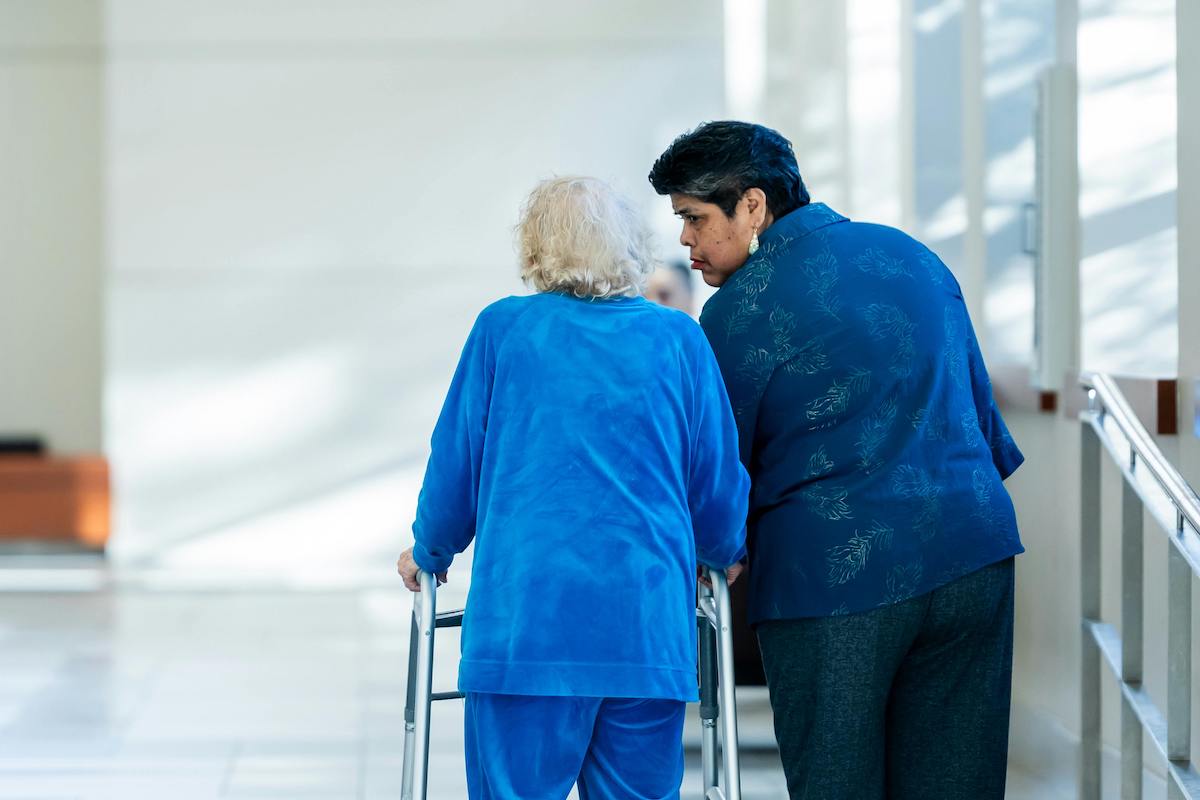
A new report from AARP revealed that 63 million Americans — about one in four adults — are involved in providing unpaid care for a parent, child, friend or relative with complex medical conditions or disabilities. That’s a 45% increase since 2015. This is one of the most significant demographic and economic shifts affecting American households today, say caregiving experts.
Caregivers are exhausted, overwhelmed, and financially and emotionally drained, according to the research. For the first time, reporters can see how the situation stacks up in their state.This state compendium builds on the national report published in July 2025, adding further clarity to the picture of family caregiving presented in the national report.
When reporting on family caregiving, here are some key points to consider:
There are both similarities and differences in the roles of family caregivers across the United States.
Geography can affect and shape the lived experience of family caregivers.
Nationally, family caregiver prevalence — classified as adults 18-plus caring for another person with medical needs — is 24%.
The average age of these family caregivers is 51; ranging across states from 46 in Maryland to 55 in Arizona.
National and state-level story angles
The financial toll: Nearly half (47%) of family caregivers experience at least one negative financial impact, including stopping savings, accumulating debt, or being unable to afford basic expenses like food. About one in five caregivers reports experiencing high financial strain due to their caregiving responsibilities.
“For many, that means that they had to trade off things,” Rita Choula, AARP’s senior director of caregiving, explained at a press briefing during the Gerontological Society of America annual conference in November. “They might have had to move into a less expensive arrangement. Many have had to take on more debt to pay for out-of-pocket expenses for the family member that they’re caring for.”
The intensity of care: Nearly one in four caregivers (24%) provide 40 or more hours of care per week or constant care, while 44% are engaged in high-intensity situations. The average caregiver provides approximately 27 hours of care weekly.
The “sandwich generation” crisis: 29% of caregivers are “sandwich generation” caregivers who care for an adult while also caring for a child under 18. As Alan Weil, J.D., AARP’s senior vice president for public policy, said, “a growing number are in the so-called sandwich generation. They’re raising children while they’re also caring for aging parents.”
Workplace impact: 70% of working-age caregivers are employed, and three out of five work 40 hours or more in addition to caregiving. Yet workplace support remains uneven, particularly for hourly workers.
Medical tasks without training: Over half (55%) of caregivers perform medical and nursing tasks such as wound care, medication management and operating medical equipment, but only 22% receive formal training for the care they provide.
Rural-urban divide: 34% of rural caregivers report difficulty accessing affordable services, compared to lower rates in urban areas. This reflects both limited service availability and lower average incomes in rural communities.
Emotional toll: More than half (51%) of caregivers report their role gives them a sense of purpose, many reported high emotional stress (64%), physical strain (45%) and loneliness (24%). One in five reported fair or poor health themselves.
Policy stories
State tax credits: Oklahoma and Nebraska have passed caregiver tax credits.
Paid family leave: Available in some states but not at the federal level.
CARE Act Legislation in multiple states requires hospitals to identify family caregivers and provide discharge training.
Medicaid plays a critical role, with 47 states and D.C. allowing payment to family caregivers through various programs, though eligibility and structure vary widely.
Percentage of caregivers who are paid for their work (ranging from 10% in Iowa to 28% in New Jersey).
Rates of high emotional stress (from 26% in Pennsylvania to 51% in Colorado).
Local access to affordable services and support systems.
How budget cuts will affect both unpaid and paid caregiving options, aging-in-place and workforce issues like absenteeism, presenteeism, unemployment rates, Medicaid rolls, health insurance and poverty levels.
Resources
The Family Caregiver Alliance provides information on particular diseases and in several different languages, general information, support groups and information for professionals. This map has a comprehensive list of agencies and the services they provide.
Caregiver Action Network is a nonprofit focusing on quality of life for caregivers ranging from parents of children with special needs to the families and friends of wounded soldiers.
New York State Caregiving and Respite Coalition is a nonprofit and advocacy organization focusing on increasing caregivers’ access to respite resources (Your state may have something similar).
Consumer Voice represents consumers in issues related to long-term care, helping to ensure consumers are empowered to advocate for themselves. “We are a primary source of information and tools for consumers, families, caregivers, advocates, and Ombudsmen to help ensure quality care for the individual.”
Liz Seegert is AHCJ’s health beat leader for aging. She’s an award-winning, independent health journalist based in New York’s Hudson
Valley, who writes about caregiving, dementia, access to care, nursing homes and policy. As AHCJ’s health beat leader for aging,