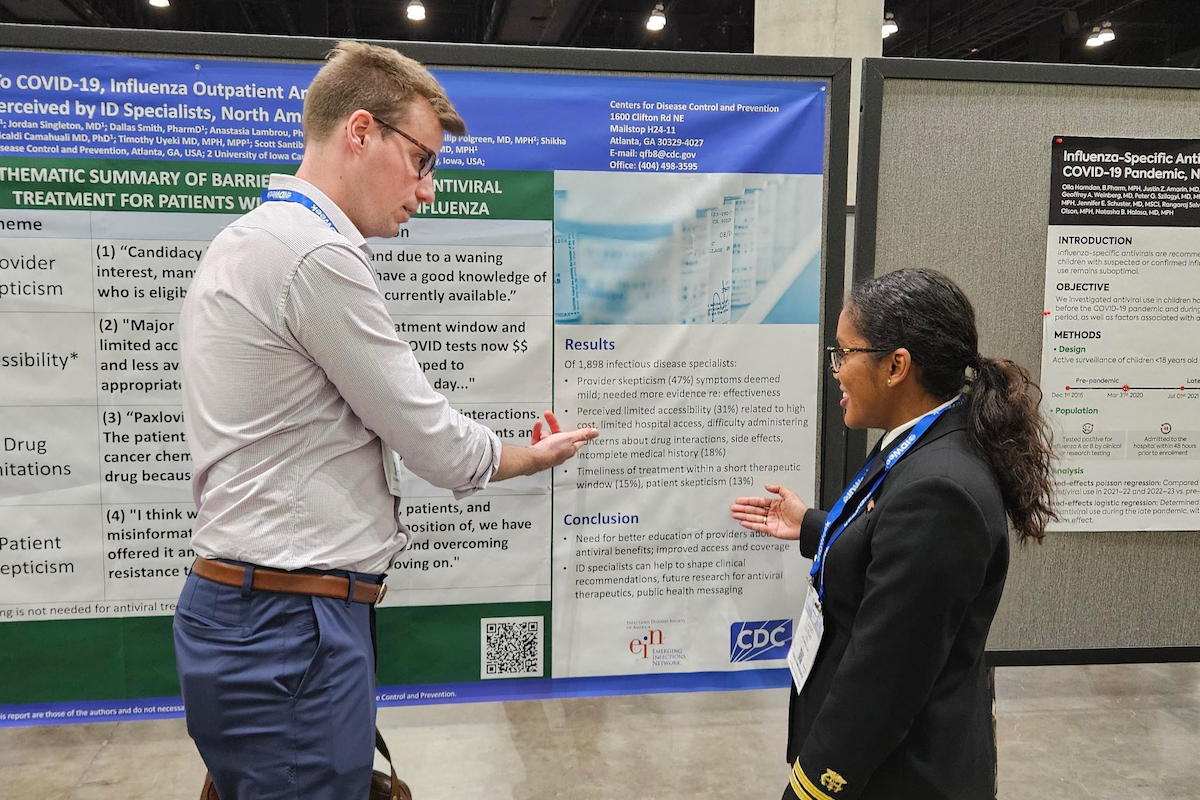
Conference season is in full swing, with dozens of medical societies and nonprofit organizations hosting meetings that last two to eight days in cities around the world. The season roughly runs the same as the academic year, with peaks in mid-fall and mid-spring, though a handful host their annual meetings in the summer or winter months.
Covering medical conferences is the bread and butter of many health journalists, especially if they write for trade publications. For a reporter covering their first few conferences, however, the experience can be overwhelming and even intimidating. It’s challenging to sift through the program schedule and the often hundreds of oral abstracts and research posters to figure out what to cover, even with an editor’s guidance. Then there’s figuring out your own schedule, from making sense of the venue layouts to making sure you find time for coffee, sustenance, and some absolutely essential decompression time in between attending sessions, interviewing attendees and writing your stories.
AHCJ has created a series of tip sheets on covering conferences, and we have so much to share that we’re breaking them up into four parts. This one covers the basics of what a conference is and common terms and concepts to know. The second covers preparation before you arrive, and the third covers actually attending and reporting at the conference. The fourth covers how to find outside sources to comment on the research, both in person and at virtual conferences. So let’s dive in!
What is a medical conference?
Every area of medicine and health has associated organizations with a common interest, most often a medical specialty (such as cancer or pediatrics) or subspecialty (such as breast cancer or pediatric rheumatology). Examples include the American Society of Clinical Oncology, American Academy of Pediatrics, the American College of Obstetricians and Gynecologists, The Obesity Society, The Menopause Society, and the American Academy of Neurology.
Each of these have their own annual meetings, and many have smaller, shorter regional or sub-sub-specialty meetings throughout the year. You can see examples of the largest or most covered meetings in the conference coverage of Medscape (news here) and MedPage Today, or see lists that medical students might reference here and here. Sometimes large meetings bring together multiple related organizations, such as IDWeek or Digestive Disease Week.
There are similarly various pharmacy, nursing and dental organizations that host annual conferences and/or smaller meetings throughout the year. Then there are nonprofit organizations specific to one disease or condition, such as the National Center on Shaken Baby Syndrome, the National Multiple Sclerosis Society, or the Lupus Foundation of America, that host a meeting every year or every couple of years, or host small regional meetings.
Finally, there are organizations and/or conferences specific to business, technology or policy sectors within healthcare that host meetings. Examples include the Healthcare Business Management Association, HLTH, American Public Health Association, the American Hospital Association, and the Healthcare Private Equity Association.
Basically, for just about every career and sub-sub-sub specialty topic that exists within health and medicine, there is a conference that focuses on it. And for every one of those meetings, there are publications and websites interested in publishing news from those conferences for all the people who cannot attend. The vast majority of this coverage is for trade outlets (those that cater to a specific career specialty), but larger meetings, such as AAP, ASCO, and the American Heart Association, also get coverage in mainstream and consumer publications that general audiences read.
Who goes to medical conferences?
Attendees include physicians, researchers, industry representatives, medical studies, patients, patient advocates, nonprofit representatives, journalists, and anyone else with a vested interest in the information shared.
Where are they held?
They most often occur in a city’s convention center, but some occur completely within a single hotel or at another single location. Most meetings rotate throughout different year by year, but a few, such as ASCO in Chicago and HLTH in Las Vegas, are held in the same location every year.
How much do they cost?
Nearly all conferences have an option for free media registration, but an occasional few may require a fee even for journalists. Media registration requirements vary by conference and will be covered in a different tip sheet.