The Trump administration is making clear its intention to banish, arrest or imprison people who are homeless in the nation’s capital, as well as threatening forced treatment for those struggling with substance use disorders. But front-line workers, activists and experts are expressing skepticism about this old and failed approach to homelessness.
So what is the state of affairs in D.C.? How are people who work on homelessness responding to the impending campaign, and what is the likelihood that other cities will take a similar approach? This webinar equips reporters to cover the story in their own cities and towns with guidance from a national reporter who is covering the D.C. story, an addiction researcher, a longtime activist and a journalist who did a year-long project on homelessness.
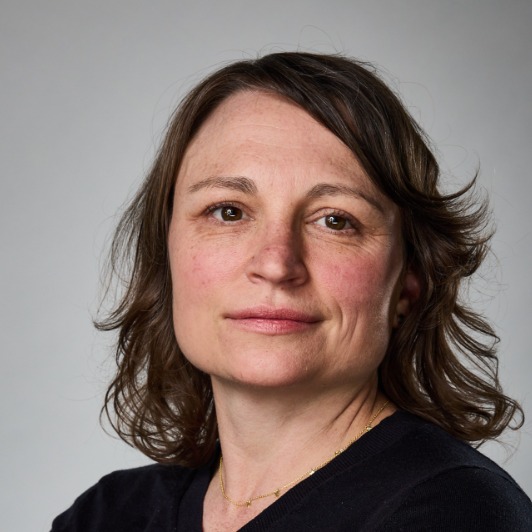
Katia Riddle
Health correspondent, NPR
Former AHCJ fellow
Katia Riddle is a correspondent at NPR covering mental health. She has reported extensively on the impact of events such as Hurricane Helene, Los Angeles wildfires and the loneliness epidemic.
Prior to her current role, she covered public health including reproductive rights and homelessness. She won a 2024 Gracie Award for a series on reproductive rights, and was an AHCJ U.S. Health System Reporting Fellow from 2023-2024.
Riddle lives in Portland, Oregon with her husband and three kids.
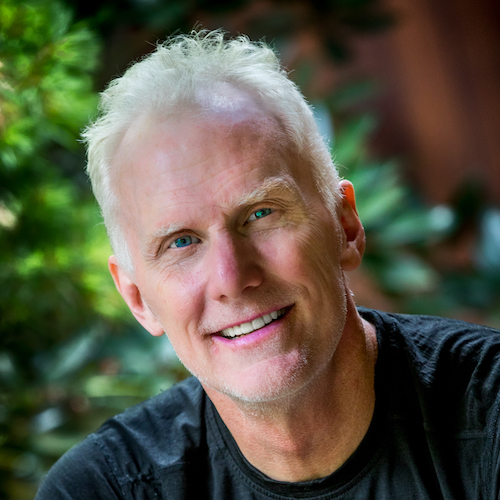
Brian Mann
National addiction correspondent, NPR
Brian Mann is NPR’s first national addiction correspondent. He also covers breaking news in the U.S. and around the world.
Mann began covering drug policy and the opioid crisis as part of a partnership between NPR and North Country Public Radio in New York. After joining NPR full time in 2020, Mann was one of the first national journalists to track the deadly spread of the synthetic opioid fentanyl, reporting from California and Washington state to West Virginia.
After losing his father and stepbrother to substance abuse, Mann’s reporting breaks down the stigma surrounding addiction and creates a factual basis for the ongoing national discussion.
Mann has also served on NPR teams covering the Beijing Winter Olympics and the war in Ukraine.
During a career in public radio that began in the 1980s, Mann has won numerous regional and national Edward R. Murrow awards. He is author of a 2006 book about small town politics called Welcome to the Homeland, described by The Atlantic as “one of the best books to date on the putative-red-blue divide.”
Mann grew up in Alaska and is now based in New York’s Adirondack Mountains. His audio postcards, broadcast on NPR, describe his backcountry trips into wild places around the world.
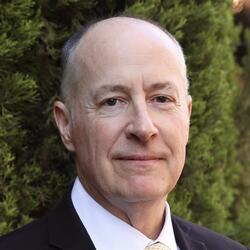
Keith Humphreys, OBE, Ph.D.
Esther Ting Memorial Professor, Stanford University Department of Psychiatry and Behavioral Sciences
CIGH fellow, Stanford Center for Innovation in Global Health
Keith Humphreys is the Esther Ting Memorial Professor in the Department of Psychiatry and Behavioral Sciences at Stanford University. His research addresses addictive disorders and the translation of science into public policy. In addition to over 400 scientific publications, he has written extensively for outlets like The Washington Post and The Atlantic.
Dr. Humphreys’ public policy work includes testimonies to U.S. House and Senate Committees, to the Canadian and U.K. parliaments, and in many state legislatures. He served on the White House Commission on Drug-Free Communities during the Bush Administration and as Senior Policy Advisor in the White House Office of National Drug Control Policy under President Obama. He created and co-directs the Stanford Network on Addiction Policy, which brings scientists and policy makers together to improve public policies regarding addictive substances. To recognize his service to addiction-related scholarship and policy, Queen Elizabeth II made him an Honorary Officer in the Order of the British Empire in 2022.

Lisa Daugaard
Co-executive director/policy, Purpose. Dignity. Action.
Lisa Daugaard is Co-Executive Director/Policy at Purpose. Dignity. Action. (PDA), formerly the Public Defender Association, based in Seattle. She joined the Defender Association in 1996 as a public defense staff attorney, later served in multiple management positions and led TDA’s Racial Disparity Project, combatting racial discrimination in, and generated by, the criminal legal system at the height of mass incarceration, from 2000-2013.
From 2001-2008, Lisa led a successful selective enforcement litigation challenge to drug arrests of Black people in Seattle. The settlement of that litigation effort resulted in an agreement by SPD and the King County Prosecutor’s Office to launch a pilot pre-booking diversion framework for drug offenses, which came into being in 2011 as the Law Enforcement Assisted Diversion (LEAD) model. Lisa was founding Co-Chair of the Seattle Community Police Commission, & served on the CPC until 2019.
In 2019, she was awarded a MacArthur Fellowship for work building consensus around community-based responses to illegal behavior related to unmet behavioral health needs and extreme poverty. From 2020-present, she has helped design and implement JustCARE, a response to unsheltered homelessness in the Seattle area combining low-barrier entry with non-congregate shelter, intensive case management, and aftercare, that has allowed resolution of over 40 large encampments without dispersal or displacement of individuals to other areas.
Lisa grew up in the Seattle area, attended the University of Washington, was an anti-apartheid activist at Cornell University in the mid-1980s while occasionally attending class and earning an MA, and obtained her JD from Yale Law School (class of 1992). After law school, she worked in New York City as a fellow at the ACLU National Legal Department, leading a successful challenge to the first US detention camp at Guantanamo (for HIV-positive Haitian asylum seekers); as Legal Director of the Coalition for the Homeless; and as Organizing Project Director at the Urban Justice Center.