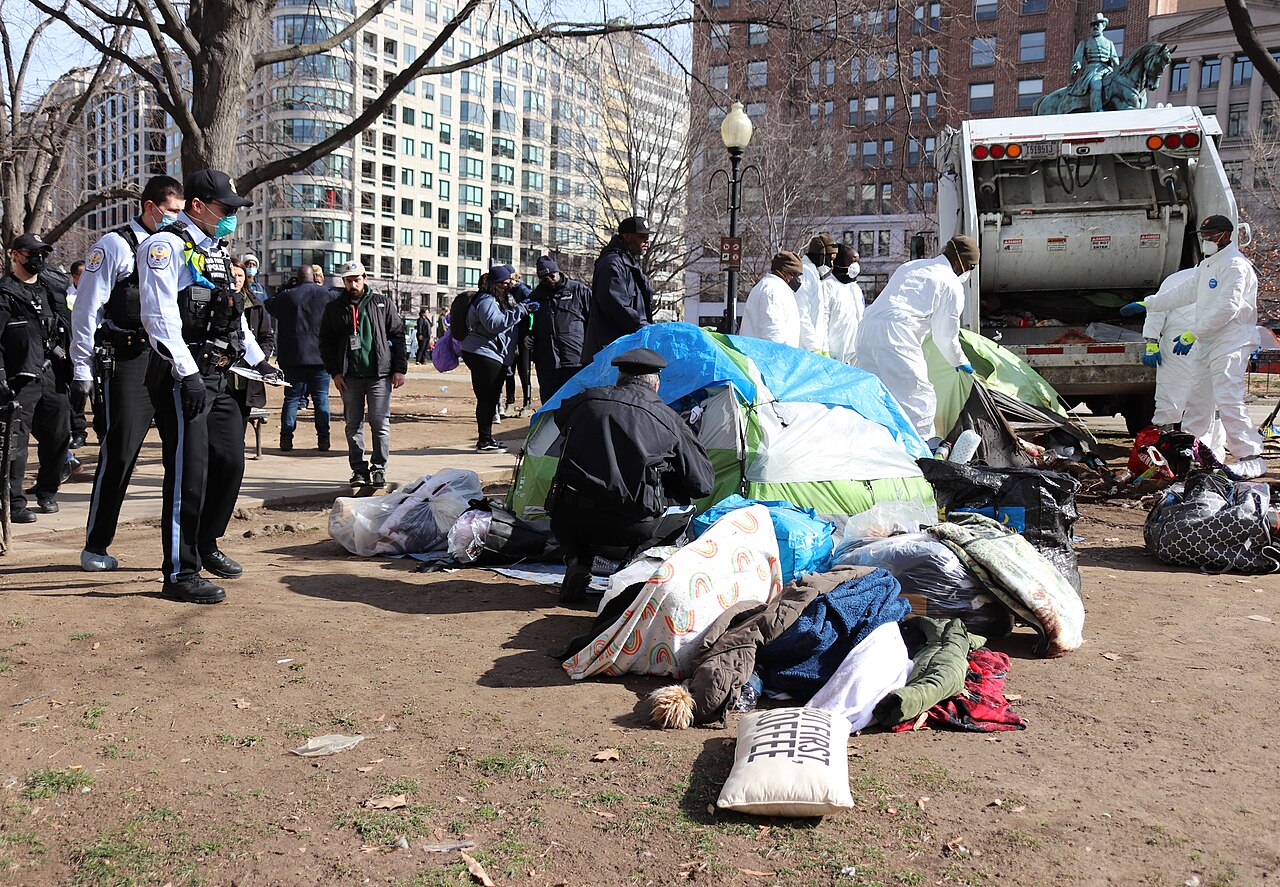
A new federal policy that reframes homelessness as a law-and-order issue rather than a public health concern could change the way journalists cover mental illness, addiction, housing and social policy in the months ahead.
President Trump signed an executive order in July that pushes local governments to remove unhoused people from public spaces, expand the use of involuntary institutionalization, and roll back funding for programs rooted in public health — like Housing First and harm reduction.
While the order is positioned as a strategy to restore public safety, its real consequences lie in the health outcomes it may trigger. For reporters covering mental health, addiction and community health systems, this policy shift presents an opportunity to re-examine how public institutions treat people in crisis — and what happens when emphasis is placed on control versus care.
The executive order encourages states and cities to pass or enforce stricter laws against camping, squatting, public drug use and loitering, and gives preference for federal grants to those that comply. It also directs federal agencies to expand the use of civil commitment, making it easier to institutionalize people — often without their consent — based on mental illness, substance use or perceived public safety risk.
According to NPR’s coverage, the Trump administration’s goal is to “restore order to American cities” by giving local governments more power to forcibly remove homeless people from view, even if that means hospitalizing or incarcerating them.
Critics argue this approach not only strips people of their rights, but also rejects decades of public health research showing that stable housing, voluntary care, and harm reduction are more effective in ending homelessness than coercion. By prioritizing surveillance and institutionalization over treatment and support, critics say the order “criminalizes homelessness” by steering the national response away from health-based solutions and toward punitive ones.
Journalists should examine how the order will affect care delivery, public health funding and the availability of supportive services. For example, if cities begin closing down harm reduction programs to qualify for federal funding, what happens to overdose rates? If people are institutionalized under relaxed legal standards, how will that impact mental health systems already stretched thin? If homelessness is treated as a criminal issue, how does that shape public perception of people who are mentally ill, poor or addicted? What impact will that have on jails and prisons, which already house many people with behavioral and mental health disorders?
It’s also vital to center the voices of those most affected. The order may look like a political or legal issue from a distance, but on the ground, it will reshape how people live, whether they get help, and whether they are treated with dignity. Stories from service providers, outreach workers, health officials, and especially unhoused people will provide necessary context and human insight.
Journalists should also be prepared to cover the legal and ethical debates ahead. While the order pressures states to bypass existing protections, civil commitment laws vary across jurisdictions, and lawsuits are likely to follow. Civil rights organizations and disability advocates have already warned that these policies may violate constitutional rights and undermine decades of patient-centered reforms in behavioral health care.
Finally, the language we use to tell these stories matters. Be mindful of terminology that may reinforce stigma or bias, such as framing individuals as “nuisances” or “threats.” Instead, helping audiences understand homelessness and addiction as public health issues shaped by housing shortages, inadequate care, systemic inequality, and trauma can help convey the complexity of the policies.