No acceptable level: Stopping lead exposures
By Margaret O’Hara, New Mexico Health Journalism Fellow
If Sonia Ruiz Roman could write her own headline on environmental lead exposure, it would be this: “We deserve [a] healthy environment, and lead is not in it.”
Ruiz Roman served as a community scientist with Prospering backyards, a citizen science project dedicated to finding alternative solutions to reducing exposure in lead-contaminated East and Southeast Los Angeles neighborhoods.
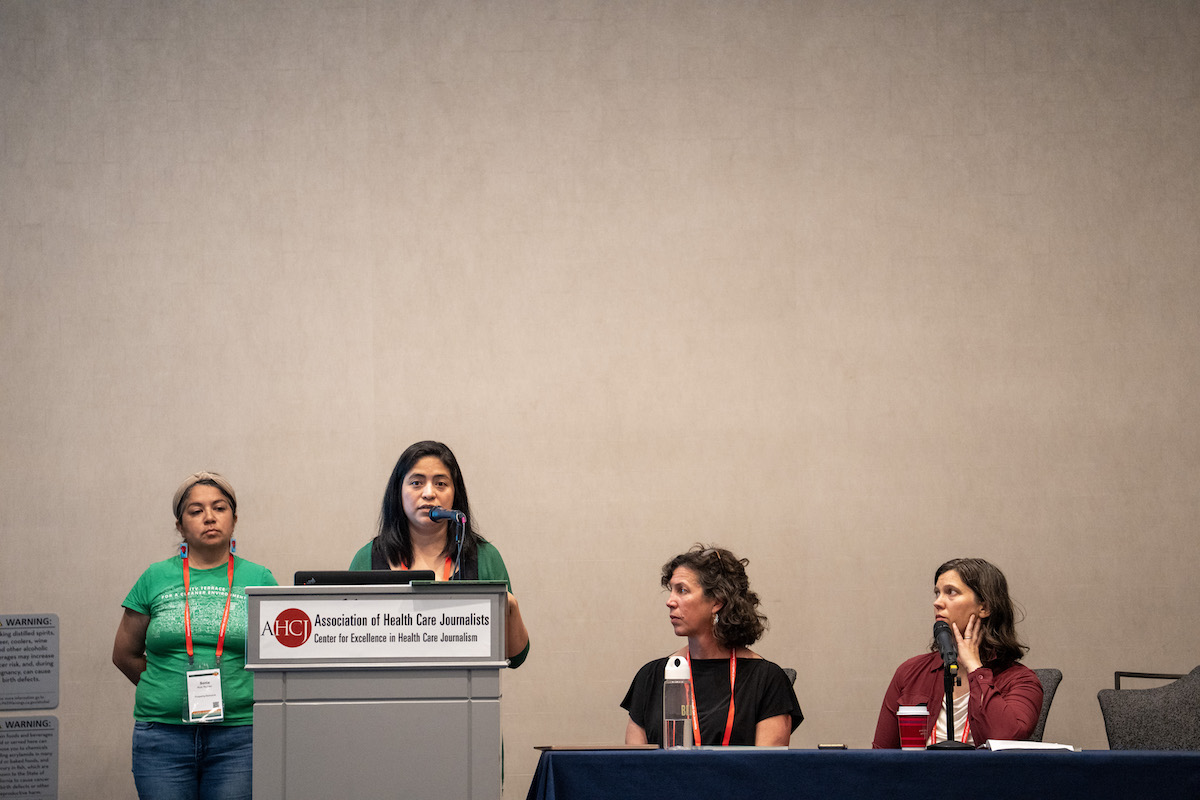
During a panel at Health Journalism 2025 in June, Ruiz Roman and other advocates argued for sweeping government responses to reduce the risk of exposure while highlighting innovative ways residents can combat contamination in their communities.
Lead exposure at a young age — which can occur through soil and drinking water, among other means — can result in life-long consequences, including damage to the nervous system, lower IQ and underperformance in school, according to the CDC.
“Lead is highly toxic for kids, and it affects how they learn, grow and behave. … There is no safe level of lead exposure, especially for children,” said Emily Rusch, vice president and senior director for state organizations at the Public Interest Network.
While a handful of high-profile cases of lead contamination — most notably, the now 11-year-old water crisis in Flint, Michigan — have increased awareness of the issue, Rusch said there’s more work to be done to ensure residents are safe from lead exposure, particularly through drinking water at schools and child care centers.
Politicians often rush to the more popular “test and fix” method, a piecemeal approach in which government officials test water for lead contamination site by site and remediate as contaminants are found, Rusch said. She advocated instead for “action at every tap” — such as the installation of filters — due to the variability testing methods, delay in response time, and lack of remediation at certain low but still unsafe levels of lead exposure.
Community members themselves can respond to lead contamination, too — and Prospering backyards’ work shows it. After a battery recycling facility released hazardous materials, neighborhoods in East and Southeastern Los Angeles had to deal with the fallout, including lead-contaminated soil, said Maru García, project lead at Prospering backyards.
To address this, the organization put on workshops to educate residents on the importance of clean soil and the dangers of lead contamination and started free soil testing in collaboration with scientists at the Natural History Museums of Los Angeles County, García said.
Prospering backyards also set up its own community science project, inviting residents to test the efficacy of different treatments in addressing contaminated soil on their properties. Ultimately, García explained the group’s research found that adding minerals called zeolites to the soil helped reduce the bioavailability of lead in soil, making it slightly safer.
In addition to applying zeolites, Prospering backyards’ researchers recommended widespread government action in response to lead contamination, such as free soil testing and additional outreach to affected communities.
“We are not saying that this is the solution that will save the planet from lead, no, but it could be a good way to start reducing lead exposure,” García said.
Margaret O’Hara is a staff reporter at the Santa Fe New Mexican.