In April 2025, The Toledo Blade published a groundbreaking investigation revealing dangerously high levels of radioactivity in groundwater across Luckey, Ohio — a village shadowed by its Cold War-era legacy.
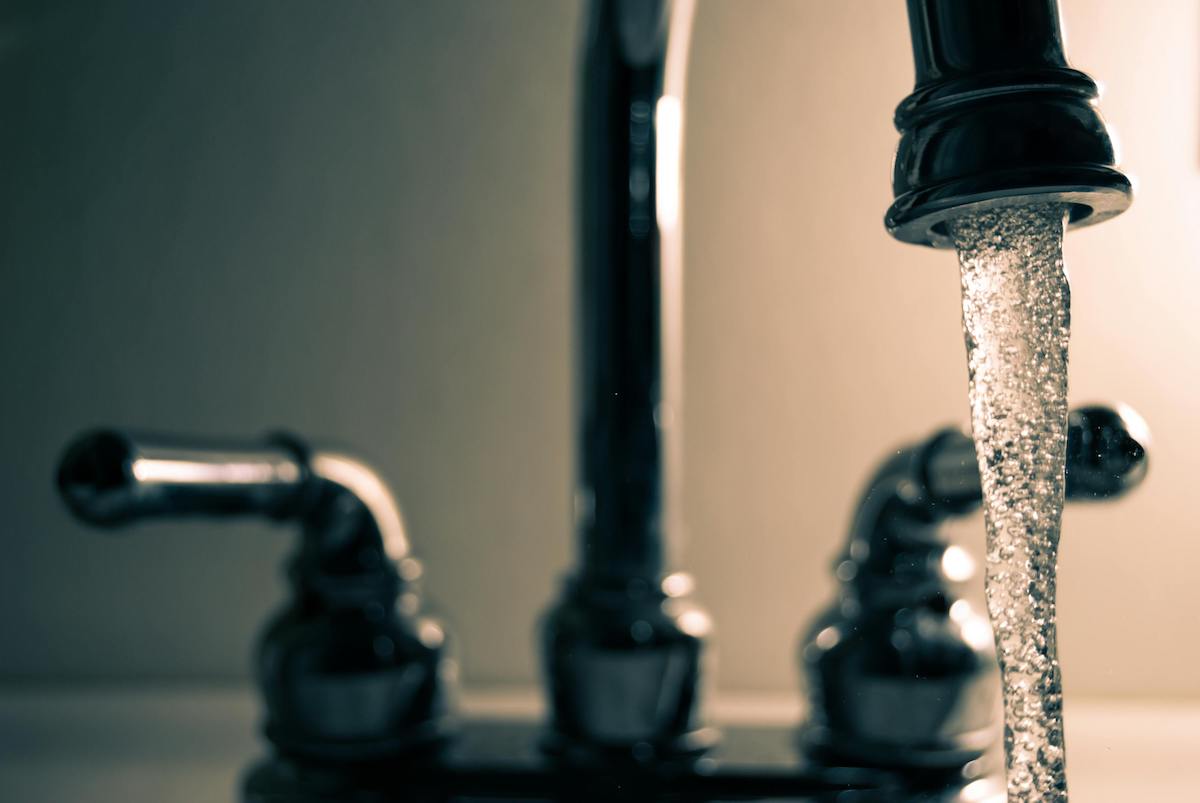
The newspaper’s independent testing uncovered alarming concentrations of bismuth-214, which decays from the radioactive gas radon-222, in water samples from public locations such as Eastwood Middle School, Luckey Library and local athletic fields. One sample exhibited radiation levels 1,731 times higher than normal background levels. Radon is the leading cause of lung cancer in nonsmokers.
This exposé, supported by the Pulitzer Center, not only prompted immediate action from state health and environmental agencies, but also challenged long-standing assurances from federal entities that residential areas remained unaffected by contamination from the nearby former weapons plant. The Blade’s meticulous approach — combining extensive water testing with analysis of declassified government documents — shed light on decades of environmental neglect and its enduring impact on public health.
Blade reporter Alexa York discussed the challenges of conducting independent environmental testing, navigating complex historical records and the ethical considerations of reporting on public health hazards.
This interview has been edited for clarity and brevity.
You were hired specifically to pursue this story. How did the reporting get started?
I grew up in Luckey and stumbled into this during COVID when I moved home from college. I studied music in school. I never cared about journalism. But what happened is I went back home during college, when COVID happened in 2020, and I noticed that the cleanup was going on. I thought, “What are they doing?”
It started as a personal interest project and the more I read about it, a lot of red flags — alarm bells — started going off. I saw bulldozers at the cleanup site and got curious. I started digging through documents and realized something wasn’t right. That research snowballed into a full-time project — even before I was officially employed [by The Blade].
I had already done a lot of research when I joined The Blade. My editor, who had experience with the Pulitzer Center, suggested applying. We used my early reporting to strengthen the application and, ultimately, secure funding for independent water testing.
Why did you conduct your own testing instead of relying on government data?
First, it was to fact check what had already been done to see if it matched up. Second, it was to fill in some gaps of chemicals that hadn’t been tested that I thought might be a good idea. And the third was to do some independent testing that wasn’t done by the government.
The bulk of [testing] was done by the federal government, and then some was done by the state, but that’s it. No independent groups had ever been in there before. We found elevated levels of a radioactive [isotope] called bismuth-214 … which indicated high levels of radon. Radon is not regulated, so no one tests for it. These contaminants had never been previously tested at this site, not by the Army Corps or the state.
How did state and federal agencies respond to your findings?
The same day we published, [the Ohio EPA and state health department] announced a sampling program to try and replicate our results. But that came after weeks of them saying, “We don’t comment on third-party sampling.” We had to push, even go to Buffalo to meet with the Army Corps of Engineers, who helped get them to reverse course.
It helped that our testing methods were something no one could brush off. For journalists, if you’re testing, keep it as scientific as possible. Don’t just find a local lab if you’re gonna do some testing. If you’re testing a government site, look at what the government is doing, what labs are they using, and then do it that way.
I think that has a much greater chance at enacting change because these agencies can turn their noses up at a neighborhood lab, but we went all the way to St. Louis. We picked a federally accredited lab that the Department of Energy and the Department of Defense uses. We followed the exact protocols the government would.
What ethical or practical advice do you have for other health journalists?
Do your homework. You don’t need to be an expert in radioactivity, but you need to know enough to strategize. Talk to scientists before you start sampling. I waited until after, and I’d do that differently. And when working with experts, proceed carefully. Some people tried to steer me in the wrong direction on purpose. I think it’s a symptom of reporting on nuclear sites — it causes a lot of public relations issues.
I think science and journalism are like peanut butter and jelly. They go hand in hand. When journalists collaborate with scientists, it opens the door for shared knowledge — and real change.
What was the community response like?
I didn’t get a single negative email in my inbox, which is pretty remarkable for 2025. Local folks especially were really gratified. People who lost parents that had worked at the plant, others with cancer that had died close to the site — it’s just back in the conversation again.
What comes next in your reporting?
I’m continuing to follow the results of state testing. But I’m also looking at other Cold War-era cleanup sites across the country. A lot of people — including public health experts — don’t even know this program exists. There’s only about 20 sites that are being cleaned up, like Luckey. I’m curious as to what the situation’s like at these sites.
Has there been groundwater testing there? Is it next to a community? Are they on private wells? Do they use domestic water sources? What mismanagement has happened at this site over the years that could have traveled offsite? If it happened in Luckey, it could be happening elsewhere — and the public deserves to know.