
The story of the fires: A portrait of smaller journalism in a huge disaster
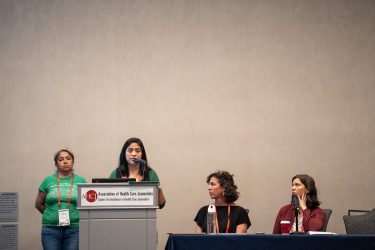
Panelists at an HJ25 session on January’s fires in Los Angeles agreed it was interesting to see how Southern California residents embraced certain platforms and tools, such as Watch Duty, TikTok and Facebook, over others, to inform themselves and decide when and how to take action.
The session covered how reporters cultivated sources and reported stories during the disaster, investigated short- and long-term environmental hazards, and connected with audiences.
Anish Mahajan, chief deputy director of the Los Angeles County Department of Public Health, said there was an “evolution” in how health professionals and fire safety officials communicated with the public through the fires. They tried public health orders, TV appearances, virtual town halls and website additions that offered detailed FAQs, data visualizations of burn scar areas, and results from air, water and soil quality tests.
Working at a small independent newsroom, journalist Michelle Zacarias said limited resources prompted her newsroom to stay out of reporting breaking news, instead covering how certain marginalized communities faced challenges evacuating the fires and accessing resources in the aftermath.
“When it comes to catastrophes and crises, journalists fall into this cycle of wanting to report on the headline, which is that people are losing everything and there’s devastating loss,” Zacarias said. “But as an enterprise reporter and impact reporter, we have to think about what stories we are trying to tell, and are people ready to talk about their stories.”
The disaster brought some new sources of information to the fore.
“We had a story about a 24-year-old amateur climate scientist who was posting about the Eaton fire,” said Los Angeles Times reporter Brittny Meija. “People watched his Facebook videos. He was posting things and showing where the fire was and telling people what to do. People took his word seriously.”
Among the tools that became especially relevant was Watch Duty, a public safety app that provides users with real-time public alerts and updates about the wildfires. The tool is backended by volunteer firefighters, first responders and journalists.
Environmental reporter Tony Briscoe was part of a team of reporters at the Los AngelesTimes who produced a multi-part investigation into soil toxicity following the fires. The project spotlighted how routine soil testing procedures were not being used and required extensive research into federal, state and local standards for soil testing.
By attending public news conferences, Briscoe said, Los Angeles Times reporters were able to get representatives from the Army Corps of Engineers and FEMA to speak on the record, breaking news about the deviation from standards in cleanup and testing.
Across their reporting, Zacarias and Meija focused on covering underrepresented communities, such as Los Angeles’s disabled and chronically ill residents and Black and immigrant homeowners in Altadena.
“These are communities that we don’t reach out to enough and we don’t connect with enough,” Meija said. “To do these stories…it was critical.”
Ethan Bakuli is a freelance reporter based in Detroit, Mich.