Red pens and cruel comments: How to handle criticism like a pro
By McKenna Oxenden, Texas Health Journalism Fellow
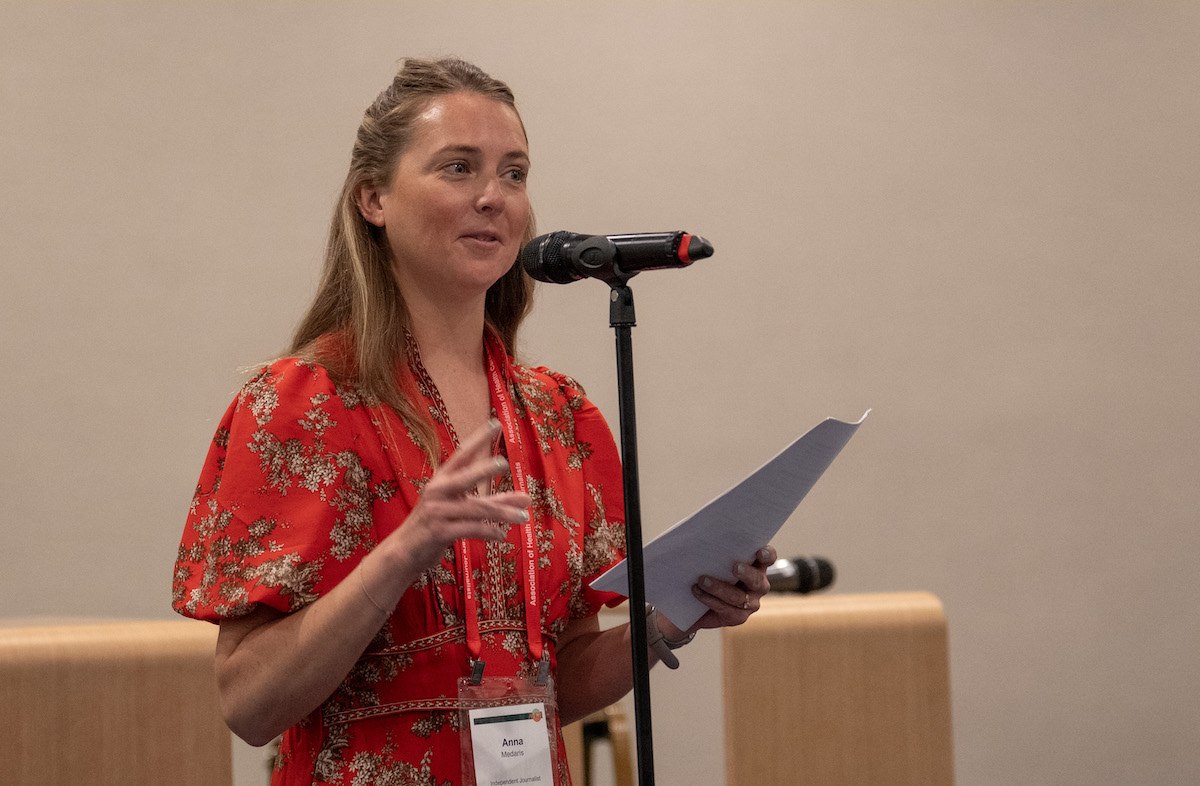
Anna Medaris, an independent journalist who covers health and lifestyle, offered Health Journalism 2025 attendees several tips about how to put a positive spin on critical feedback during her lightning talk on May 31.
Medaris encouraged “leaning into your nature” and said that sensitivity can actually be an asset, particularly when interviewing real people or when seeking genuine feedback from editors.
While often helpful, Medaris said editor feedback can be harsh and she has found it extremely helpful to foster connections with other journalists, particularly those working at the same outlet she is writing for.
If she has a particularly difficult edit, Medaris said she will ask a fellow reporter at that publication for insight — many times she’s then learned that the editor may be notoriously heavy handed or that it was a good sign the story had even made it that far.
“Suddenly I had a whole overhead light on a situation where before, I just had a flashlight,” she said. “I needed that friend.”
It’s also helpful to have a good, working relationship with editors. If there is a story that feels like a rough edit, Medaris encourages just being direct and asking if something is missing in the story. Similarly, if an editor offers to talk through an edit or a pitch, say yes.
She said every conversation is almost always a “bonus” and that when on the phone editors will regularly say “hang on, let me see what else I have.”
“I wind up calling about one story and hanging up (the phone) with another one,” she said.
As helpful as journalism relationships can be, Medaris said the non-writing relationships are equally as important to handling criticism.
For example, she said, her cardiologist friend regularly reminds her that mistakes in journalism are not life and death. She also tries to remind herself that journalism is just a small part of who she is — that it isn’t her entire identity.
Sometimes, Medaris asks her husband to skim the comment section and pick out a few to read. She also encouraged setting up a folder to funnel reader emails to so you can pick and choose when to read the criticism.
Another tool is to go read the comments on a story of a writer you admire. Medaris said it will help you realize that even the best writers receive negative feedback.
“Try reframing the feedback,” Medaris said. “It’s a sign that people are engaging with and care about the issues.”
McKenna Oxenden is a reporter covering Harris County for the Houston Landing.