Why survive? Aging in America and the guy who started the conversation
By Steven Potter, Wisconsin Health Journalism Fellow
Fifty years ago, Dr. Robert Butler wrote the groundbreaking — and Pulitzer Prize-winning — book, “Why Survive? Being Old in America,”illuminating the many struggles of older Americans including health care gaps, financial insecurity and social isolation.
When the book was published in 1975, less than 23 million Americans were over age 65. Today, that number has doubled to more than 55 million.
And, while the older adult population has grown, many of the challenges Butler identified have not only persisted, they’ve deepened and evolved.
That’s the premise behind a new PBS documentary, “Aging in America: Survive or Thrive,” produced by filmmakers Neil Steinberg and Mark Harris. Inspired by Butler’s book, the hour-long film explores the promise of increased longevity and the complex public policy changes that have emerged with an aging population.
The documentary, narrated by actor Martin Sheen, is on PBS and available on some streaming services.
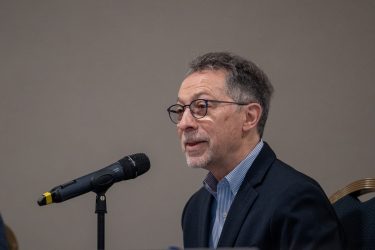
At HJ25 in Los Angeles, Steinberg and Harris discussed how they made “Aging in America,” how they chose what to include, and highlighted the obstacles older Americans still battle to overcome today.
The panelists also outlined several story ideas for journalists covering aging including systemic issues like the shortage of geriatric specialists and social dynamics such as ageism and financial insecurity.
“We’re going to live 30 more years than we did two generations ago,” Steinberg said.
“What are those extra 30 years going to look like? There’s always been old people, but just not as many of them. Now they’re such a big swath of the population. And as a country, as a society, we have to think about what we want those 30 years to look like, how we support people and how we give people kind of a new vision of what that might be.”
Other story ideas include writing about the need for more emergency health care for seniors as well as mental health and social workers, the difference in quality of care between nonprofit and for-profit nursing homes, medical debt and the growing number of seniors who are losing their homes or struggling — and failing — to secure permanent housing.
Harris said making the documentary underscored how disparities between groups of Americans — and their problems — continue to be ignored.
“Some of these problems are larger social problems that we haven’t solved — and they become exacerbated at an old age,” he said. “One of the things that was most startling for me in doing this is that the inequity in our society was something that Robert Butler pointed out 50 years ago as affecting old age. And it’s gotten only worse.”
Despite the many challenges, Harris and Steinberg emphasized the importance of telling stories of resilience, reinvention and joy in later life.
“People want to share their stories,” Steinberg said, adding that reporters need to be sensitive to the problems of older adults while keeping in mind that they are still capable of a lot. “These are not people who are helpless, these are people who just need some help.”
Find more information about “Aging in America: Survive or Thrive” on the documentary’s website..
Steven Potter is a reporter and producer for PBS Wisconsin’s “Here & Now.”