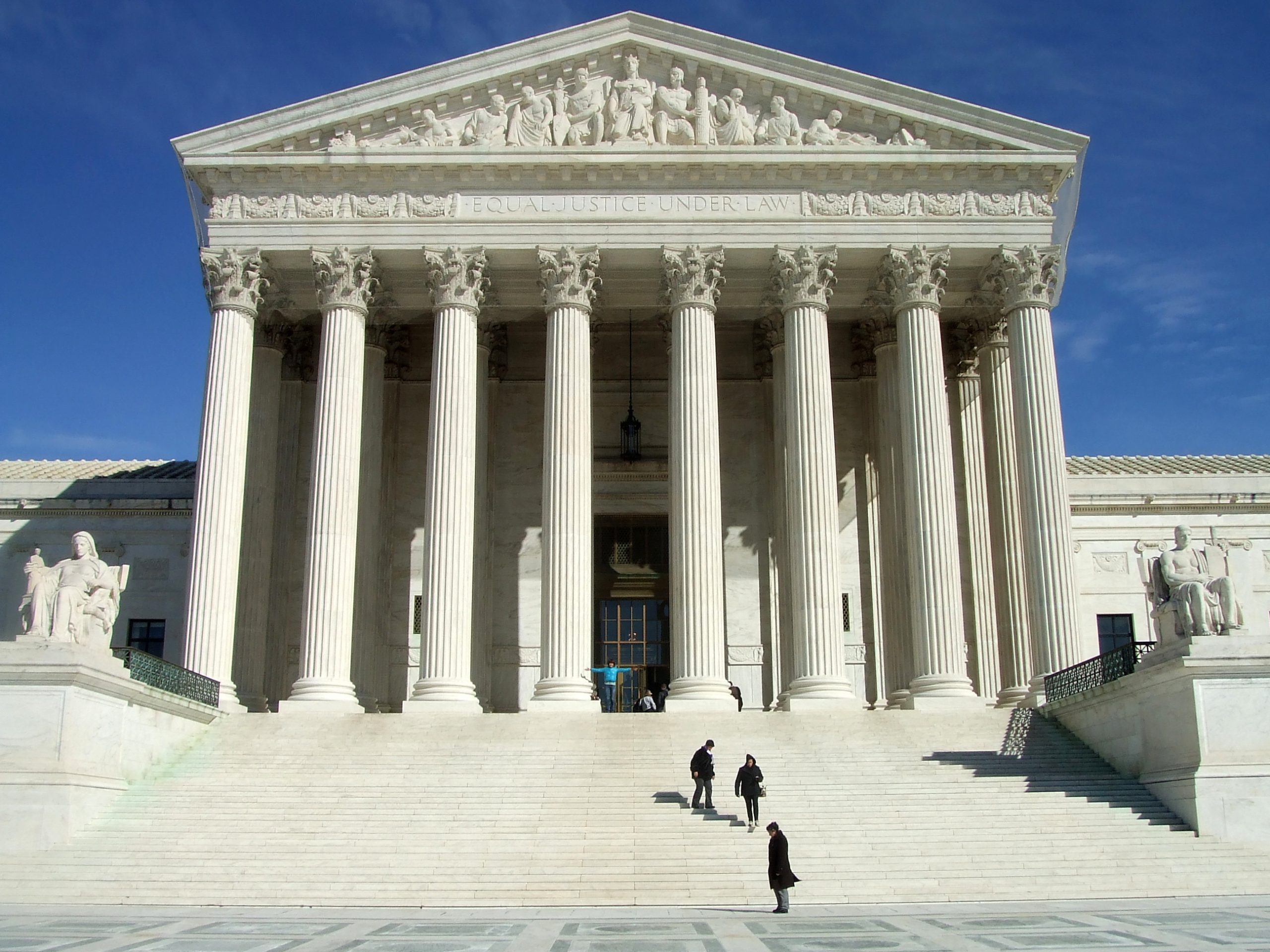
Among some lawyers and U.S. Supreme Court observers, a consensus developed Monday that the court will likely uphold a provision in the Affordable Care Act (ACA) allowing millions of Americans to continue getting no-cost preventive care services. Other lawyers and observers, however, were not so sure.
The ACA requires private health insurers to cover preventive health services at no additional cost to patients, as Amy Howe explained in a preview of the case on the SCOTUSblog. But the law does not identify those services, she added. Instead, the ACA directs the U.S. Preventive Services Task Force (USPSTF) to list those services, and the law requires that the task force’s recommendations must be “independent, and to the extent practicable, not subject to political pressure,” she wrote.
The case is Kennedy v. Braidwood Management. Robert F. Kennedy Jr. is the newly named secretary of the federal Department of Health and Human Services (HHS), as my colleague Liz Seegert and I reported last month. Earlier, the case was Braidwood v. Becerra, the previous HHS secretary.
A ‘religious objections’ challenge
The plaintiffs, in this case (meaning Braidwood), are four people and two small businesses that have religious objections to the requirement that insurers and group health plans provide coverage for PrEP, or pre-exposure prophylaxis, Howe wrote. For more on the plaintiffs, see this excellent explanation of the case from Madison Pauly at Mother Jones.
One of those companies is Braidwood Management, a for-profit closely held organization, owned by a trust, with Dr. Steven F. Hotze, as the sole trustee and beneficiary, as KFF explained here. A self-insured company, Braidwood provides health insurance to its 70 employees, KFF added.
The challengers in the case contend that the USPSTF’s recommendations are invalid because the task force members were not appointed by the president and confirmed by the Senate, Howe explained. “But most of the justices seemed skeptical of that argument,” she added.
For journalists covering the Braidwood case, much of the media attention has focused on PrEP to prevent HIV infection, according to A. Mark Fendrick, M.D., director of the Center for Value-Based Insurance Design. But, he added, reporters should note that almost 50 other preventive services have received an “A” or “B” rating from the USPSTF, meaning health insurers and employers need to cover those services at no cost, he wrote.
“Those 50 recommendations have affected more than 200 million Americans, and all are at risk of having cost-sharing imposed if SCOTUS rules for Braidwood,” Fendrick wrote.
In 2020, the Braidwood plaintiffs brought the case to the U.S. District Court for the Northern District of Texas, Howe explained. In that complaint, the plaintiffs challenged a mandate to cover PrEP, which helps to prevent infections from HIV, and an earlier mandate to cover contraception. In 2019, the USPSTF recommended PrEP for coverage at no cost to patients.
Some cautious optimism
“The Supreme Court on Monday appeared to side with the federal government in a dispute over the constitutionality of the structure of a task force within the Department of Health and Human Services,” Howe wrote in an article about oral arguments hearing. Although not all observers shared her opinion, she was not alone.
“My very initial take after listening to the oral arguments is I’m cautiously optimistic,” said Jose Abrigo, a lawyer and the HIV Project Director at the Lambda Legal Defense and Education Fund, a group that supports the civil rights of the LGBT+ community. “I was actually surprised, but I shouldn’t be surprised, given that the Trump Administration is defending the case.”
Writing on Substack, Chris Geidner agreed. Also known as Law Dork, Geidner explained that SCOTUS is likely to reject an argument from Braidwood to end no-cost preventive care for millions of Americans, as the ACA requires. Such a ruling, however, could empower Kennedy to make changes in the no-cost provisions, which, Geidner wrote, is “an area of concern given HHS Secretary Robert F. Kennedy Jr.’s positions and actions in office already.”
Richard H. Hughes, IV, a health lawyer with Epstein Becker & Green, in Washington, D.C., commented in an email that SCOTUS seems likely to uphold the constitutionality of the USPSTF. He also wrote that having Kennedy appoint and supervise task force members also could be ruled as constitutional. But like other observers, Hughes mentioned another option SCOTUS could pursue: Send the case back to the Fifth Circuit Court of Appeals in New Orleans or to the lower court, the Northern Texas U.S. District Court in Dallas.
More rulings to come?
Basing predictions on how the court will rule is always difficult, commented Laurie Sobel, a lawyer and the associate director for women’s health policy at KFF. “While many legal pundits have speculated that the court is ready to uphold the authority of the USPSTF, that’s not entirely clear,” she said.
“A ruling might not be the end of the story in terms of whether the current USPSTF recommendations remain as part of what private insurers, Medicaid and Medicare need to cover, because, as the administration has argued, they have the power to remove anyone from the task force,” she commented. “So, the Supreme Court might not be the last word on this.”
Decision due this summer
SCOTUS is likely to rule in this case by the end of June or early in July, Howe predicted. But, as Sobel and others suggested, more litigation is possible.
Echoing Sobel, Zachary L. Baron, an adjunct professor at Georgetown Law, said, “I don’t think that the Supreme Court is going to wrap things up tightly in a bow for all of us. We’re going to continue to have legal and policy fights over whether or not people can have guaranteed access to a wide array of preventive services.” As the director of the Center for Health Policy and the Law at the O’Neill Institute for National and Global Health Law, Baron has followed the case closely.
It’s possible, added Fendrick, that the Trump administration’s decision to defend the case before SCOTUS could sway some of the conservative justices to keep preventive services accessible at no cost.
Nearly half of all Americans report having skipped or delayed medical care because of cost, he added. “The imposition of out-of-pocket costs for these preventive services currently available at no cost will likely lead to a reduction in their use, including some that are potentially lifesaving,” he noted.
Resources
- Braidwood v. Kenney, challenge to the Affordable Care Act, Center for Value-based Insurance Design
- Robert F. Kennedy, Jr., secretary of Health and Human Services, et al, petitioners, v. Braidwood Management, Inc., et al, respondents. No. 24-316. Oral arguments transcript, April 21, 2025.
- Court to hear challenge to ACA preventative-care coverage, SCOTUSblog, April 18, 2025
- Supreme Court Preview: Kennedy v. Braidwood Management and the Fate of Preventive Services Under the ACA, O’Neill Institute at Georgetown Law, April 16, 2025
- ACA Preventive Services Are Back at the Supreme Court: Kennedy v. Braidwood, KFF, April 15, 2025
- Reporter Guide and Fact Sheet: Braidwood, The Supreme Court Case Targeting PrEP, Impacting Preventive Healthcare for Americans, GLAAD, April 14, 2025
- Brief of the American Public Health Association, Public Health Deans and Scholars, The Robert Wood Johnson Foundation, and Public Health Advocates as amici curiae in support of petitioners, amicus brief, Feb. 25, 2025
- Brief of 48 bipartisan economic and other social science scholars in support of petitioners (economists’ amicus brief), Feb. 25, 2025
- Recent court rulings imperil public health and patient protections, AHCJ, July 29, 2024
- How to cover the case that could kill patients’ access to no-cost preventive services, AHCJ, July 12, 2023