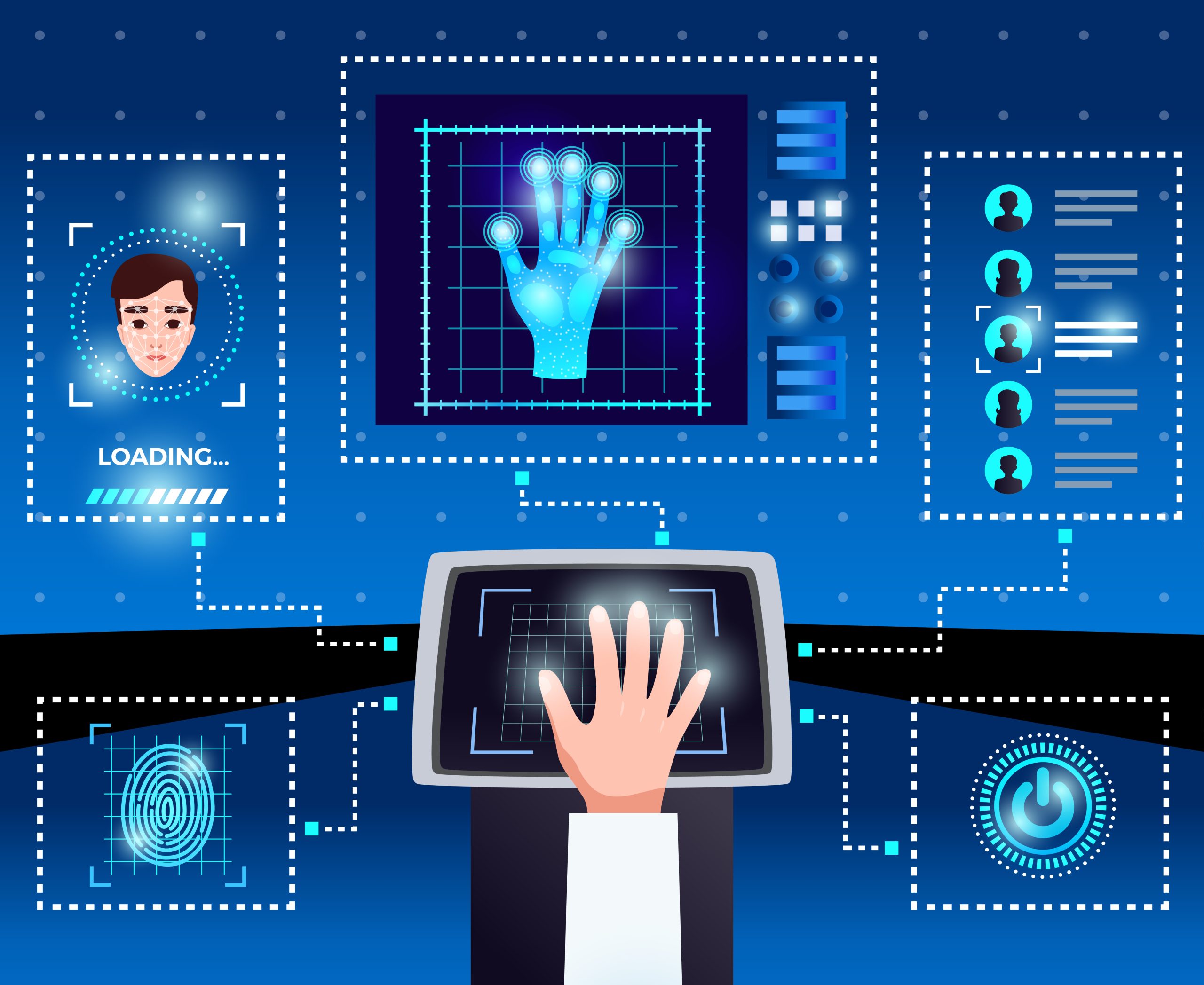
We all know the pain points of checking in for medical appointments: Manually fill out tons of paperwork, or follow multiple prompts on a tablet or check-in kiosk and scan your ID and insurance card. What if you could just walk in and hover your hand over a scanner? Palm-scanning technology — which has been used as part of a payment system at some grocery stores, sports stadiums and airports — is also being implemented in health care systems.
NYU Langone Health in New York City and Amazon announced in early March that the health system would be implementing Amazon’s contactless palm-scanning technology called Amazon One at all of its locations by this summer. When patients arrive for an appointment, they can hold their hand above a scanner to check in. However, they would first have to fill out their profile information in Amazon One through the health system’s mobile app on their phones, or at a kiosk at the health system. Then, when they scan their palm, the information will be used to help staff pull the correct electronic health record.
It’s an interesting trend for journalists to follow and a springboard for potential story ideas (Refer to my story idea list at the bottom of the page).
How does it work?
Just as no two fingerprints are alike, no two palms are alike.. Each palm is made up of tiny, distinct features on and below the surface, many that are indiscernible to the human eye or a standard camera, according to Amazon.
The technology uses infrared light to detect unique features in the palms including vein patterns below the skin. As light traverses the hand, it encounters the veins, where hemoglobin within the blood absorbs the light, according to an article in Security Journal Americas. This creates darker areas in the captured image, precisely where the veins are situated, the article said, while the surrounding tissues and non-absorbent components of the palm create lighter areas in the image. “With meticulous precision, the camera records the distinct patterns formed by the veins and surrounding tissues…serving as the foundation for constructing a unique biometric template. Through intricate algorithms, the camera converts this palm vein pattern into a digital template with data points representing the spatial arrangement and characteristics of the veins,” the article said.
Amazon claims its technology has a 99.9999% accuracy rate and a recognition time of less than one second.
But how secure is the technology? Amazon claims it does not use the images to identify a person but instead creates a unique numerical, vector representation called a palm signature for identity matching, according to its website. Images collected “are immediately encrypted and sent to a highly secure storage area” in Amazon’s cloud. The technology can recognize the difference between a real palm and a fake, having been tested with silicone and 3D printed palms. NYU Langone Health says they share none of its protected health information with Amazon. Participation is voluntary, and patients can opt out at any time.
Why use this technology?
It’s not the first use of palm-scanning technology. Another version where patients place their hands directly on a scanner for reading by infrared light has been used in hospitals in North Carolina, Alabama, Louisiana, Indiana, Florida and more dating back several years.
So why use it? Andrew Rubin, senior vice president for clinical affairs and ambulatory care at NYU Langone Health, told CNBC they anticipate it will cut the time patients spend at front desks from two to three minutes to less than a minute, which adds up given their patient volumes.
It’s also been used to reduce fraud or administrative errors. Patient misidentification incidents have occurred at hospitals where staff pull an incorrect record with the same name or date of birth as the patient checking in. After deploying palm-scanning technology, Carolinas HealthCare System saw its duplicate medical record rate fall by 98%.
And, because it’s noninvasive, it potentially can be used by children; people with disabilities or dementia who may not be able to tell staff their names; or people arriving at emergency departments who are unconscious or unidentified.
Story ideas
- From a patient satisfaction perspective, how are patients liking this option? Is it more popular among certain demographics?
- From a health equity angle, what is being done to make the technology accessible to people who are less tech-savvy?
- From a workflow/operations/business perspective, is this saving time at check-in or making things easier for front-desk staff? Have there been any glitches?
- Pursue the security/privacy angle — how is the information being stored or linked to electronic health records? Have any patients declined to participate because of these concerns?
- On the technology side, how else are health systems using biometric data such as fingerprints, facial recognition, iris scans or voice recognition?
Resources
- NYU Langone 1st system to add Amazon’s palm-scanning tech for check-ins – an article from Becker’s Health IT.
- Palm vein scanning: What is it & How does it work? – an article from Security Journal Americas.
- Amazon’s palm scanning tech is coming to hospitals: A big step for healthcare and secure identification – an article from Forbes.
- How generative AI helped train Amazon One to recognize your palm – alog post/video from Amazon about the technology.
- Checking in for your appointment – information on implementing Amazon One from NYU Langone Health.