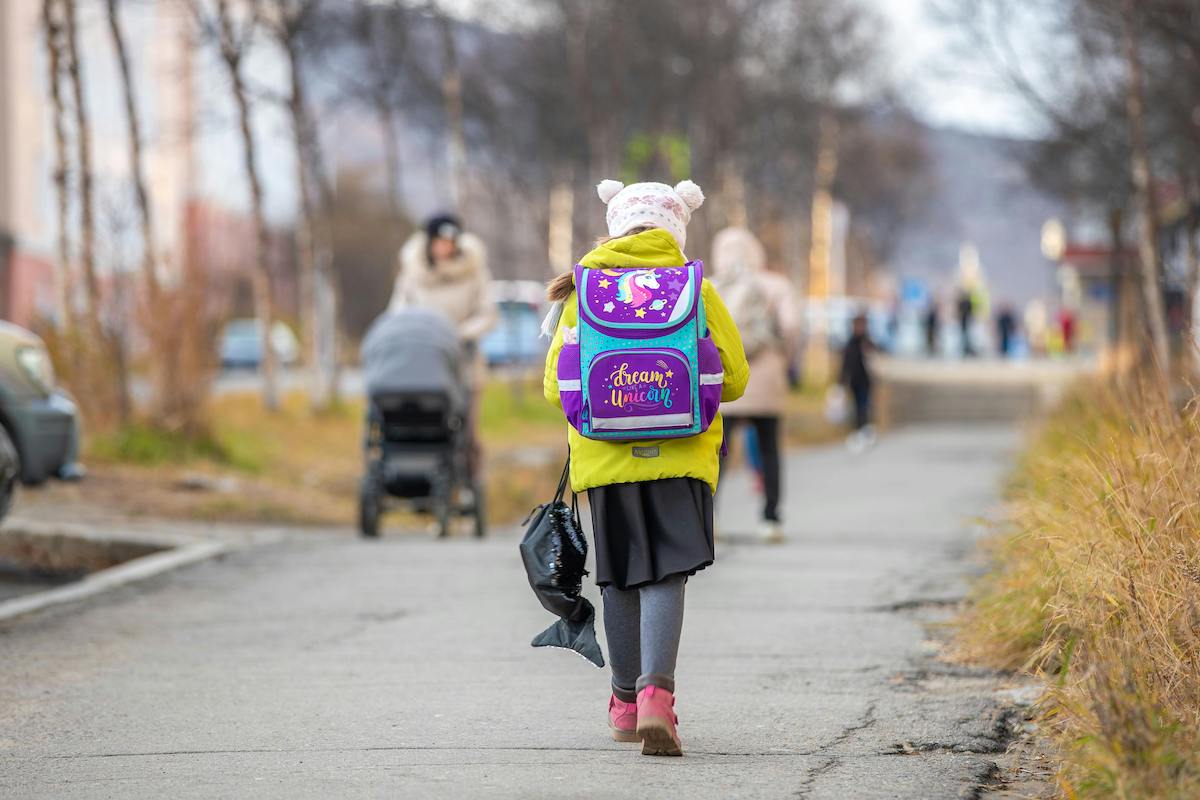
Kids walking to and from school often hear gunshots in one Chicago neighborhood, recent research from Ohio State University revealed.
The December 2024 study, using acoustic-detection sensors along walkable routes to and from schools in Chicago’s Englewood neighborhood, detected 610 gunshots fired during the 2021-2022 school year on days when school was in session.
“Focusing on both direct and indirect forms of gun violence, the study uses acoustic detection technology to quantify the cumulative burden of gun violence exposure potentially encountered by students during their commute to and from school,” the study’s authors wrote.
Researcher Gia Barboza-Salerno, J.D., Ph.D., led the study, working alongside Sharefa Duhaney, MPH, and Hexin Yang, MSW, all from the College of Public Health at Ohio State University in Columbus.
Beyond the direct safety risks, researchers said they wanted to explore the indirect ways children experience gun violence and how they’re affected by often hearing gunshots.
Reducing violence exposure for youth will take broadening the narrative around “school gun violence,” researchers wrote. Journalists can help by not only covering school shootings but also highlighting the risk of violence children face en route to or on their way home from school.
A closer look at the findings
An average of one to 18 gunshots were heard during commute times in the morning and afternoon, according to the study.
Researchers determined the number of shots increased throughout the school day and was highest during the afternoon commute: 52% happened between 3 p.m. and 6 p.m. and 12% happened between 6 a.m. and 9 a.m. The median number of rounds fired was three.
The days with the highest counts were Wednesdays in October and Mondays in December.
Researchers also learned that the number of gunshots recorded by their sensors was more than four times what police officially recorded during that same time period.
“Our findings underscore the urgent need to reframe the narrative around ‘school gun violence’ to consider exposures that occur in proximity to school boundaries to more effectively reduce violence exposure for youth who walk to school in violence-prone neighborhoods,” the authors wrote.
Children in high-poverty areas are more likely to walk to school, according to the study.
”But we know very little about direct and indirect violence exposure during travel times before and after school,” the study’s authors wrote.
Nearly half of all households in Englewood don’t have cars, researchers wrote, leaving residents dependent on public transit and walking.
In 2022 alone, more children were shot in Englewood than any other neighborhood in Chicago, according to the study. And those walking routes, including the ones used by children, often pass through high violence areas.
Solutions
Existing definitions of school violence miss the walk to school, the study’s authors note, and often only focus on shootings that happen on campus. For example, the U.S. Department of Education collects and reports on school safety indicators. But the agency’s definition leaves out witnessing and hearing gunshots.
The researchers argue the department should acknowledge the impacts of indirect gun violence exposure and include shootings within 400 meters of a school.
The study’s authors call for more policies and practices that “address the public health crisis of gun violence in and around schools.”
Exposure to school gun violence is linked to poor grades, increased absenteeism, decreased enrollment and lower graduation rates, researchers point out.
“Given the scale and severity of this issue, schools have become sites of violence exposure that shape students’ experiences, expectations, and long-term outcomes, particularly for youth in high-crime neighborhoods,” the authors wrote.
Resources
- The K-12 School Shooting Database is a great resource for covering school shootings. An open-source research project that documents when a gun is fired, brandished (pointed at a person with intent), or a bullet hits school property, regardless of the number of victims, time, day, or reason.
- The University of Chicago Crime Lab partners with cities and communities to use data and research to design and implement effective programs for improving public safety and advance justice in communities long impacted by both violence and unjust criminal justice systems.