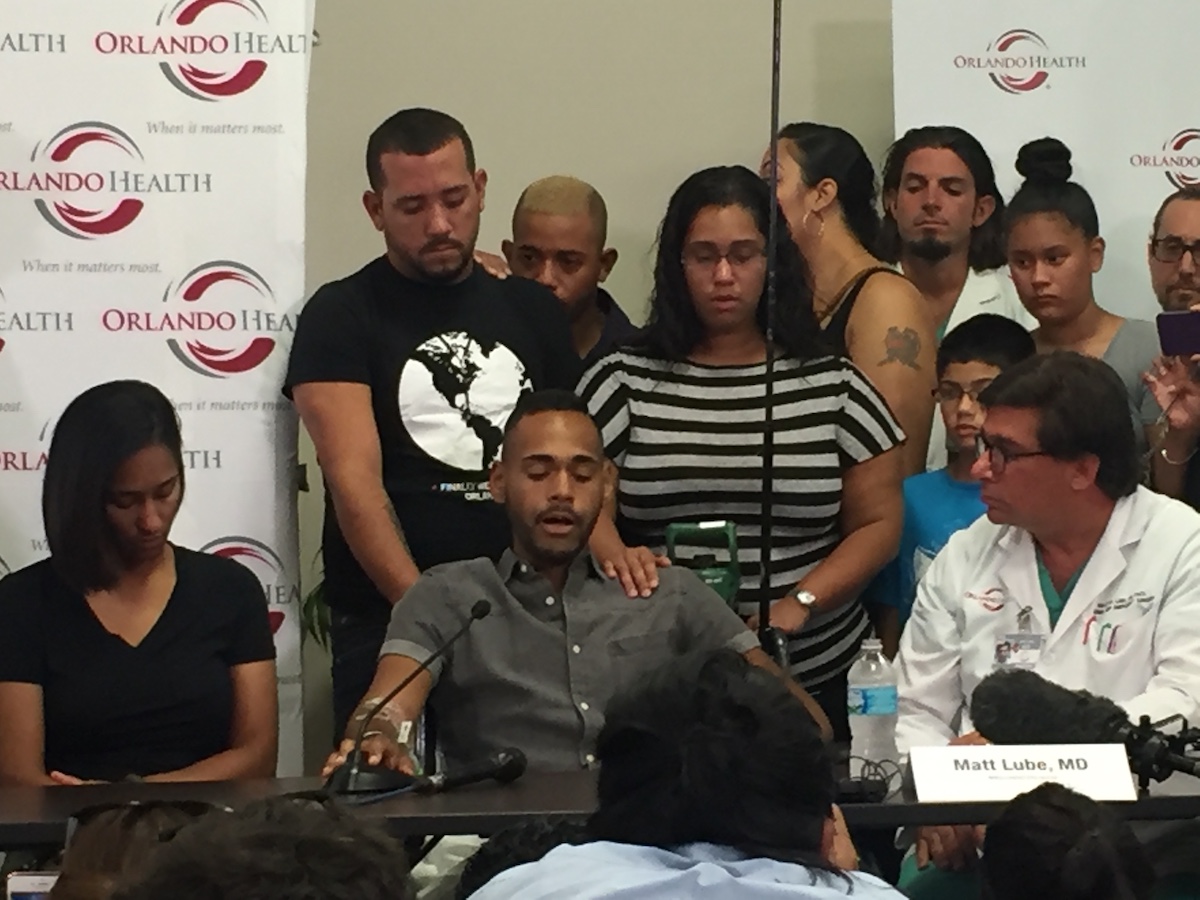
Gun violence coverage often focuses on people killed in shootings. And that’s for good reason — more than 48,000 Americans are shot and killed each year, according to recent research. However, only focusing on fatalities misses a big part of the problem. A majority of people who are shot survive — about 115,000 nonfatal shootings occur each year. Survivors sometimes wrestle with the physical, emotional, and mental impacts of a gunshot wound for the rest of their lives.
Amplifying the voices of survivors is critical for understanding the full extent of firearm violence. Survivors are left with chronic health problems, both physical issues and mental health disorders. There is also the provider side to this story, which would involve talking with trauma surgeons, emergency room doctors and nurses.
We recently published a Q&A with two reporters who are investigating what happened to the children and adults who survived a mass shooting earlier this year during the Kansas City Chiefs Super Bowl celebration.
Bram Sable-Smith, the Midwest correspondent for KFF Health News, and Peggy Lowe, an investigative reporter focused on public safety at KCUR, reported on the multi-part series. They spent months interviewing the survivors about their experiences coping with the physical and emotional toll of the shooting.
One of the salient points they made was how survivors feel forgotten and left behind.
Sable-Smith shared this example: “At the start of the NFL season, the Chiefs had a moment of silence for Lisa Lopez-Galvan, the one person who was killed at the parade shooting. But there was no commemoration for the 24 people who were shot and survived and they noticed.”
“Their lives have been changed forever by the same event. Some have not been able to return to work or even lost their jobs,” Sable-Smith added. “Some are still recovering physically eight months later. All are still recovering emotionally. It can lead to a sense of forgottenness. But these people have so much to share, so much insight into life and one of the great challenges of our time.”
The following advice will leave you with story ideas, tips for approaching and speaking with shooting survivors sources for data and research on nonfatal firearm violence.
Sourcing
Cultivating shooting survivor sources requires sensitivity, trust building, patience, and an open mind. Anyone who has survived a trauma of some kind lost a level of power and control.
When you approach them, make it clear that they have control. This includes allowing for extra time when arranging interviews because survivors may need time to prepare for the conversation. You could also offer them the option to bring someone to the interview and let them decide how long you talk with them and when they may need to take breaks. They can also decline to answer any questions you ask. Allowing the source to review their quotes and context also helps ensure your reporting is accurate and not harmful.
It’s crucial to remember that while it can be a difficult conversation, survivors often want and appreciate the chance to tell their stories. When you take the time to foster a comfortable and safe environment for them, these can be some of the most fruitful and illuminating interviews you can have, as the KFF Health News and KCUR reporters found in their series.
To find these sources, a good resource is a local community organization focused on supporting victims of crimes. In many cities, these groups are founded by people who lost someone to gun violence. They’ve often built relationships with them and are a trustworthy entity for them. There are also support groups. Contact the organizers and see if anyone would be comfortable talking with you or if the group feels safe having you attend a meeting.
Story ideas
- An in-depth profile following a survivor from the shooting, through their recovery, and to the present day can help emphasize all the ways a shooting disrupts a person’s life. One of the best examples of this is a Chicago Tribune photo essay following a 10-year-old boy after he was shot in Chicago. The series won the Pulitzer Prize.
- What are the costs of surviving a shooting? These costs are not just enormous medical bills, they can include time off from work, mental health needs, quality-of-life issues and loss of a caregiver. While the story is several years old, this Mother Jones breakdown on the true cost of gun violence offers a good blueprint for tackling this approach.
- Surgeons often don’t remove bullets inside a patient’s body because it can be challenging and risky to remove them and risks further harm to the patient. However, for many survivors, it’s a constant, physical reminder of the trauma they’ve lived through. One of the stories from the KCUR/KFF Health News covers this issue.
Data and research
- The Gun Violence Archive offers near-real-time data on shooting incidents around the country. This is one of the best ways to report on recent trends along with local law enforcement’s data on violent crime. (Learn more about how to use the Gun Violence Archive in this data dive.)
- The CDC does track injury data, including from firearms.
- Johns Hopkins Center for Gun Violence Solutions brings together respected gun violence researchers and prevention advocates to examine and promote policies and programs to improve community safety.
- The National Collaborative on Gun Violence Research supports rigorous research that broadens agreement on the facts associated with gun policy and promotes the development of fair and effective policies for preventing gun violence.
- University of California Davis Violence Prevention Research Program focuses on research and policy development, particularly on firearm violence and the causes, consequences and prevention of violence. The program helped to develop the public health approach to violence in the 1980s and continues to apply that framework in their research.