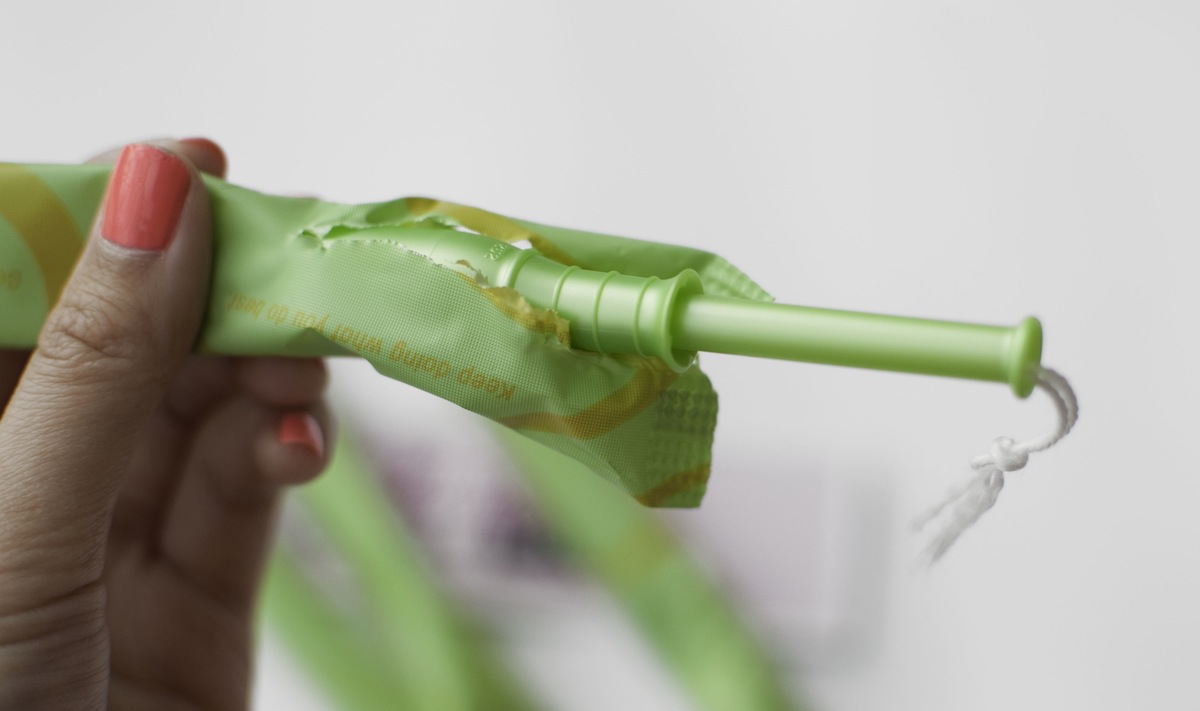
The Food and Drug Administration announced last month that it has commissioned an investigation into the ingredients in tampons after a small study in July identified the presence of heavy metals in multiple brands. When it was first published, the study caused quite a stir, with (far too many) stories and sensational headlines and a smaller number putting the study in context.
On the one hand, the FDA investigation is exactly what we should hope to expect from the combination of a well-conducted study and extensive coverage of it in the media. On the other hand, far too many of the stories employed the kind of scare-mongering that predictably led friends and colleagues to ask me and others whether they needed to stop using tampons. After all, the study didn’t specify what the brands were, so how could they know which brands to avoid?
It’s reasonable to ask why the researchers chose not to name the brands they tested — and the answer goes to the heart of what journalists need to consider when they write about any kind of study: What is the purpose of the study, and how should that purpose inform how journalists cover it?
As Substacker/OBGYN Jen Gunter pointed out in an excellent piece, the tampon study is an exploratory study. It looked at just 60 tampons from 14 brands. That’s more of a spot check, as Lisa Gill, a health and medicine investigative reporter at Consumer Reports, told me. It’s powered to look for signals — to see whether there’s any “there” there to worry about in the first place.
Metaphorically speaking, it’s looking out the window to see if there’s smoke. In this case, the study found a few wisps of smoke outside a single window. We haven’t even begun to consider whether there’s a fire.
Sometimes I think it’s easy to forget that in medical research, each piece of research published is part of a long, ongoing, continuous conversation between scientists.
Lisa Gill
Health & medicine investigative reporter
Consumer Reports
The purpose of the tampon study
The purpose of this particular study was not to “chide a particular company,” as Northwell Health environmental scientist and occupational medicine physician Kenneth Spaeth pointed out. So naming brands actually could cause more harm than good. That’s not because it would harm the companies named — it’s because it could distract from the larger public health issue that might (emphasis on “might”) exist here and the need for further research to find out.
“It keeps it more at the 30,000-foot view,” Spaeth said. “The idea is to keep the focus on the larger public health concern rather than have it redirected to particular brands that will then bear the brunt and let everyone else off the hook a bit.”
As the FDA noted in its announcement: “The study did not test whether metals are released from tampons when used. It also did not test for metals being released, absorbed into the vaginal lining, and getting into the bloodstream during tampon use.”
In other words, the study was never intended to help consumers decide whether it’s safe to use tampons, and responsible media coverage should have made that clear at the top of the story.
A good study nearly always raises more questions than it answers, and this one is a particularly good example. Here’s what we now know: Certain small amounts of certain kinds of metals were found in the tampon samples. And that’s mostly it (though, again, Gunter’s piece does a great job of digging into the details).
Aside from what the FDA noted, we also don’t know where the metals came from or at what point they enter the manufacturing process. Are they in the raw materials? The processing? Do they enter at multiple stages during manufacturing? Are they added for a purpose? Do the companies even know they’re present?
Now that the study has shone a light on a potential public health issue, “there’s a lot of complicated questions that arise out that a study like this isn’t set up to or even intended to answer,” Spaeth said. Rather, the initial question — is there a contaminant in a sample of a certain type of product — is a common, standard question epidemiologists ask in an initial study like this.
Then, if the answer is yes, the next steps are to investigate how and why it’s there, to what extent, and whether it’s entering the body. “What ways can we better understand what’s happened here, and ultimately, is this posing a risk?” Spaeth said.
But all of that comes later. It takes more research to determine if the contaminant is being absorbed into the human body, then more to find out if it’s staying there long enough to have any effects. And yet more — much more complex, long-term, difficult, expensive research — to determine if there are harmful effects.
If the media don’t help the public understand that this study is only the first of many steps, they are simultaneously doing a disservice to their audience while missing an opportunity to improve the public’s scientific literacy.
Instead of framing the story from the perspective of individual health and whether people should worry about their own tampons, the story should be framed to focus on what the next questions are, how we get them, and when we can expect them.
So, what was the purpose of the tampon study? The immediate purpose was to look at whether a contaminant existed in a common product, but it has secondary purposes as well:
- To raise further questions that require additional investigation
- To instigate a larger study looking at a larger sample or otherwise trying to determine how widespread the presence of metals is
- To seek grant money to conduct those studies.
Learn to recognize the purpose of the study you’re covering
As with the tampon study, sometimes a study is designed simply to raise more questions and likely seek more funding to conduct more research. As tired as the “more research is needed” quote in every study is, journalists do have a responsibility to convey the need for more research when it’s particularly relevant to the purpose of the study they’re covering.
Of course, there are other purposes of different studies:
- Is a certain substance getting into the body?
- Is this substance staying in the body?
- Is this substance causing any biological effects in the body?
- Is this substance causing negative effects in the body?
- Is this substance causing positive effects in the body?
- How is this substance causing effects in the body?
- How is this substance beginning the X disease process in the body?
- Can anything stop this substance from starting a disease process once it’s in the body?
- Can anything stop or slow the disease process of X?
- Can intentional exposure of a substance or activity improve health?
- How does that intentional exposure improve health? What’s the mechanism?
- How much of that exposure is needed to improve health?
- To what extent does that exposure improve health?
- Is this drug effective?
- Is this drug safe?
- How safe or effective is drug A compared to drug B?
Considering the purpose of a study should be a journalist’s first step in thinking about how to cover it because it naturally leads to the next set of questions: What do we actually know? Does any action need to occur on the basis of these findings? If so, whose responsibility are those actions? Is it the manufacturer’s? Is it the government’s? Is it policymakers’? Is it the owner of the company that makes the product? Is it consumers’?
Why it’s important to consider a study’s purpose
Considering a study’s purpose before reporting on it can help journalists decide whether to frame the story as a public or individual health issue, or a bit of both. Many of the stories journalists write about are about public health, but the average consumer is typically reading them from an individual health perspective: What does this mean for me and my loved ones? Even when it’s a bit of both, you usually still need to pick one to frame your story.
Consider some examples. Coverage about ethylene oxide use in factories is a public health issue that individuals have little control over. Secondhand smoke is also a public health issue, but it’s one that individuals have much more control over, whether in controlling exposure in their personal lives or in influencing policy at a local level.
Air pollution from climate change is a public health issue that only policy can address in meaningful ways, but a story framing it as a public health issue can still include actions that individuals can take, such as checking air quality online, avoiding being outside for long periods, wearing a mask on days with particularly poor air quality and contacting policymakers to make their concerns known.
The harms of ultra-processed foods are a kind of flipside to air pollution: The public has much more control over individually consuming them, but there are important policy implications when it comes to their addictiveness, their marketing, their use in school lunches, and so on.
A big mistake I saw in coverage of the tampon study was framing it as an individual health story instead of a public health one.
When to ‘name and shame‘
Clearly the tampon study was not an appropriate one for naming and shaming, but that certainly doesn’t mean doing so is never appropriate. Here are some examples (non-exhaustive) of when there might be a reason to name specific companies:
- When there’s a clearly established harm occurring with an indisputably identified responsible party.
- When naming the brand or company enables the public to avoid a product or take other actions to keep themselves safe or reduce their risk of harmful exposure.
- When naming may lead to the company making changes, or to put public pressure on the company to do so.
- When naming has the potential to lead to necessary policy or legal action.
And sometimes there’s a judgment call to be made. The CDC recently published a report on 23 new cases — in addition to 23 known previous ones — of bacterial infections with Burkholderia multivorans from the contained water and ice from ice machines at four different hospitals. The CDC report notes that all four hospitals used the same brand of ice machine, filters and sanitizing products. Should the report have named the brand? Possibly, if the brand is a common one being used at other hospitals. Do other hospitals using that brand know about it? Could the 23 new cases have been prevented if the brand had been revealed when the original cases were identified?
Or, is there selection bias here? That is, were those infections only identified because researchers were looking for them after learning that other hospitals had the same brand machine? Could there be cases occurring elsewhere due to a different brand that haven’t been detected yet? Given that other research has found ice machines to be potential reservoirs for pathogenic bacteria or fungi, is this a bigger problem that merits a closer look at the ice machine industry in general?
Sometimes responsible reporting means calling out bad actors. But sometimes it means keeping the big picture in mind and helping your audience see that big picture as well.