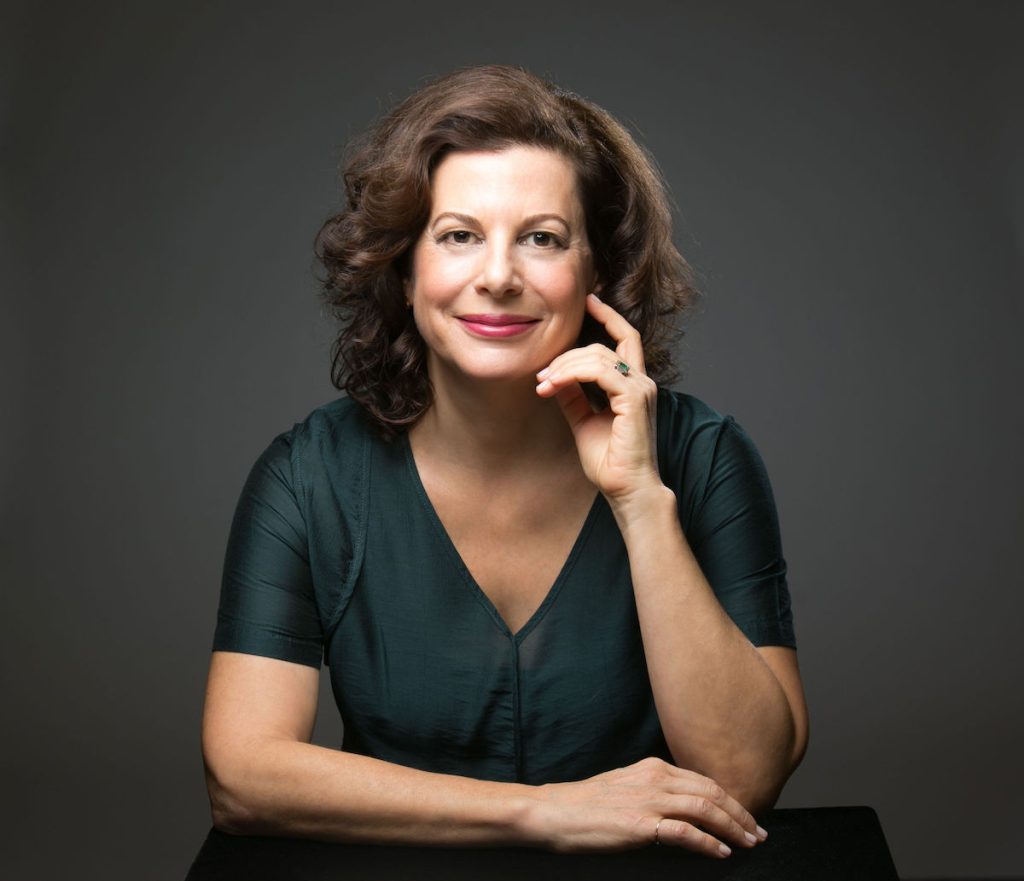
Journalist Katherine Eban was teaching an investigative journalism course at the Newmark Graduate School of Journalism at the City University of New York when she got an intriguing tip.The FDA had concerns about the Living Brain Project, a research study at Mount Sinai Medical Center in New York.
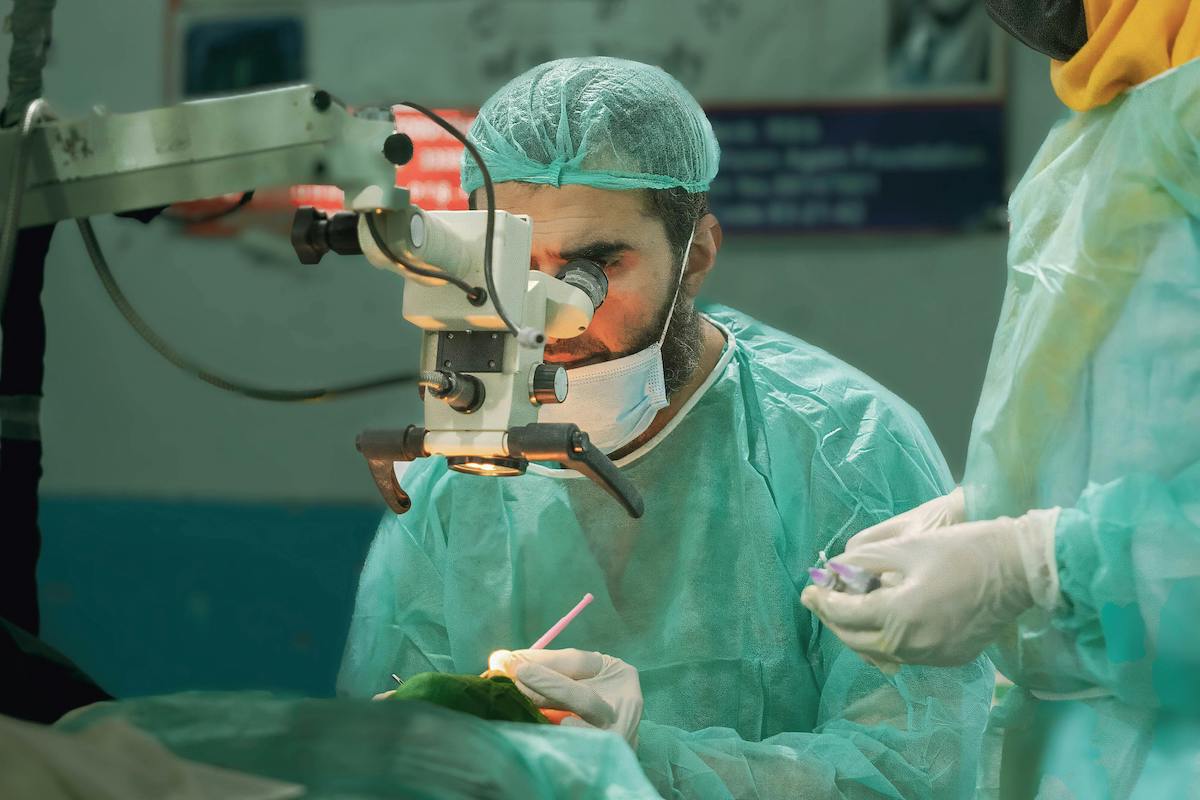
As part of the project, physician-researchers remove brain tissue from patients who are undergoing deep brain stimulation (DBS), a treatment for debilitating movement disorders such as Parkinson’s.
Eban decided to embark on an investigation as a class project, but getting information was challenging. Institutional review boards (IRBs) charged with protecting patients who participate in research operate largely in secret, and in this case, government agencies were not forthcoming with documents.
“For a long time we didn’t know whether it would even be a story,” Eban told me in an interview.
The course ended but some students stuck with the project. With money from the Fund for Investigative Journalism, Eban filed suit to force federal agencies to release information. After a two-year legal battle, and additional reporting, her team received 3,500 pages of records.
The cache included a 2019 FDA review that concluded Mount Sinai doctors were exploiting vulnerable patients by using a false justification to obtain consent for brain biopsies. Partly at issue was Mount Sinai’s consent form, which told patients they would have “the same amount of tissue loss” as from a standard DBS procedure — a notion strongly disputed by outside experts.
That FDA review was the foundation of the team’s nearly 7,000-word investigation, which appeared in STAT May 1. A follow-up on July 31 described Mount Sinai’s efforts to discredit their reporting, which included asking patients to retract their comments.
The team did not find evidence that any patient has been physically harmed. (More than 410 patients have enrolled, according to Mount Sinai’s website.) Still, Eban noted that the Living Brain Project was granted a five-year round of NIH funding in 2020 and has expanded to a second site.
“This is a story about medical ethics in this cutting-edge world of research. Given the high stakes of that, we felt that it definitely was a story,” she said.
Here are excerpts of the interview, which have been edited for brevity and clarity.
Can you explain how this story began?
One of the first things we did was file FOIAs with FDA, NIH and HHS. It started as a classroom effort to demonstrate how you tackle all the unknowns of an investigative project, but once the class was over and we were really just at the foothills of this story, four of my students said they wanted to continue on it. We met almost once a week for two years outside of the CUNY classroom structure. Each of us took separate pieces.
Do you think this story would have come to light if there had not been this unusual situation where the FDA was asked to review the use of a device for these biopsies?
It was a complete fluke. There was a paper trail from the 2013 FDA approval that was given for a small early feasibility study for patients with intractable depression that was limited to six patients. That review was interesting because the FDA consulted with three neurosurgeons, and all three of those neurosurgeons said to them, ‘Huh? What? You don’t lose any tissue as part of DBS.’ That led the FDA to initially not approve that study and then approve it on a very limited basis.
This story would not have come to light had it not been for this device manufacturer going back to the FDA in 2019, requesting approval to modify an electrode. Had that not happened, the FDA would not have re-reviewed the 2013 approval and the Living Brain Project generally.
Do you have any insights into why the FDA didn’t act to stop the study?
Clearly, from some of the documentation, the FDA was not sure of its jurisdiction, but there were people inside of the FDA who were urging that the agency take some kind of action. There is a question of who is monitoring these very advanced research studies. On one level, it’s just the IRBs, and there is a question of whether an IRB is truly independent: Can they turn down studies when you’ve got prominent people in that institution on the study?
What was the role of the HHS Office for Human Research Protections, which enforces ethical conduct in NIH-supported research?
What we were able to see in the paper trail was that an FDA reviewer reached out to that office to say, ‘We’d like your insight,’ but it doesn’t look like OHRP did anything.
How were you able to persuade sources to trust you to report the story accurately and completely?
It is a complicated thing when you’re asking experts to opine on the legitimacy of certain claims in a very small field because people are reluctant to be critical of colleagues. As we said in the story, some people were afraid to go on the record about Mount Sinai because that institution is viewed as very powerful and they did not want to be penalized professionally for breaking ranks. We reviewed quotes and context with everybody we interviewed because we knew how sensitive this was going to be.
What was your reaction when you learned that patients you interviewed were contacted by one of the researchers and asked to retract their comments?
It was surprising. What we were very glad about is that we had taped conversations and had emails with every single one of them, and they’d signed off on their quotes prior to publication. So, the claim that we had somehow misquoted them is simply not correct. Some of these patients were still under Mount Sinai’s care, so certainly they felt under the gun to agree to make statements that were siding with their doctor. In the first story, we quoted a number of them as saying very positive things about their neurosurgeon, so, the picture that emerged was a complicated one.
In its written response, Mount Sinai attacked one of your questions, calling it evidence of bad faith and bias on your part. Are you personally afraid of being sued or facing other repercussions?
We were very, very careful in how we worded things. We gave Mount Sinai an opportunity to respond, and we didn’t cherry pick their responses. There is a hyperlink embedded in the story where we give them their full say. I think with stories that are this complicated, you have to endeavor in every way to be fair and accurate. That is your best defense.
How can journalists learn about the practices of researchers in their communities?
Contact former IRB members. Look at research studies and contact former lab employees. If there is turnover in a medical center department, ask why. But it is hard because there is a lot of research loyalty and I think top researchers need to feel pretty insulated before they start raising questions about a colleague’s research. They’ve got to feel that they are untouchable in their field.