By Cris Villalonga-Vivoni, AHCJ-Connecticut Health Journalism Fellow
The demands of dementia: What caregivers and patients need
Responding to text messages with a smiley face is one of the many ways Herb Caldwell supports his sisters as part of the caregiver team for their mother living with dementia. Since her diagnosis in 2015, his sisters stepped in to care for her, quickly learning how to advocate for her and navigate a complicated system.
More than anything, they needed a “sounding board” for ideas and to find comfort as they worked to provide care to their mom. So, including a smiley face emoji in their text updates about their mom was an easy way to show support for their efforts, he said.
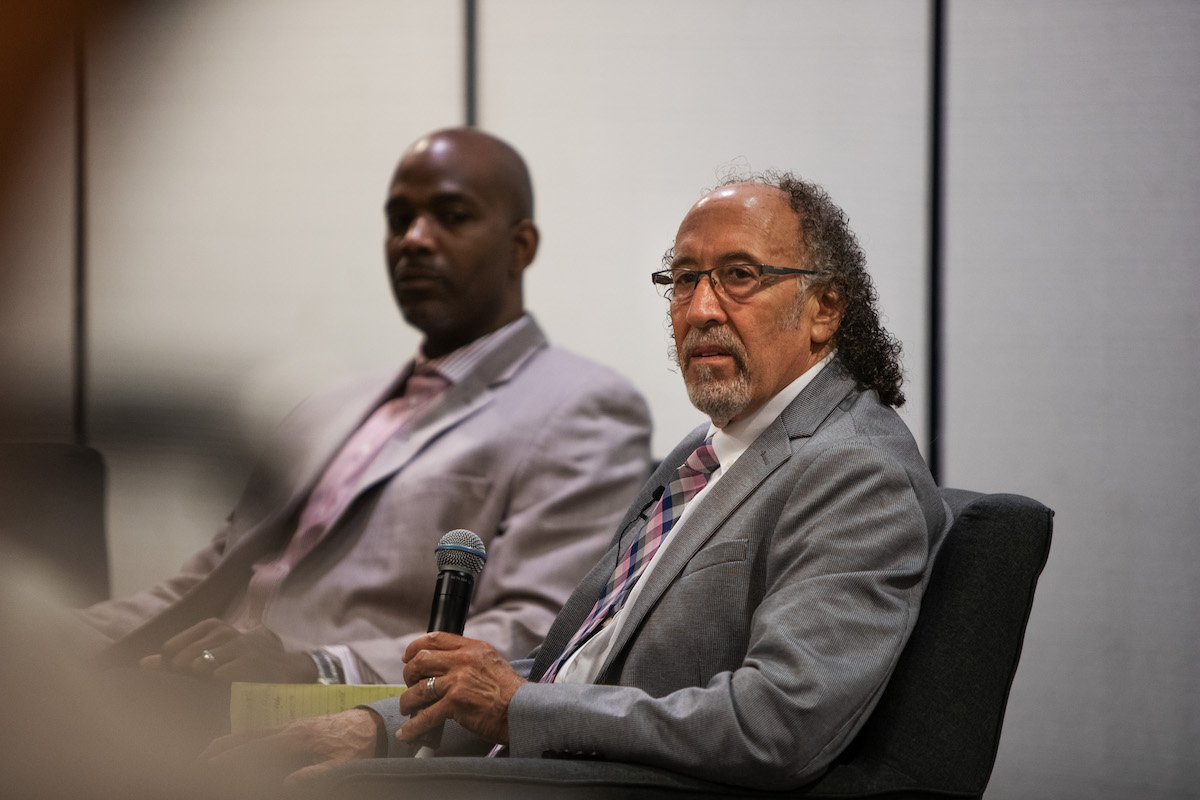
Caldwell shared his mom and sisters’ experiences as part of a panel at Health Journalism 2024 highlighting the need for more support services and resources for unpaid dementia caregivers.
Christine Herman, a freelancer and editor at Illinois Public Media, moderated the panel. Caldwell, the chief of compliance and engagement at Longan University, spoke about caregivers’ lived experiences and what he has observed in his own family.
Panelist David Bass, senior vice president and senior research scientist at Benjamin Rose, said family and friends are often the primary caregivers for people with dementia but encounter a variety of barriers and adverse consequences, like emotional distress and high financial costs.
Bass said that support and resources for familial caregivers have been continuously developed, researched, and proven effective. However, there’s still a lack of access to resources because many people don’t even know where to start after a loved one receives a diagnosis.
To address this, Bass said that the Centers for Medicare and Medicaid Services recently launched the Guiding an Improved Dementia Experience (GUIDE) Model to implement a comprehensive dementia care model at select sites nationwide. The goal is to offer additional support to unpaid caregivers to improve the quality of life for people with dementia and reduce access disparities.
In addition, this is the first time Medicare will cover support and education services for dementia caregivers, he said.
“It’s a chance to bring together health care and community-based care, which historically have been very fragmented,” Bass said.
Another project Bass highlighted at the panel was the Best Programs for Caregiving, a free online database of evidence-based dementia care programs for unpaid caregivers.
To Caldwell, one of his family’s biggest challenges was finding resources for their mom. He described “Mama Joe” as a “powerful maternal force” and advocate who was deeply loved by her family and community, so he said it was a shock when she was diagnosed with dementia. He added that in the African-American community, dementia was “a bad word we didn’t talk about.”
He continues the legacy of advocacy through “My Mama Joe,” a documentary highlighting the family’s story. Set for release in February 2025, the film explores resources through interviews with professionals who work with dementia patients. He said the goal was to address misinformation and analyze racial disparities while highlighting resources. He hopes the film helps people learn about how the resource landscape changes to address the caregiver’s needs.
“When I hear about programs like GUIDE and other resources out there, I feel hopeful,” Caldwell said. “This is what gives me the energy to stay in the fight.”
Cris Villalonga-Vivoni, also known as CV, is the health equity beat reporter for the Record-Journal based in Meriden, Conn., and a Report for America corps member since 2022.