Incarceration impacts not only the health of millions of Americans who pass through U.S. prisons and jails each year, but it also exacerbates health disparities in communities.
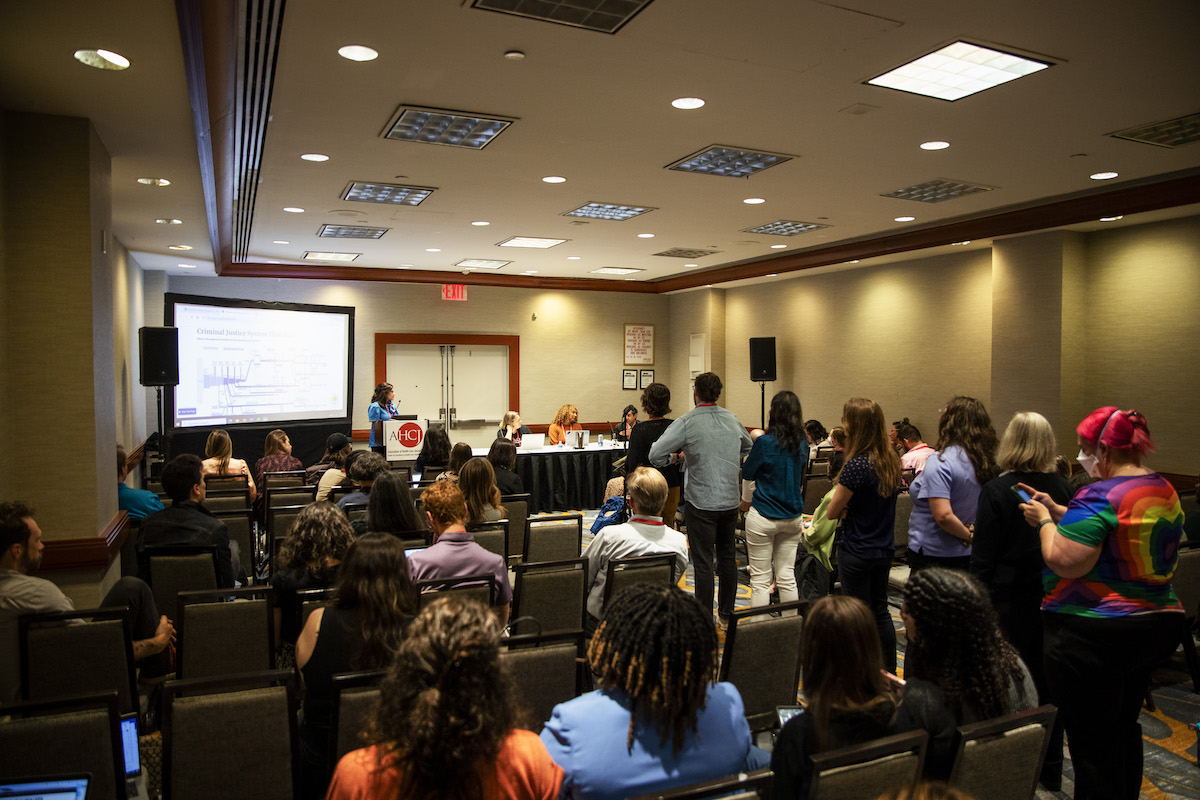
“Very few people get healthier from interacting with the prison system,” Dana Rice, Dr.PH., assistant dean and associate professor at University of North Carolina at Chapel Hill Gillings School of Global Public Health said during a panel at Health Journalism 2024 in New York City earlier this month.
Public health researchers “use incarceration as a measure of health depletion,” Rice added.
People who have been incarcerated have higher rates of infectious diseases, mental health issues and chronic conditions compared to the general public. And prison facilities face more health concerns among people who are incarcerated than they are equipped to handle, according to the panelists.
The staff of a [correctional] facility is focused on security — they are not focused on individual [health care] needs. A lot of people are cut off from their medications when they go to jail. They are cut off from their community care providers.
Wendy Sawyer, research director at the Prison Policy Initiative
Research suggests that for each year a person is incarcerated, their life expectancy is reduced by as many as two years.
The panel also shed light on vulnerable groups within the incarcerated population, such as aging prisoners and pregnant people, who often receive inadequate care.
Women are among the fastest growing population to enter the correctional system, suggesting that correctional facilities may likely have to respond to more health issues specific to women.
“These women tend to have more comorbidities, more mental health issues or substance abuse disorders,” compared to women who are not incarcerated, which are exacerbated when they enter a prison or jail, Rice said.
Effects of isolation
Many prisons are, by design, located in isolated areas, which also contributes to increased health disparities among those imprisoned.
The location of many prisons has contributed to staffing shortages, including health care workers, according to Correctional Association of New York Policy Director Sumeet Sharma.
“There isn’t a professional labor pool to draw from,” Sharma said. “It leads to these quandaries where prisons have to choose: do you want a doctor who lost their license to practice to be a prison doctor, or do you want no prison doctor at all?”
The language used to describe the criminal legal system and people who have faced incarceration can help shape society’s views on incarceration and can inform policy actions, the panelists explained.
“The more we use dehumanizing language, it allows people to be disconnected and lose interest,” Rice said.
Panelists advised against using terms like “inmate,” advocating instead for person-first language such as “person in prison” or “person who is incarcerated.”
According to the AP Style Guide, journalists should not use “prison” and “jail” interchangeably, as they serve different purposes.
Prisons confine individuals serving sentences for felonies, while jails typically house those awaiting trial or serving short sentences for misdemeanors.
The panelists suggested that while telling a story about an incarcerated individual can engage audiences, it should also include social and environmental factors to provide context for the person’s experience and health outcomes.
“Very few people are islands,” Sawyer said. “They are family members, community members, and part of a greater whole in society.”