By David Moreno, Texas Health Fellowship
A close look at medical stigma and how it hurts everyone
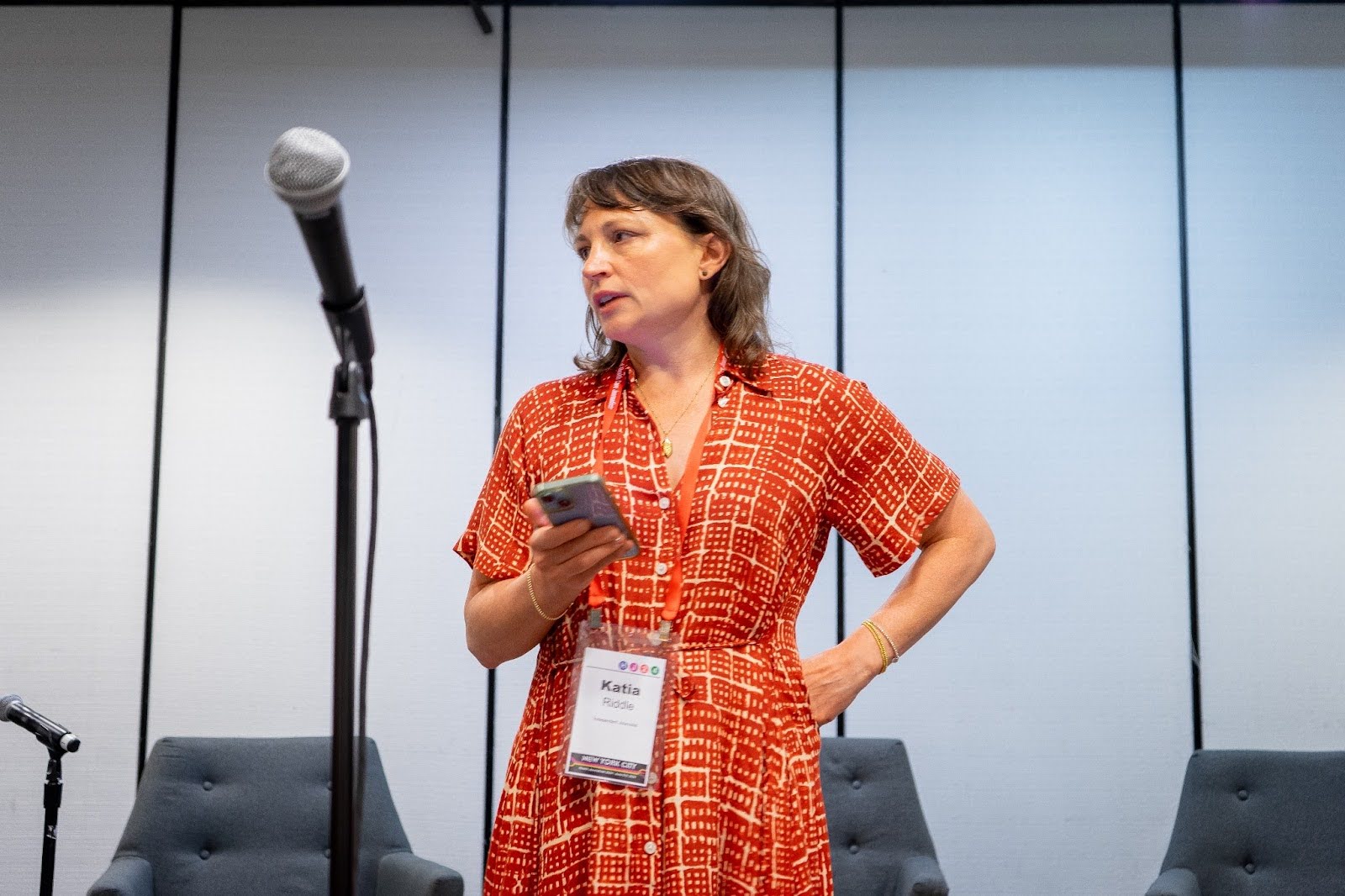
Freelance journalist Katia Riddle explored how stigma around substance use disorder is ingrained in the medical and journalism communities and the importance of reducing those biases during “A close look at medical stigma and how it hurts everyone” at HJ24.
Through interviews with health care providers, Riddle found that stigma around the disorder starts as early as medical school and causes doctors to shy away from providing addiction care altogether.
“I think there is an idea that people deserve it, they’ve somehow brought it on themselves through the choices they’re making,” she said. “All the stigmas of a society are reflected in these institutions.”
Substance use disorder is a treatable mental disorder that affects a person’s brain and behavior that leads to their inability to control their use of substances like alcohol, drugs or medications, according to the National Institute of Mental Health. Riddle said 100,000 people die by overdoses each year and that doesn’t include “all the collateral damages, all the lives ruined by the disease.”
More than one doctor told Riddle they struggle to treat people diagnosed with substance use disorder, because “it essentially makes their patients very unlikeable and difficult to work with.”
Riddle experienced similar situations when covering the disorder, but reflected on how biases, even her own, cause more harm than aid in finding effective solutions.
“It doesn’t help with treating or preventing this disease,” she said. “Seeing this [stigma] in others helps me see it in myself and my own reporting.”
To avoid stigma, Riddle suggested other journalists lean into the complications and complexities of these stories and to “resist the urge to paper things over and to render your characters as victims or heroes.”
“These stories are harder to talk about and they don’t fit into the narrative and preconceived values we have,” she said. “I’d encourage us to seek out these situations rather than look for ways to wiggle out of them. In doing so, it forces us to inventory our own biases and prejudices.”
Riddle added that there is a tendency in the community of advocates and practitioners to confuse moral certainty with fact and that it’s a journalist’s job to question it “not only of our sources, but of ourselves.”
Riddle concluded, “uncomfortable questions will lead you to uncomfortable answers, which will lead you to inconvenient truths.”
David Moreno is a health reporter based in Fort Worth, Texas. He was a 2024 AHCJ-Texas Health Journalism Fellow.