How officials and institutions managed the pandemic response has resulted in a substantial drop in the public’s faith in U.S. public health infrastructure. This decline in trust in public health and science itself is evident in the growing political polarization of the country, the public health officials who left their jobs due to threats and harassment during the pandemic and the rising strength and influence of the anti-vaccine movement and other science denialism movements.
Yet public health cannot be successful without public trust. So how do policymakers and public health workers rekindle faith in public health institutions? And how do they do it in the wake of the ‘the largest exodus‘ of public health leaders in American history”?
The rise and fall of public trust
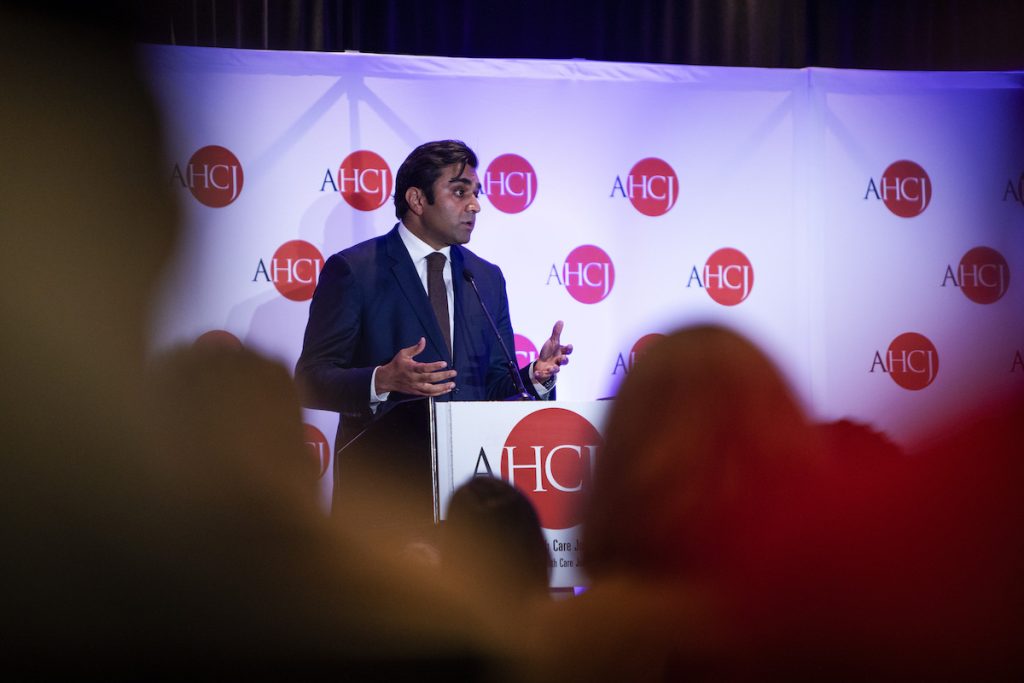
“It’s been said that trust goes down by the elevator and up by the staircase,” Ashwin Vasan, M.D., Ph.D., the New York City Department of Health & Mental Hygiene Commissioner, told attendees at AHCJ’s Health Journalism 2024 keynote discussion Friday afternoon. “It takes a lot longer to build up trust than to lose it, and we’re at a moment of historic mistrust.”
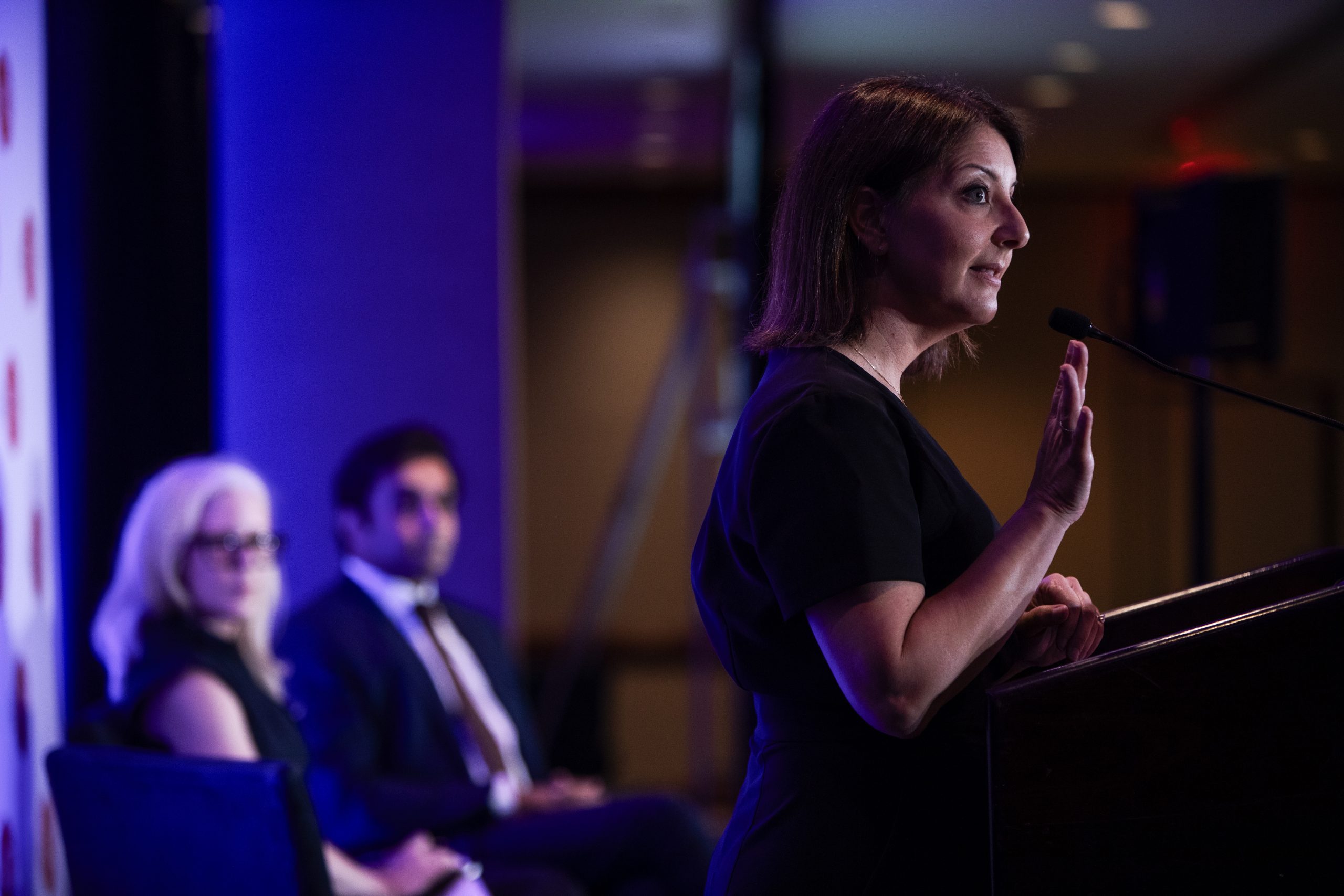
Vasan’s sentiment was echoed by CDC Director Mandy Cohen, M.D.,M.P.H., and the administrator of the Agency for Toxic Substances and Disease Registry. It was also reflected in what Brandy Zadrozny, the NBC news senior reporter who moderated the discussion, discovered in her reporting throughout the pandemic in its aftermath.
But both Vasan and Cohen shared their vision for how to begin rebuilding a foundation of trust to be more prepared for a future pandemic and to better manage and improve public health during non-public emergency times.
“It starts with better data,” Vasan said. “Covid showed us that our data is too siloed and fragmented to drive coordinated action with the speed and with the effectiveness that New Yorkers and Americans deserve from public health. Our technology and our systems were not up to scratch, and so we’ve been working hard to fix that and to make that data as open and as transparent as possible.”
That priority led to last year’s launch of the Center for Population Health Data Science, with a goal of improving citywide population health surveillance for both reportable and non-reportable conditions.
Cohen similarly focused on the need for data as a “first and foremost” capability for effectively responding to a disease threat.
“We cannot solve problems we can’t see, and we need to make sure we have the data infrastructure that powers our ability to see threats early and respond to them quickly,” she said. ”Second, we need the laboratory capacity to understand what’s happening and diagnose things quickly. Third, we need talented people.”
Need for transparency

But even with the best data, laboratory capacity and talented people, no response can be effective without clear, transparent, constant communication to the public. Cohen acknowledged journalists’ role in that piece of the bigger picture.
Leading the COVID-19 response in North Carolina, Cohen said she “learned every single day how important our press, our journalists, were [for] conveying important information to the public so that they could protect their own health.” This is done both through explaining technical information and through telling stories in interesting, engaging ways that reach people’s hearts as well as their minds, she said.
When Zadrozny asked how Cohen believes the national response should be handled differently in a future pandemic, she said, “I would communicate more quickly, more often, with a unified messenger, and then I would absolutely put more of the operational piece a little more front and center,” such as communicating what tests, therapeutics or vaccines the public should take and when.
It’s been said that trust goes down by the elevator and up by the staircase. It takes a lot longer to build up trust than to lose it, and we’re at a moment of historic mistrust.
New York City Health Commissioner Ashwin Vasan, M.D., Ph.D.
An important part of an effective communication strategy in today’s climate must also reckon with the constant daily tsunami of misinformation and disinformation polluting the airwaves and online platforms. Zadrozny asked Cohen and Vasan whether they felt they “knew their enemy” when it came to fighting the vast amounts of misinformation and disinformation related to public health. Cohen responded with three key strategies that she sees as vital to fighting the “info war,” as Zadrozny half-ironically called it.
“We in public health need to make sure that we are communicating simply in a rapid way, so that we meet the timelines of the fast-moving news cycle, but then we’re also repetitive in our communications,” Cohen said. “There has to be a lot more information.”
While she can’t ensure there’s no misinformation, she can “push out as much of the good information” as possible. The other two strategies are to use trusted partners in communities to communicate that information in an engaging way.
“Investments into communications need to become central to what we do, rather than an afterthought,” Vasan added. “Our information ecosystems are not only far more vast in volume, but it’s far more fragmented. So, flood the zone. Go everywhere. There isn’t a platform that, frankly, we shouldn’t be on.”