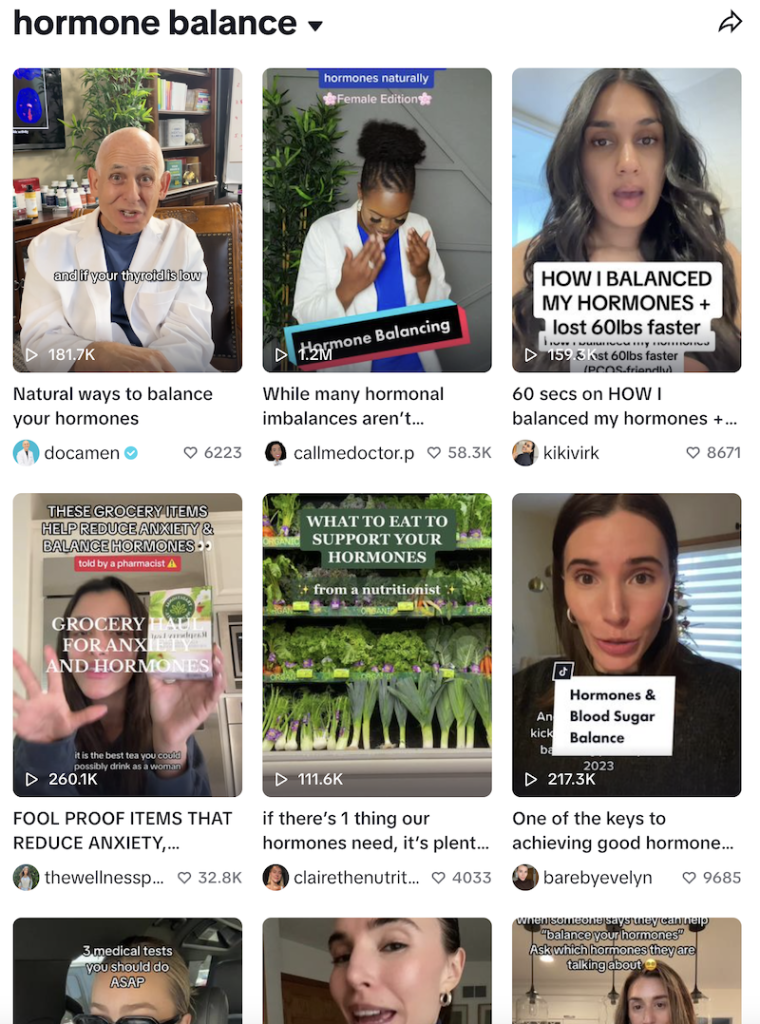
One TikTok influencer tells viewers that her “happy hormones” supplements improve your mood, reduce belly fat and relieve menstrual headaches. Another warns that common conditions such as fatigue and irritability are signs of “too much cortisol.”
Ideas like these are doing real harm, according to New Jersey endocrinologist Deena Adimoolam, M.D., who discussed “hormone balancing” pseudoscience at a recent online event for science writers sponsored by the Endocrine Society.
So-called remedies promoted on TikTok can backfire by disrupting the body’s natural hormone regulation, Adimoolam explained: “When you’re taking something that your body doesn’t need, your body is doing everything that it can to protect itself.”
Young women are being harmed
Adimoolam said in her experience, many of the people being harmed are young women.
She related the story of a 30-year-old patient who took an unregulated supplement called an adaptogen after an at-home test showed her cortisol was low. (Such tests are heavily advertised to consumers but not always reliable, according to experts interviewed by Medscape.)
The patient was led to believe that boosting her cortisol with the supplement would relieve fatigue and improve her mood, but instead she developed a host of new symptoms: weight gain in her midsection, acne, hirsutism, irregular periods, bruising, large stretch marks, thirst, and frequent urination.
Blood tests showed her cortisol, which is normally released when a person feels stress, was five times the upper limit of normal. Several other key hormones were too high or too low, and she had high blood sugars, a low blood platelet count and anemia, Adimoolam said.
“This was all related to her main risk factor, which was taking the adaptogen that she believed was helping to boost her hormones,” Adimoolam said. “It took almost two years for her body to truly go back to what it used to look like. So it was a significant impact on her life.”
TikTok’s bad advice
TikTok can raise awareness about medical conditions and prompt people to discuss their symptoms with a doctor, but many influencers lack expertise or fail to mention risks associated with their products, Adimoolam noted.
Some reports suggest that TikTok serves up supersize portions of bad medical advice:
- Researchers at The Ohio State University assessed 430 popular TikTok posts about gynecological cancers and found that at least 73% were inaccurate or of poor educational quality. According to the researchers, videos touted bogus treatments like “vaginal steaming.”
- A medical resident reviewed about 2,200 TikTok posts mentioning “cirrhosis” and “liver disease” and found that nearly 40% contained misformation such as false claims about healing properties of herbal products, mushrooms, beef liver and “parasite cleanses.” He presented his work at a medical conference in May 2023.
- NewsGuard’s TikTok search for “mRNA vaccine” yielded five videos containing false claims in the top 10 results. The media watchdog company warned that TikTok’s search engine “is consistently feeding millions of young users health misinformation, including some claims that could be dangerous to users’ health.”
Compounding the problem is the fact that TikTok users tend to eschew more reliable news sources.
It’s unclear what if anything TikTok is doing to quash misleading medical content. The company didn’t respond to AHCJ’s query about the hormone balancing videos via its media portal.
TikTok states in bold letters on its website: “We do not allow inaccurate, misleading, or false content that may cause significant harm to individuals or society, regardless of intent.”
In smaller type, it says: “Significant harm includes physical, psychological, or societal harm, and property damage.”
TikTok further states that it relies on “independent fact-checking partners and our database of previously fact-checked claims to help assess the accuracy of content.” However, a list of its “safety partners” does not appear to include any organizations with medical expertise.
What can responsible messengers and journalists do?
Debunking of the hormone balancing trend has appeared on medical news sites and consumer outlets such as Time. Some experts have posted myth-busting videos, like registered dietitian Abbey Sharp’s cheeky criticism of a hormone balance diet.
Adimoolam said in some cases, she’s personally contacted influencers to let them know that their inaccurate information harmed her patients. She also serves on advisory boards of health news sites, which she said “gives me some power at least to make sure there is no misinformation propagating out there.”
Adimoolam said it’s important for journalists to cite credible sources. People with many followers on social media “are not always the best sources,” she noted. “If you want to utilize an influencer, then always back it up with an expert.”
Beyond that, news organizations can warn about the dangers of unregulated dietary supplements and critically examine other dubious hormone-balancing “hacks.”
They can also point out that hormones — chemical messengers that naturally fluctuate in order to control bodily functions — usually do a fine job of regulating themselves.
In fact, hormones “all communicate with each other to keep our body in a tight system of checks and balances — something that’s called homeostasis,” Adimoolam said.
She recommends that people take care of their health through diet, exercise, sleep, stress reduction and avoiding endocrine-disrupting chemicals. And, she added, if they’re worried that a hormone level might be too high or too low, see a doctor.