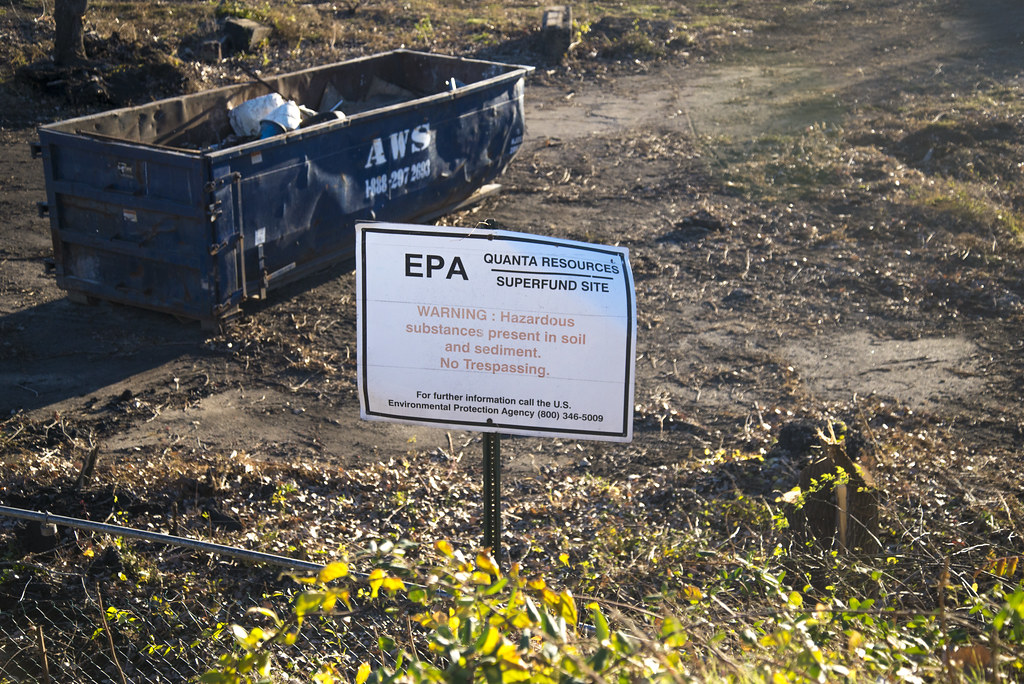
Across the country, thousands of abandoned factories, landfills, mines, refineries and other contaminated sites are improperly managed, posing a threat to the people living around them.
Toxic disasters like Love Canal became household names in the 1970s, and when the adverse health effects of living near a site like it became widely known, public pressure to clean up other sites increased. Due to these pressures, Congress passed the Comprehensive Environmental Response, Compensation and Liability Act (CERCLA) in 1980, known as Superfund. The Superfund Tax is a federal excise tax imposed on any taxable chemical sold or used by a manufacturer, producer, or importer.
The act gives authority to the EPA to clean up sites with the Superfund designation as well as the power to hold responsible parties accountable for the clean-up. The polluters either have to clean up the site themselves under supervision, or reimburse the EPA. When there are “orphan sites,”meaning there is no identifiable responsible party, the EPA can pull from the Superfund money to clean up the site.
A wide range of contaminants are found at Superfund sites, and the complexity of the clean-up can make the work very expensive. Due to partisan politics, the Superfund has struggled to keep a steady flow of funding and in 1995 the Superfund tax expired and the funding shifted from mostly tax revenues appropriated by Congress each year to mostly general revenues appropriated by Congress to fund the program. The EPA website has a comprehensive timeline about the history of the Superfund.
With more money going out then coming in, the Superfund ran out of money in 2003, and future clean-ups either had to be done by the responsible party or with taxpayer money. For obvious reasons, this has slowed the clean-up process significantly, but the number of sites that need to be cleaned up continues to grow.
Meanwhile, climate change has increased the health risks associated with Superfund sites as more intense storms, flooding and wildfires, which have the potential to spread the contaminants.
With the passage of the Bipartisan Infrastructure Law, the Superfund is back on track to fund clean-ups.
Resources from the EPA website
- Superfund: National Priorities List (NPL) — The National Priorities List (NPL) is the list of sites of national priority among the known releases or threatened releases of hazardous substances, pollutants, or contaminants throughout the United States and its territories. The NPL is intended primarily to guide the EPA in determining which sites warrant further investigation.
- Search for a Superfund site — This function through the EPA website allows you to search for Superfund sites using various filters.
- Superfund Redevelopment Program — Superfund Redevelopment helps communities reclaim and reuse thousands of acres of formerly contaminated land. This corner of the website shares the transformation process, policies and success stories.
- How do sites receive the Superfund designation? — This page walks through how a site qualifies for the designation.
- Contaminants at Superfund Sites — This page contains links to Superfund contaminant-specific websites and information on common contaminants found at Superfund sites.
- EPA Regional Superfund Community Involvement Contacts — Ask to speak to someone in the Superfund community involvement program.
Further reading
- National Geographic — This article provides a comprehensive history of the Superfund and the process a designated site undergoes.
- The New York Times — “His Home Sits Alongside America’s First Superfund Site. No One Told Him.”
- Civil Eats — “An Indigenous-Led Team Is Transforming a Minneapolis Superfund Site into a New Urban Farm.”
- Times Union — This article reports on the recent designation of Hurley landfill as a Superfund site.
- Inside Climate News — Reporting series that looks at toxins and mistrust in Atlanta.
- United States Government Accountability Office — “EPA Should Take Additional Actions to Manage Risks from Climate Change.” The report states that climate change threatens 60% of toxic superfund sites.