Should health care practitioners retain the ability to prescribe controlled medications to patients via telemedicine — perhaps without any in-person evaluations — now that the peak COVID-19 public health emergency has passed?
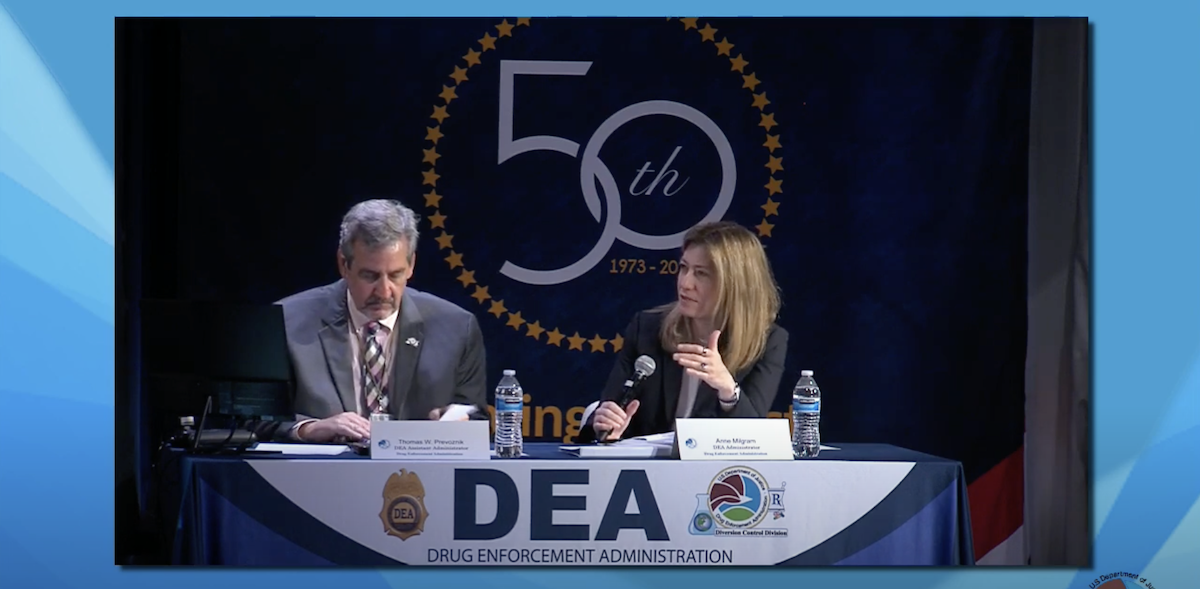
That was the subject of debate over a two-day listening session in September held at the U.S. Drug Enforcement Administration’s Virginia headquarters. Journalists who cover health IT and/or drug policy can keep tabs on this issue through a number of sources listed below.
The background
Typically, a practitioner may prescribe controlled medications to a patient only after conducting an in-person evaluation. Controlled medications are drugs subject to stricter control by the government because they could be misused or lead to addiction.
Because of the COVID-19 public health emergency, the DEA in 2020 granted temporary exceptions to allow prescribing of these medications, including some narcotics for maintenance and withdrawal management of opioid use disorder, via telemedicine, even when a prescriber had not first conducted an in-person evaluation.
On March 1, 2023, the DEA and the U.S. Department of Health and Human Services released two notices of proposed rulemakings in the Federal Register to consider making permanent some of these temporary prescribing flexibilities. One covers telemedicine prescribing of controlled substances when the practitioner and patient have not had a prior in-person medical evaluation (RIN 1117-AB40), and one covers expanding the induction of buprenorphine (for opioid use disorder management) via telemedicine (RIN 1117-AB78).
The regulations would allow for telemedicine prescribing of certain controlled substances, subject to safeguards, and would impose an initial limit on telemedicine prescriptions to a 30-day supply. To prescribe more, practitioners generally would be required to evaluate the patient in person.
Within a one-month open comment period, opinions poured in. These notices generated some 38,369 public comments: 35,454 comments on the general telemedicine rule and 2,915 for the buprenorphine rule.
After reviewing the comments, the DEA with the Substance Abuse and Mental Health Services Administration issued a temporary rule allowing prescribing of controlled medications via telemedicine to continue through Nov. 11, 2023. Any practitioners who have established relationships with patients before Nov. 11 will be granted a one-year grace period to continue this practice. Meanwhile, the agency says it is evaluating the comments received. Written comments will be accepted again this fall before any telemedicine regulations are finalized.
Comments and listening sessions
Several thousand comments received by DEA supported extending these prescribing capabilities at least through the end of 2024, which would provide the agencies with a longer period of time to educate practitioners, pharmacies and the public about any regulatory changes. Without an extension, some expressed concern that practitioners would suddenly be inundated with requests for in-person evaluations and wait times could occur.
But many commenters expressed concern as well, DEA noted in the Federal Register, mainly stating that the practice increased diversion and overprescribing of some controlled substances as a result of some telemedicine companies that did not conduct or require medication evaluations of patients prior to issuing prescriptions.
The DEA held two full-day in-person listening sessions to hear testimony about these proposed rules. The agency selected 55 presenters representing a cross-sections of physicians, pharmacists and administrators from universities, health care associations and other interested parties with diverse views. Some participated live while others testified via video. Video recordings and transcripts from the program are available on a DEA website.
One commenter, the CEO of an opioid use disorder treatment company, noted that without proper oversight of patients who are prescribed controlled substances, including regular in-person visits combined with definitive toxicology testing, “There is no reason to believe that some telemedicine-only providers won’t become buprenorphine mills, just as painkiller mills once flourished,” reported AHCJ board member Joyce Frieden in a MedPage Today article.
Psychiatry groups were among those concerned about the proposed 30-day prescribing limit, Frieden noted, with one psychiatrist saying 30 days wouldn’t be adequate given the current wait times for psychiatric care in many parts of the country. An addiction medicine consultant for the Alaska Native Tribal Health Consortium expressed concern that requiring in-person visits for buprenorphine prescribing “will do more harm than good” and contribute to astronomical travel costs for Alaska natives.
The listening sessions were novel for the DEA in that the agency generally has not held public meetings to inform regulatory drafting efforts, said Matthew Strait, the agency’s deputy assistant administrator in diversion, on day two of the listening sessions.
“I hope this effort underscores our sincere desire to improve upon our information-gathering capabilities to better inform this important work,” he said. “These regulations will impact the delivery of health care for every American in the United States, and frankly, we need to make sure that we get it right.”
Story angles
While waiting for the DEA to announce final decisions, journalists could find interesting story ideas by following up with any of the speakers providing in-person or virtual testimony, or who provided written comments, or by interviewing any mental health practitioners who engage in the practice of prescribing controlled medications via telemedicine to get their take on the subject. Journalists could also localize the story by finding people who testified from their local area, or write a trade magazine article on the perspective of psychiatrists, pharmacists, etc.
Resources
- Practice of Telemedicine: Listening Sessions — information from the Federal Register about the listening sessions, posted Aug. 7, 2023
- DEA Telemedicine Listening Session page — a resource that includes videos and a transcript of the listening sessions, a list of speakers and background information
- DEA Gets an Earful About Telehealth Prescribing of Controlled Substances — an article from MedPage Today
- DEA Announces Proposed Rules for Permanent Telemedicine Flexibilities — a DEA press release, posted Feb. 24, 2023