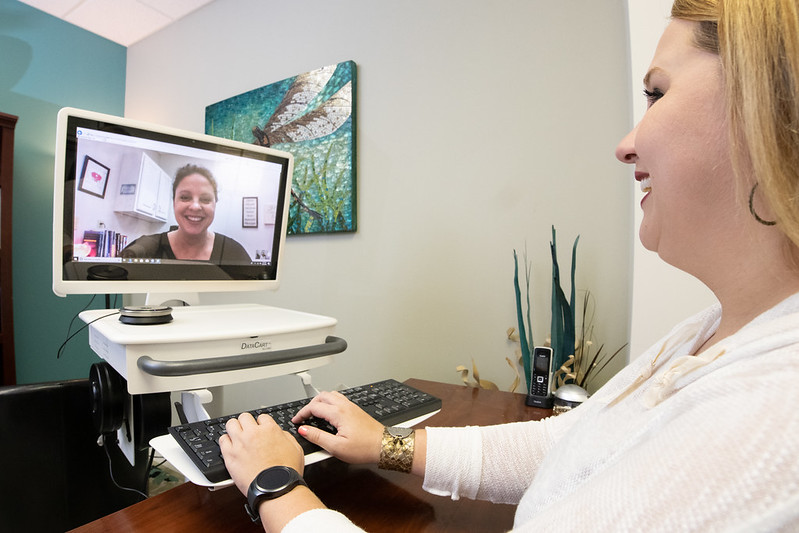
In case you missed it, the U.S. Department of Health and Human Services in November released its findings of Medicare Beneficiaries’ Use of Telehealth in 2020. The report showed that telehealth visits among Medicare beneficiaries increased 63-fold in 2020.
In other telehealth news wrapping up 2021, another report focused on how technology and telehealth could remedy health inequities in Black and other minority communities, and 16 health organizations launched a new public education campaign to protect expanded access to telehealth services.
Just when you thought everything related to telehealth was straightforward, two other studies from late 2021 indicate that many adults — even some teens and twenty-somethings — still prefer in-person visits over virtual ones or believe that in-person visits are more effective. Reviewing the details of these studies (which all have some limitations) can provide reporters with plenty of telehealth story ideas.
A deep dive into the research
The Medicare report examined telehealth services during 2020 among 34.9 million Medicare fee-for-service beneficiaries. It found that 52.7 million visits (about 5% of all clinician visits) were provided via telehealth in 2020, a sharp increase from 840,000 (less than 1%) in 2019.
The Centers for Medicare and Medicaid Services (CMS) announced initial flexibilities for telehealth on March 17, 2020, allowing equal payment for telehealth and in-person visits because of the COVID-19 pandemic. CMS allowed Medicare fee-for-service beneficiaries to receive care via telehealth in urban areas (instead of only rural areas), in patients’ homes (instead of only in facilities), and by additional types of providers including federally qualified health centers and rural health clinics.
The report also found that:
- Total clinician visits declined about 11% in 2020 compared to 2019, reflecting 179 million fewer visits even with the increase in telehealth services.
- Telehealth visits increased from 122,400 to 16.6 million (38-fold) for medical specialists from 2019 to 2020. In the same time period, they increased from 317,800 to 10.1 million (32-fold) for behavioral health specialists and from 400,000 to 26 million (24-fold) for primary care providers.
- The increase in telehealth utilization was driven primarily by urban beneficiaries. Overall, urban beneficiaries had about 50% higher use of telehealth than rural beneficiaries.
- Telehealth use in 2020 grew and shifted into more urban states, with the highest rates in the Northeast and in the West, particularly California. States with the highest use of telehealth in 2020 included Massachusetts, Vermont, Rhode Island, New Hampshire and Connecticut, while states with the lowest use included Tennessee, Nebraska, Kansas, North Dakota and Wyoming.
- A lower share of Black beneficiaries (4.7%) had a telehealth visit in 2020 compared with white beneficiaries (5.3%), while a higher share of Hispanic (6.2%) and Asian (6.4%) beneficiaries had a telehealth visit compared with whites.
- The overall net reduction in all health care visits was similar across most racial and ethnic groups, with a range of 9.4% to 12.8%.
Meanwhile, in other news, the American Hospital Association, Johns Hopkins Medicine, and 14 other organizations in early December launched Telehealth Access for America, an effort to make permanent the expanded access to telehealth services granted by Congress and state governments through public health emergency waivers.
The education campaign “emphasizes the benefits of telehealth and what individuals could stand to lose if policymakers do not solidify access, including better health outcomes, better quality of life, greater health equity, increased patient and caregiver choice, and lower health care costs,” according to an article in mhealthintelligence.com.
“Access to telehealth is vital to Americans’ well-being and quality of life,” said Rick Pollack, AHA president and CEO, in a news release. “Flexibility provided by policymakers during the pandemic led to greater use of telehealth services made possible by providers’ investments in these tools. Without action from Congress, millions of Americans who have come to rely on telehealth services will lose access to the care they value.”
The American Telemedicine Association, which joined this effort, previously rallied over 400 health systems, associations and companies to send a letter to Congress urging policymakers to extend telehealth benefits for Medicare beneficiaries. AHCJ covered this in a previous blog post.
In early December, data analytics firm Clarivate released a report on “Realizing the potential of telehealth: Using tech to remedy health care inequities.” In this document, the authors noted how COVID-19 accentuated disparities in health care for Black Americans. It also discussed how Black Americans are disproportionately impacted by the so-called digital divide. More than a third of Black households (36.4%) do not have a computer or broadband access, and connectivity is a serious challenge for many, the report said, citing data from the CEO Action for Racial Equality and the U.S. Census Bureau.
“The pandemic really highlighted the inequities that we have, both in the broader society and in health care delivery,” wrote Denise White Perkins, M.D., Ph.D., a contributing author of the study and director of Healthcare Equity Initiatives and vice chair of academic affairs for the Department of Family Medicine at Henry Ford Health System in Michigan.
“When we converted the majority of our visits to virtual care at the start of the pandemic, it became immediately obvious that there were certain segments of the population we were serving that did not have equal access, whether that was knowing how to use the technology or the more upstream issues of having broadband access in their neighborhoods,” Perkins wrote.
Among the report’s takeaways:
- Telehealth has shown real promise in improving health care access and outcomes for Black Americans but realizing this promise will require continued investment in telehealth innovation.
- Training is needed so health care professionals can help their patients navigate telehealth and bridge divides in communication and technology.
- Telehealth can help health care stakeholders address social determinants of health, but it’s no cure-all. Payers, providers and policymakers must collaborate on solutions.
Telehealth vs. in-person medical visits
As much as telehealth has helped keep services going during the pandemic shutdown and beyond, a new study from the RAND Corporation that surveyed 2,080 Americans found that most participants (66.5%) expected at least some video visits in the future. But, given a choice, more than half (53%) said they preferred an in-person visit over telehealth. The research, published in JAMA Network Open revealed that 42.3% of 20- to 39-year-olds and 64.5% of those 60 and older preferred in-person visits. Understanding patient preferences will help identify telehealth’s role in future health care delivery, the authors said.
And, a study out of the University of Michigan published in the journal Telemedicine and e-Health conducted text message surveys of 14- to 24-year-olds’ attitudes toward telemedicine in October 2019 and October 2020. In Fall 2020, 68% reported a preference for video visits for reasons such as having a provider’s undivided attention or because it seemed more personal. However, 49% of participants reported telemedicine to be not as effective as in-person visits, because providers can’t take vitals or perform physical exams, or pick up on clues detected in in-person visits.
“To best serve the needs of a diverse population, clinics should plan to have a large suite of services available both in person and via telemedicine,” authors wrote. “Youth perspectives and preferences regarding telemedicine should be considered as clinics determine the types of services to be offered as they expand telemedicine services.”
Story angles to consider
- Why did Medicare visits decline, even with the increased use of telehealth?
- What are the demographics among people using telehealth in your local health systems/hospitals?
- What are hospitals/health systems doing to include additional patient populations in telehealth efforts, such as rural residents, older adults and people of color?
- What new offerings could they add or are they adding to telehealth platforms?
- What complementary technologies are they incorporating, such as remote monitoring equipment, text messaging programs or use of patient portals?
- What is being done in governments to continue expanded telehealth coverage instituted during the pandemic?
- How can telehealth become more effective?
Resources for journalists
- Request to extend telehealth benefits for Medicare beneficiaries, and other story starters, an AHCJ blog post on telehealth updates
- Medicare Telemedicine Snapshot, from CMS.gov, provides information about people with Medicare who utilized telemedicine services between March 1, 2020, and February 28, 2021.
- Medicare Beneficiaries’ Use of Telehealth in 2020, a report from the U.S. Department of Health and Human Services
- American Telemedicine Association
- Telehealth Access for America
- Realizing the potential of telehealth, a report from Clarivate on using technology to remedy inequities in the treatment of Black Americans and other minority groups in the United States
- Telehealth Became a Lifeline for Older Americans, But It Still Has Glitches, a story from the New York Times