While most AHCJ members have been writing about health for a while, the COVID-19 pandemic suddenly turned nearly every other reporter in the country into a health reporter, at least for a time. Even those who don’t directly report on the pandemic likely cannot report on their regular beat without the pandemic affecting it in some way or another.
Those who have been able to stick to the beats they know best, such as business, entertainment, or sports, have not needed to worry as much about quickly boning up on science for the first time since high school or college. But many other reporters, particularly general assignment reporters, have found themselves reporting on vaccines, epidemiology, infectious disease, health disparities, health policy, vaccine hesitancy, and a host of related topics for which they lack specialized training or experience. Sometimes, that has been a big problem. At times, they’ve gotten the science wrong, inadvertently mischaracterized a concept, or unwittingly conveyed or emphasized the wrong message.
Seeing the latter happen again and again led Eleanor Murray, an assistant professor of epidemiology at Boston University School of Public Health, and Syra Madad, a research fellow at the Harvard Kennedy School’s Belfer Center for Science and International Affairs, to create a framework to help guide journalists new to the beat — and perhaps some veterans as well.
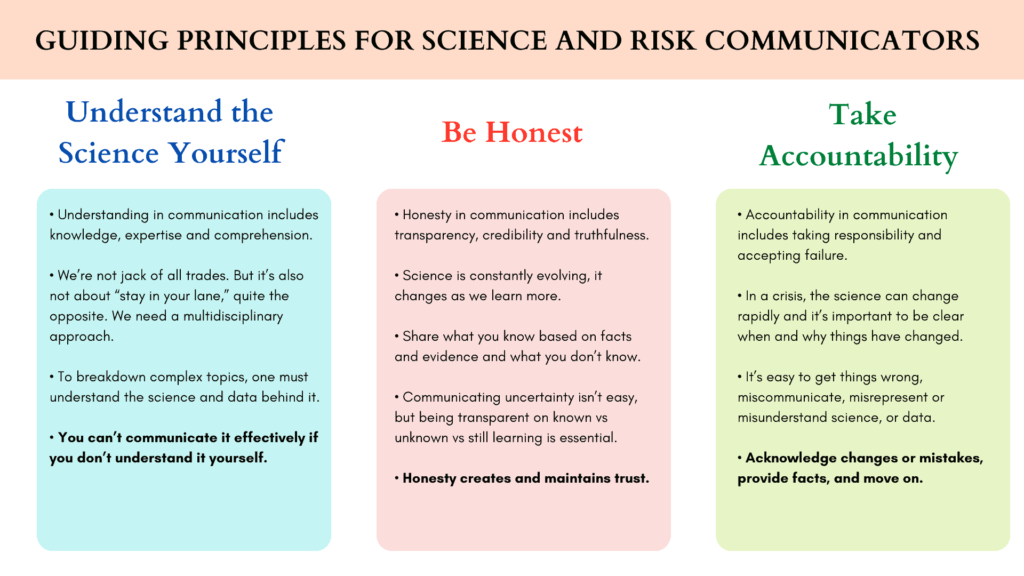
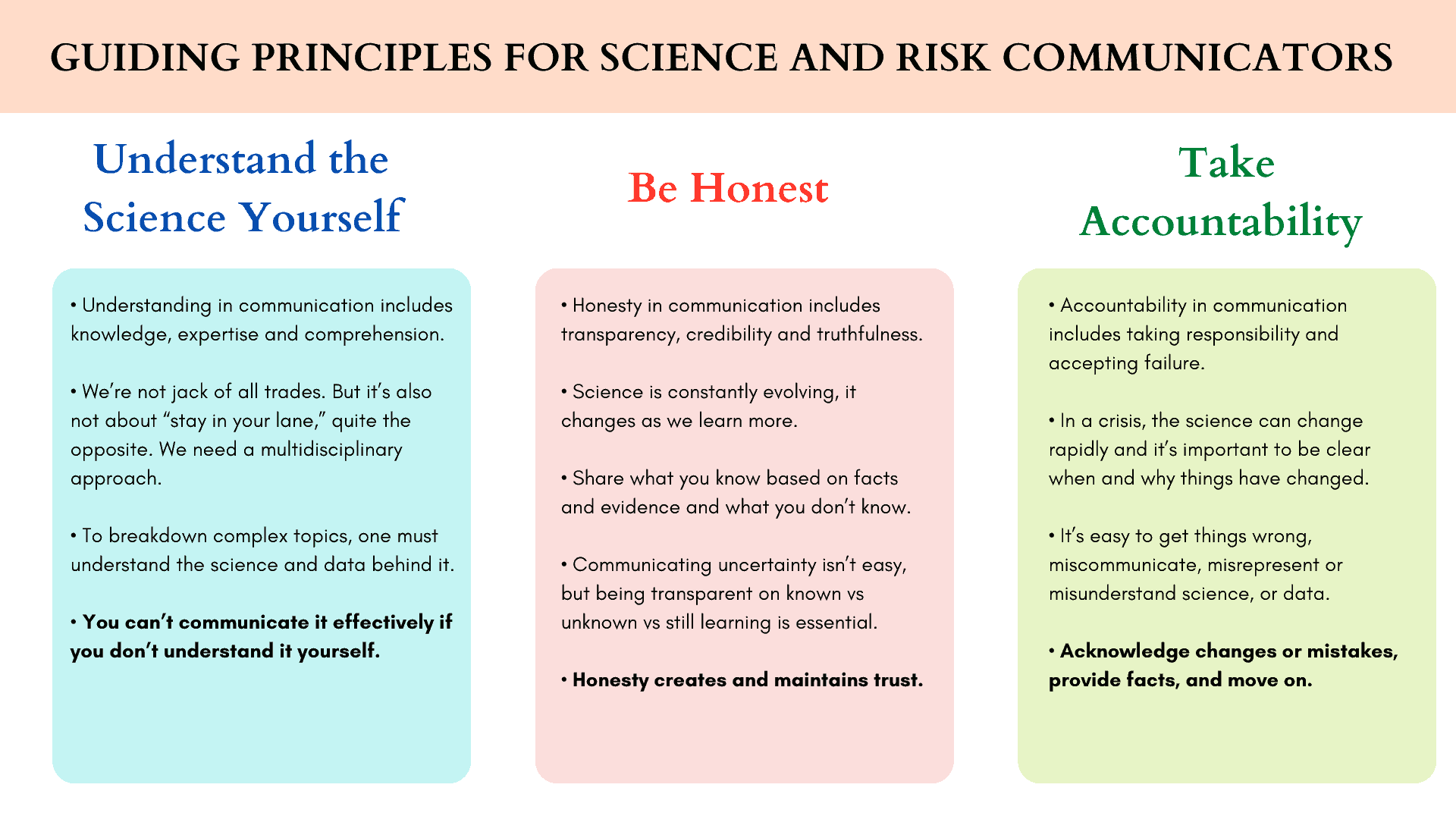
“Guiding Principles for Science and Risk Communicators,” published at the Belfer Center, proposes three guiding principles that every risk and science journalist—including those who may be new to the beat — should follow to help ensure they’re sharing factual, evidence-based, science-based information. They are:
- Understand the science yourself
- Be honest
- Take accountability
The principles also aim to help journalists address conspiracy theories, unverified rumors, misinformation and disinformation. As they note, the tsunami of misinformation and disinformation during the concurrent COVID-19 “infodemic” means every journalist has a responsibility to push back against false or misleading statements every chance they get.
Two of their three guiding principles are very similar to key parts of the Society of Professional Journalists’ code of ethics: “be honest” and “take accountability.” The other, “understand the science yourself,” can be the most challenging for those without the training or experience to report on complex medical and epidemiological concepts. Yet, investing the time to learn the science is essential for credible, accurate, reliable reporting. The pair’s helpful infographic (available at the site) lays out the key points for each principle.