
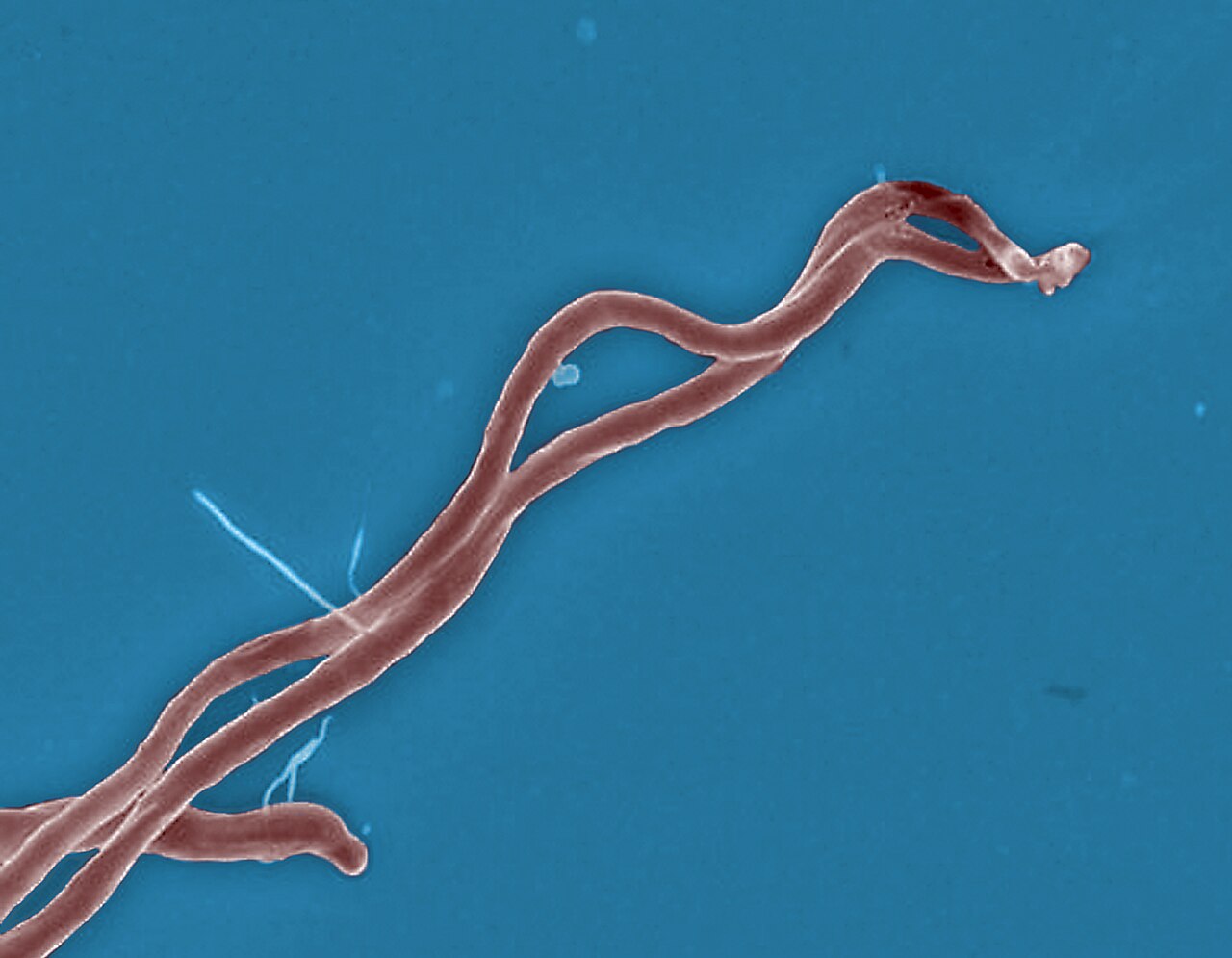
When biologist Nick Ogden moved to Quebec in 2002, there were two known populations of the black-legged tick (Ixodes scapularis) — the most important Lyme disease spreader — in Canada, on the north shore of Lake Erie.
Ogden ran computer models to predict other places in Canada that the tick could be setting up shop. He began to monitor these locations for new tick populations, including a park near his home that he visits every weekend. He found the first tick there in 2009. Now, there are so many that he’s been able to use this location in research on ticks in the wild.
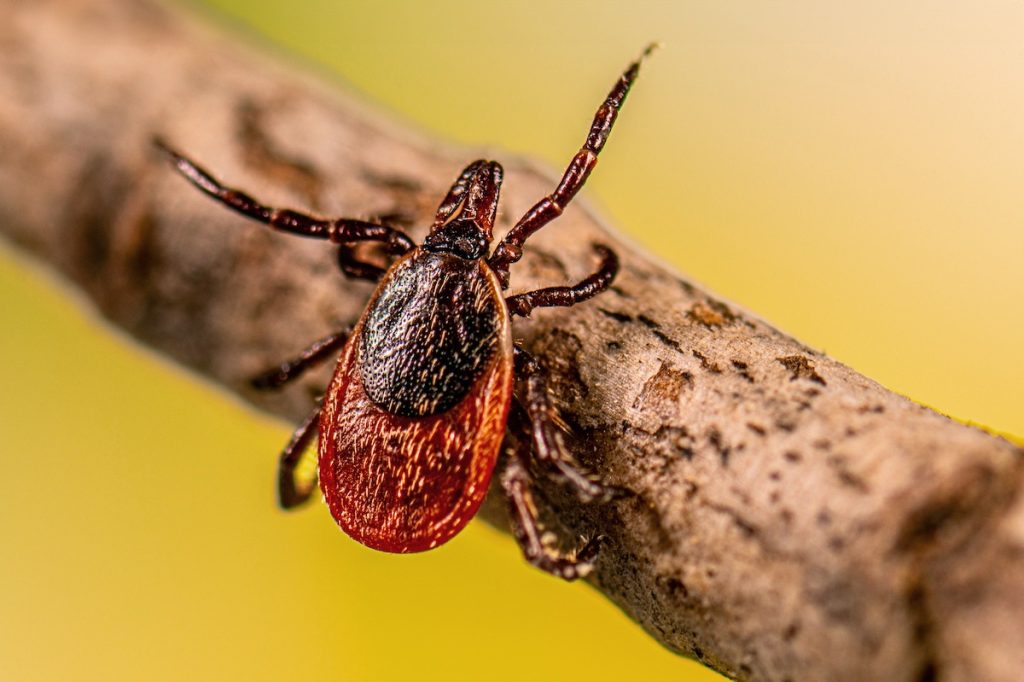
Over the past two decades, Ogden and his collaborators at the Public Health Agency of Canada have shown that black-legged ticks have been and continue to be spreading across Canada. “We are reasonably confident that this spread has been driven by climate change,” Ogden says. His work has shown that warming temperatures best explain the patterns of spread in Canada.
Over his career, Ogden has witnessed Lyme disease in Canada change from a theoretical emergence to an actual one in real life. Numbers of ticks and Lyme cases have shot upward during that time. Between 2009 and 2019, reported cases of Lyme disease in Canada grew from 144 to 2,634, but case numbers are severely undercounted, with perhaps even more than 90% of cases missed (although progress is being made on this front). “Lyme disease continues to emerge in Canada, and reported cases are increasing exponentially at present,” Ogden says.
The geographic patterns of Lyme disease on every continent are changing because of climate change. Since 1990, the range of blacklegged ticks (both species) has more than doubled in the United States, and Lyme disease cases have more than tripled over 20 years. Today, an estimated 476,000 people in the United States are diagnosed and treated for Lyme disease each year — the most common disease spread by arthropods in North America. As warming temperatures expand the ticks’ habitats and lengthen their active seasons, Lyme is becoming one of the most pervasive — and misunderstood — climate-driven health risks in the country. Yet news coverage rarely connects these dots. Framing Lyme as a climate story is crucial for public awareness, policy action, and understanding how ecological shifts are rewriting the boundaries of disease.
A Lyme disease history primer
Lyme disease and ticks have existed in North America for thousands and thousands of years. But only in the 20th century did Lyme disease become an epidemic. The bacteria may have almost gone extinct with deer following overhunting for the fur trade and deforestation during European settlement, with remnant populations left in northern Wisconsin and on Long Island — the latter six miles from Lyme, Connecticut, where Lyme disease was (re)discovered in the 1970s.
The bacteria that cause Lyme only began resurging after deer were reintroduced throughout their range in the early 20th century to improve hunting. The ranges of the bacteria species that cause Lyme disease are still expanding as deer, tick, and other wildlife host populations have expanded in the 20th and 21st centuries. Climate change is exacerbating that expansion.
Ticks in a warming world
The biggest reason climate change is good for ticks, Ogden says, is because warm weather is good for tick survival and reproduction. Ticks live for two or three years, and so warm weather helps them get to the finish line of becoming an adult faster. Eggs hatch in the spring, and then the tiny six-legged larvae feed until they grow into eight-legged nymphs, which in turn feed until they become adults (see the figure below). “The life cycle is getting shorter and shorter and shorter, and so the ticks are more abundant,” Ogden says. When Canada had shorter growing seasons, ticks couldn’t maintain a life cycle there, because they didn’t survive to become an eight-legged adult tick.

The more ticks there are, the more opportunities for the Borrelia bacteria to transmit through the population. So, then there’s also more Lyme disease. And with more transmission, the bacteria have more opportunities to evolve. “The bacteria can become more and more adapted to particular host species — chipmunks, white-footed mice, deer, redback voles,” says Ogden, “and that may have consequences for diagnostics and for the kind of disease that is produced. We know that some strains of Borrelia burgdorferi may not infect people. They may not go beyond the initial red rash, the erythema stage of infection. Others more frequently do develop into Lyme disease. So, one of the things that we are interested in looking at is: What are the ecological origins of that diversity? And what are the consequences for people and for diagnostics?” Canadian strains that Ogden has used in experiments in mice have sometimes behaved differently than expected, he says, suggesting that the strains are adapted to a different species of host.
There are places that the changing climate is making less favorable for ticks, too, but they are the exception rather than the rule. “Some areas are becoming drier and hotter, which might not be good for ticks — particularly, for example, in the south of France,” says Ogden. “But here in northern North America, in all our studies, the factor is temperature.” The black-legged ticks in North America live in woodlands, which hold water and humidity well, so they aren’t as vulnerable to drying out. When Ogden started his research, disease ecologists thought cold winters might be the limiting factor to ticks’ northern expansion, but as long as ticks have a thick duff layer to overwinter in, they can survive in very cold temperatures. It’s the warm temperatures in the spring through fall that are causing their populations to skyrocket.
Brief changes in temperature and precipitation don’t have a huge effect on tick numbers because of their multiyear life cycles. Mosquito populations, by contrast, can skyrocket or crash based on variations in weather, but that’s because they can reproduce multiple times in a season. Ticks do not do that. “It’s not like their numbers can suddenly become very high,” says Ogden. It’s the slow burn of climate change that does that. A year with fewer tick bites usually has more to do with tick and human behavior than tick population numbers. During dry weather, ticks have to return to the soil to rehydrate, and they won’t be out seeking new hosts as much. If the weather is very cold, wet, or hot, people tend to go outside less, and in turn get bitten less.
Covering the climate angle
Almost every region has someone who is monitoring tick-borne diseases over time, as well as someone who is studying tick ecology. Interview them when you cover tick-borne diseases like Lyme, and ask them about climate change. The emerging research area of attribution science, which calculates how much climate change has affected disastrous weather events or disease outbreaks, is worth watching. Most attribution science focuses on weather events, but the need for focusing on health burdens is emerging. Most pathogenic diseases can be exacerbated by climate change. Another emerging area of research regards prevention, which I discuss in a related blog post.