A novel treatment for Down syndrome regression disorder
Down Syndrome Regression Disorder, a debilitating condition affecting young people with Down Syndrome, went largely unstudied for decades. Now, clinical trials for an effective treatment are ahead of schedule.
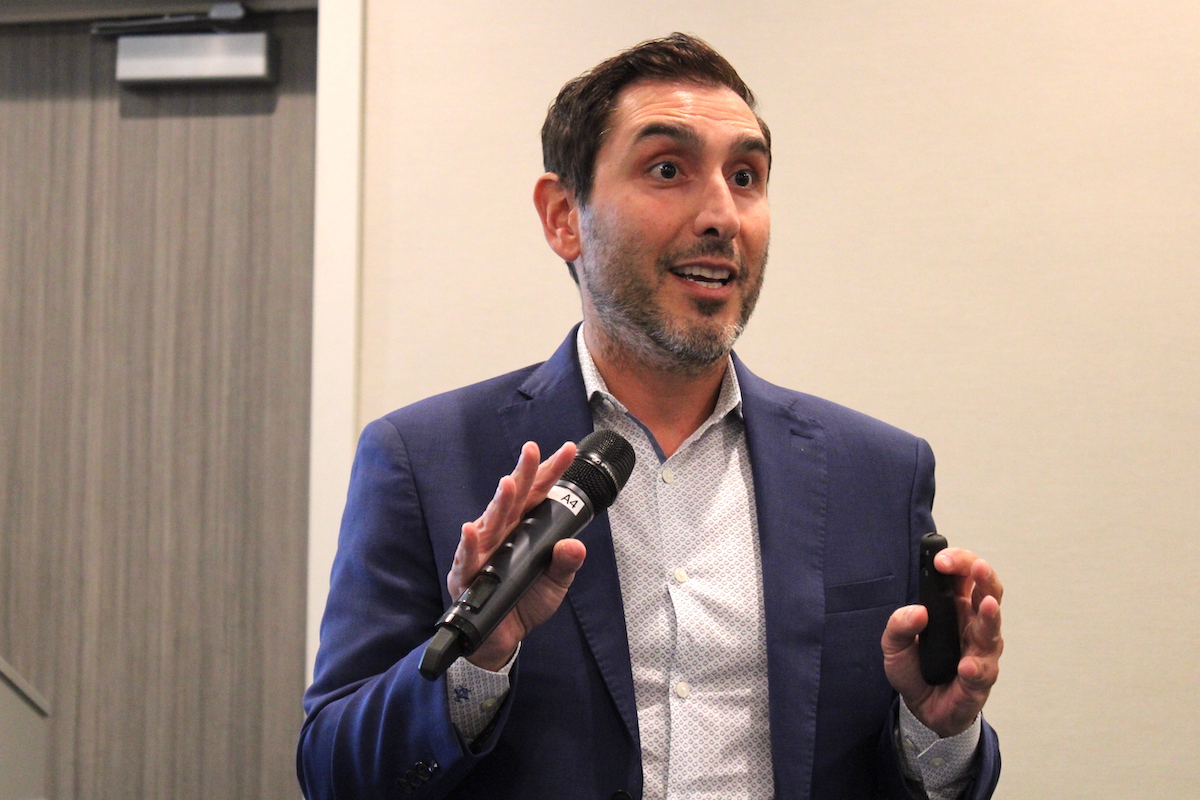
For decades, families were given limited answers about why their loved one with Down syndrome suddenly stopped speaking, moving, or sleeping. While the symptoms would warrant intensive care for neurotypical patients, Down Syndrome Regression Disorder was often seen as psychological and part of Down syndrome, said Jonathan Santoro, a pediatric neurologist at Children’s Hospital Los Angeles during his lightning talk at HJ25.
“That was not sufficient for us,” said Santoro. “So we said, ‘Let’s just do the testing we would do in everybody else.’”
After running those tests, Santoro and his colleagues found that Down Syndrome Regression Disorder patient’s cerebral spinal fluid looked dramatically similar to patients with multiple sclerosis. Santoro’s team started exploring the possibility that the symptoms are related to an autoimmune disease and started treating patients with immunotherapy.
“We went from discovery of disease to [a]clinical trial in two and a half years,” Santoro said.
While the treatment is still being studied, patients have seen dramatic recoveries, Santoro said.
He showed conference participants a video of a young woman with Down Syndrome Regression Disorder touching her hand to her mouth repeatedly. From the second she woke up, that’s all she could do, Santoro said. Another video showed the same patient smiling and dancing to Christmas music with her sister after immunotherapy treatment.
The clinical trial is funded by the National Institutes for Health and is set to finish two years ahead of schedule. But the Trump Administration has recently fired NIH researchers, cancelled grants and proposed cutting the millions from the agency’s budget.
”Rare disease, in general, is usually the first one to get the cut, and I think that that’s the primary concern right now,” he said.
The project has not lost any funding so far, and legislators continue to advocate on Capitol Hill for the importance of finding a treatment for Down Syndrome Regression Disorder. If they do face cuts, Santoro worries it will take years longer to finish their research.
“I don’t want to take my foot off the accelerator,” Santoro said.
Addie Costello is WPR’s Mike Simonson Memorial Investigative Reporting Fellow embedded in the newsroom of Wisconsin Watch.