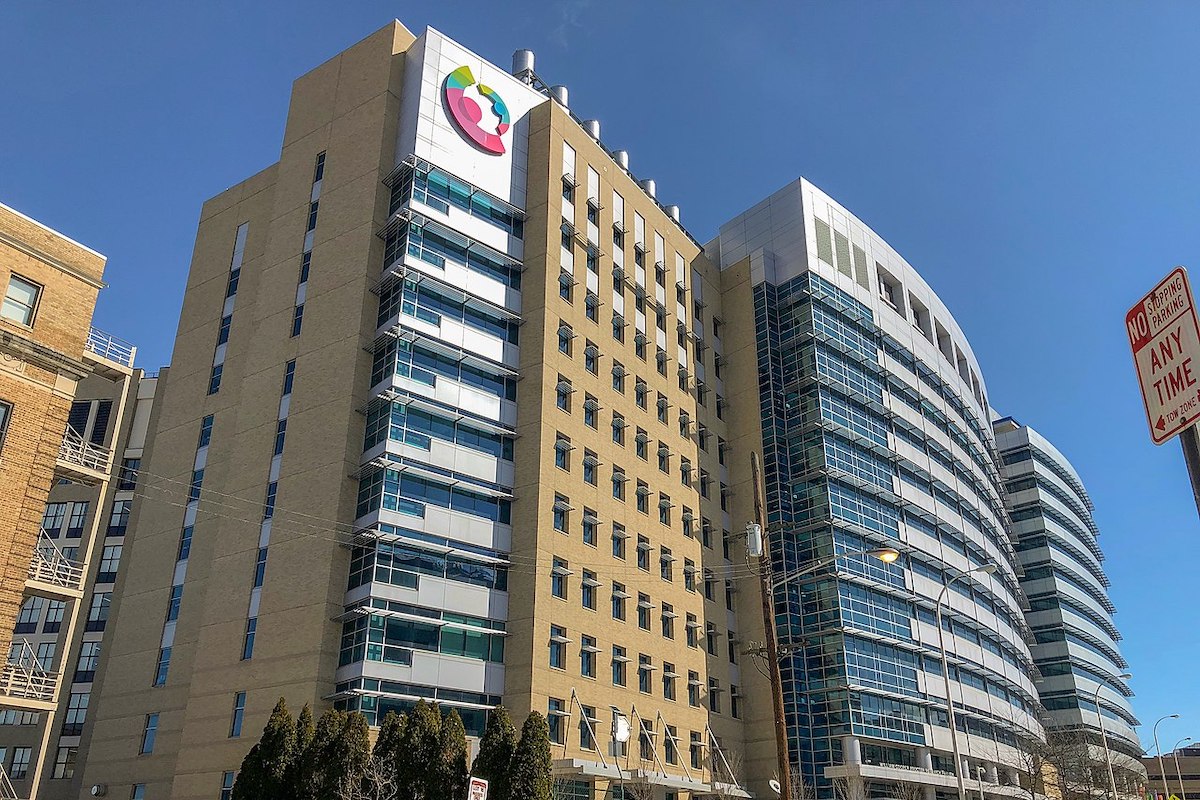
Imagine you could help hospitals improve patient safety and boost income simply by smoothing out patient flow. That’s the idea behind the not-for-profit Institute for Healthcare Optimization (IHO) in Bedford, Mass.
Now, imagine that after more than two decades of explaining how hospitals in the United States and around the world could improve operations while solving their biggest problems (including low patient safety scores, operating room and emergency department overcrowding, nursing shortages and poor financial results) that few hospital administrators would make the changes required to achieve these results.
Since 2000, IHO’s founder, president and CEO, Eugene Litvak, Ph.D., has been preaching to hospital administrators how to deliver more efficient and effective care to patients.
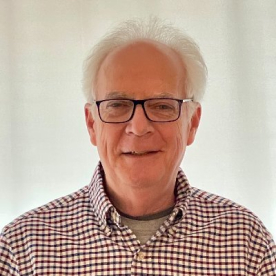
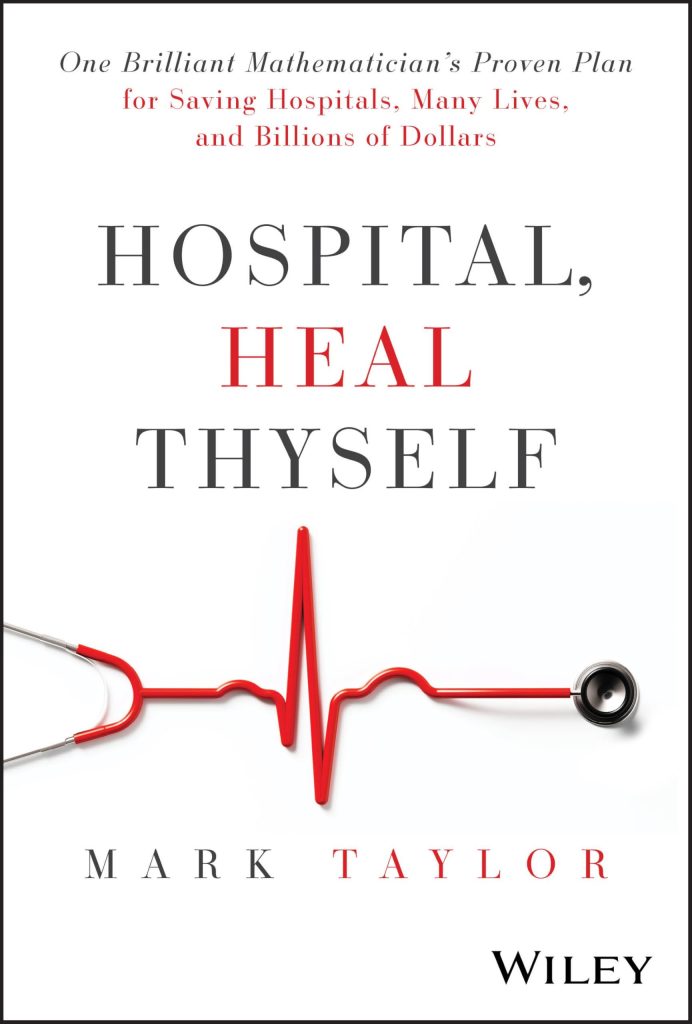
Over those 25 years, the few hospitals and health systems that have adopted IHO’s methods have had excellent results, according to an award-winning new book, “Hospital, Heal Thyself” (Wiley). The author is Mark Taylor, a health care journalist and AHCJ member who has covered Litvak and IHO for 18 years.
Saving lives and money
Published Nov. 5, “Hospital, Heal Thyself” is timely for the new administration in Washington, D.C., because more efficient hospital scheduling could cut U.S. health care costs by $200 billion annually, according to an opinion column that Litvak and a co-author published in The Wall Street Journal in December, “A Simple Way to Save Lives and Money.”
A Ukrainian-born mathematician who earned a doctorate in Moscow in operations management, Litvak, his wife, mother and father emigrated from the USSR in 1988. A newly arrived immigrant, he worked as a night manager at a small inn before taking a position as a postdoctoral fellow at the Harvard School of Public Health, Taylor wrote.
At HSPH, Litvak discovered ways to improve testing for HIV. Later, he consulted at the Massachusetts General Hospital where he found operating rooms and emergency departments so crowded that they drove up costs while decreasing the quality and efficiency of care, Taylor explained. Similar problems affect many U.S. hospitals.
As a mathematician, Litvak knew how to improve patient flow using methods that have been tested and proven to work around the world, Taylor wrote. Offering benefits beyond boosting hospital efficiency and profit margins, his methods allow hospitals to treat more patients safely and effectively, he added.
Little incentive to improve
So, why don’t more hospitals adopt Litvak’s methods? “The problem is that unlike most other industries, health care uses a cost-plus reimbursement model, meaning that health care institutions receive payments greater than their expenses,” Litvak wrote in the Wall Street Journal. “These institutions lack motivation to focus on cost-effectiveness, and they even resist interventions that challenge the status quo of hospital culture being provider-centered rather than patient-centered.”
The provider-centric nature of hospitals allows physicians to obstruct attempts to improve patient flow even if those changes would make patients safer, enhance physicians’ and other staff working conditions and increase hospital revenue, Taylor wrote. Smoother patient flow would mean better outcomes for patients and allow physicians and staff more predictable schedules, he added.
Rather than embracing these proven strategies, physicians, many of whom are unaware of how smoothing would benefit patients and providers alike, sometimes push back when administrators seek to move patients from the emergency room and surgery to other hospital wards, Taylor added.

Two inspiring fellowships
In the mid 1990s, Taylor spent a year researching community health centers on a Kaiser fellowship and then a second year as a Kaiser Media Fellow studying the U.S. health care system. “Those experiences inspired me and showed that even a local newspaper health and medical writer of modest talent could stumble on a great story that had been overlooked,” he added.
Taylor interviewed Litvak multiple times over more than a dozen years for articles he wrote as a freelancer for The Philadelphia Inquirer, The Chicago Tribune and other publications. “At the time, I had no intention of it turning into a book, but each time he called or emailed me, he brought my attention to a new study about his work,” he said.
From this growing body of research, Taylor saw hospital operations improve through reduced overcrowding, improved nurse retention and lower physician burnout and stress. Plus, he noticed that Litvak was drawing attention from other notable physicians seeking to improve hospital care such as Peter Pronovost, M.D., Ph.D., a patient-safety expert, and Donald M. Berwick, M.D., who founded the Institute for Healthcare Improvement in Cambridge, Mass.
In 2017, Taylor decided to write the book highlighting Litvak’s approach to address hospital overcrowding. “I had this gnawing idea that a book about Litvak and IHO was needed to persuade health care providers, hospitals and policymakers to change their practices, save lives and money and improve the health system,” Taylor said.
After doing more research into hospital operations and conducting dozens of interviews, Taylor produced a rough draft three years later. In 2020 and 2021, he sent the manuscript to multiple agents and publishers who recommended changes, including a restructuring and several rewrites. When two publishers before Wiley expressed interest, Taylor did more edits.
Last year, he found Wiley, a publisher in Hoboken, N.J., that has relationships with universities and foreign publishers, he said.
Big success stories
In the book, Taylor cites several examples of health care leaders who consulted with Litvak and achieved notable success, such as the Cincinnati Children’s Hospital. Using Litvak’s methods, the hospital produced over $100 million in annual savings and saved another $100 million when it canceled a planned patient tower that was unneeded after the intervention. At the same time, Cincinnati Children’s improved patient safety and quality of care, he wrote.
Another success was in New Orleans at the St. Thomas Community Health Center, a federally qualified health center that provides care to economically and medically vulnerable patients regardless of insurance or ability to pay. After St. Thomas adopted Litvak’s methods in 2014, the number of physicians, nurse practitioners and physician assistants more than doubled from 12 to 26, Taylor wrote. Also, revenue rose from about $2 million annually to almost $16 million, meaning the staff could care for still more patients, he added.
Despite a lack of interest among most hospital administrators, Litvak continues his work because, as Taylor said, “he’s aggravatingly persistent.” That tenacity was born of many failures, including spending 10 frustrating years trying to leave the USSR with his family but failing when the government refused to deliver the required exit visas. “He learned you don’t get anything done by giving up,” Taylor said. “You just have to keep at it, and that’s what he’s done with his work with hospitals.”
In January, Taylor’s perseverance was rewarded when the Chicago Writers Association named “Hospital, Heal Thyself” the Indie Non-Fiction 2024 book of the year.
Resources
- “Emergency department boarding: Covering the hidden horror story,” Mary Chris Jaklevic, AHCJ Covering Health, Nov. 22, 2024
- “Want to Fix ED Boarding? Try ‘Surgical Smoothing,’ Expert Says,” Joyce Frieden, MedPage Today, Oct. 23, 2024
- “Emergency Department Crowding: The Canary in the Health Care System,” NEJM Catalyst, Gabor D, Kelen and others, NEJM Catalyst, Sept. 28, 2021