Reporting on alcohol use and alcohol use disorder: Data, disparities, and responsible journalism
Alcohol misuse accounts for more than 4 million emergency department visits and nearly 2 million hospitalizations every year.
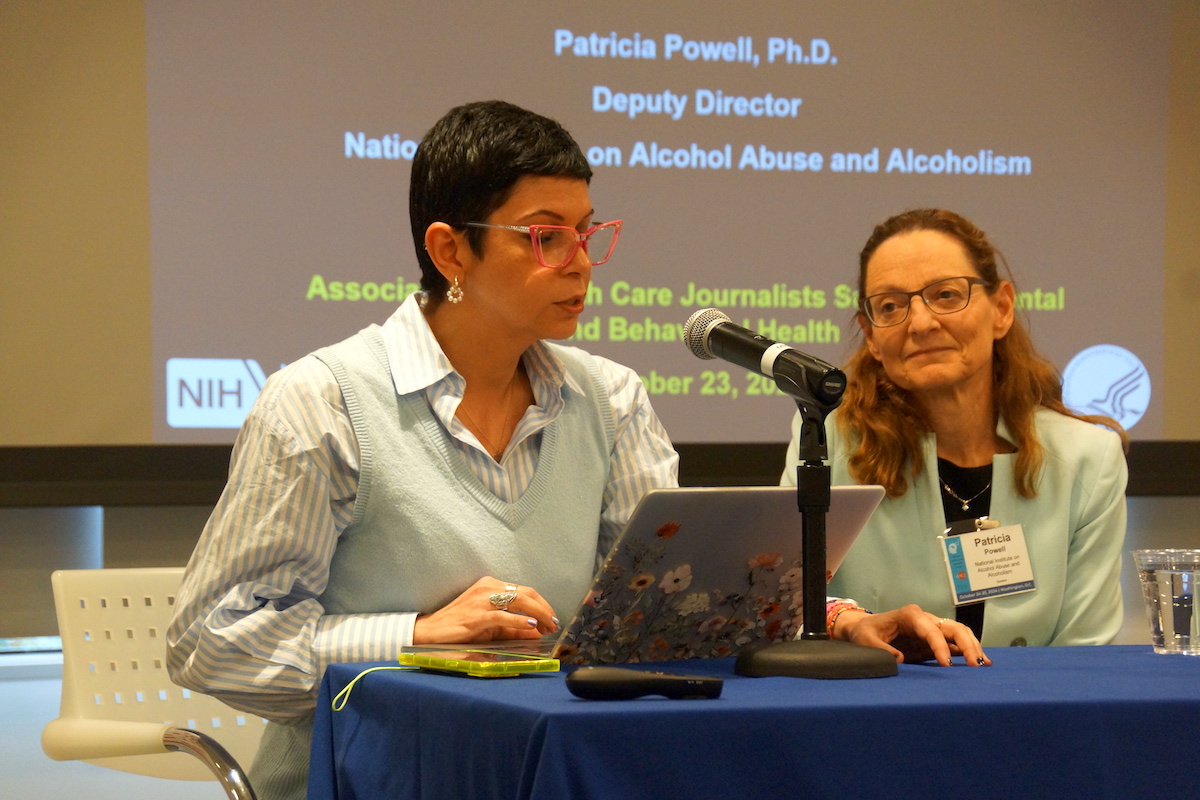
Patricia Powell, deputy director of the federal National Institute on Alcohol Abuse and Alcoholism, shared that startling data during a session at AHCJ’s October 2024 summit on mental and behavioral health, Powell and other panelists highlighted the need for journalists to cover alcohol misuse and alcohol use disorder the way they’ve covered the opioid crisis. She also noted that drinking is associated with more than 200 diseases, including cancer.
“A survey by the National Cancer Institute found that about 70% of people are unaware that alcohol can cause cancer, and about 10% actually believed that wine was protective,” Powell said, noting that alcohol is the third largest contributor to cancer for women and the fourth largest for men.
Panelist Nasim Maleki, a Harvard Medical School assistant professor of psychiatry, said alcohol is especially scary because it can cross into cells — and even the blood-brain barrier.
“A lot of times when people think about the risks and harms of alcohol, their mind immediately goes to alcohol use disorder,” Maleki said. But since alcohol is a toxin and a carcinogen, “it could still be harmful for someone who has not developed unhealthy habits in terms of using alcohol.”
Harms from alcohol use especially impact people at lower income levels, Maleki added, since they have less access to good nutrition and health care. “If somebody is experiencing harm due to excessive use of alcohol, if they don’t have access to health care, they cannot really deal with that and get help,” she said.
Maleki also noted the racial, ethnic and regional disparities of the harms of alcohol. Native Americans and Alaska Natives experienced the highest death rate from alcohol between 1999 and 2020, with deaths up by 14% yearly across most groups since 2018.
A women’s health issue
In all age groups, the percentage of women who drink is approaching or has surpassed the percent of men who drink, Powell said. Adolescent girls are more motivated to drink to cope with negative emotions than boys, while males are more motivated to drink as a result of impulsivity and sensation seeking.
Studies suggest women are more likely than men to experience a variety of alcohol-related harms at comparable doses, including hangovers, blackouts, liver disease, brain atrophy and cardiomyopathy and cognitive deficits.
Powell also noted the larger increases in alcohol-related emergency department visits, hospitalizations and death for women than men over the past 20 years.
“Interestingly, women are less likely to receive a brief intervention for problematic alcohol use and less likely to receive treatment for alcohol use disorder when it’s identified,” she said.
The increase in the number of women who are drinking is also driving an increase in adults ages 65 and older who drink regularly, Powell added. This is troubling because older adults are “more sensitive to the sedative effects of alcohol, as well as the effects of alcohol and reaction time, balance, attention and driving skills.”
“They take more medications that can interact with alcohol, and they have an increased risk of injury from falls, which is compounded by alcohol,” Powell continued.
Writing about alcohol use disorder
Podcast producer and investigative journalist Jordan Gass-Pooré encouraged journalists to consider their relationship with alcohol and the language they use. Gass-Pooré has written several personal reported essays about her family’s history with alcohol use disorder.
Gass-Pooré admitted that she used to tell people to “think of it like you’re talking to someone at a bar” when interviewing people for a podcast. She also criticized the use of terms and expressions like “functioning alcoholic” or saying that somebody “fell off the wagon.”
Using non-stigmatizing language when reporting on alcohol is critical, Powell said. For example,
use “alcohol use disorder” instead of “alcohol abuse;” “alcohol misuse” instead of “alcohol abuse;” and person-first language like “person with alcohol use disorder” instead of “alcoholic.” As always, asking an interview subject how they’d like to be identified takes top priority.