

Members in AHCJ’s professional category can vote for the association board of directors and will receive a link via email to cast their ballot on Monday, July 22. Voting will be open July 22 to Aug. 5 at 5 p.m. CST.
If you are a professional category member and have not received your ballot, please check your junk/spam folders for an email from “info@healthjournalism.org.”
If you still are unable to locate your ballot, please contact Director of Engagement Andrea Waner at andrea@healthjournalism.org.
Each year, members in AHCJ’s professional category elect members for the association board of directors.
(Associate and allied members cannot run for election or cast ballots.)
Six of the 12 director positions come up for election each year for two-year terms, although incumbent board members are allowed to run for re-election. This year, there are eight candidates for the six positions.
Service on the board is a serious commitment. It has commensurate rewards (but no pay). In addition to participating in two board meetings each year and occasional conference calls, board members are responsible for making decisions about association policies and statements, as well as working with the executive director on training projects, financial matters and other efforts to achieve AHCJ’s strategic goals. Board meetings are normally held in person but can be held online if necessary.
Board members take on committee duties and contribute to association activities, including fundraising, advocacy, helping plan sessions at training events, membership outreach and writing/editing contributions. They may be asked to play a role in other association projects that arise. They also are asked to show their support through an annual donation to the Center for Excellence in Health Care Journalism, although there is no minimum required.
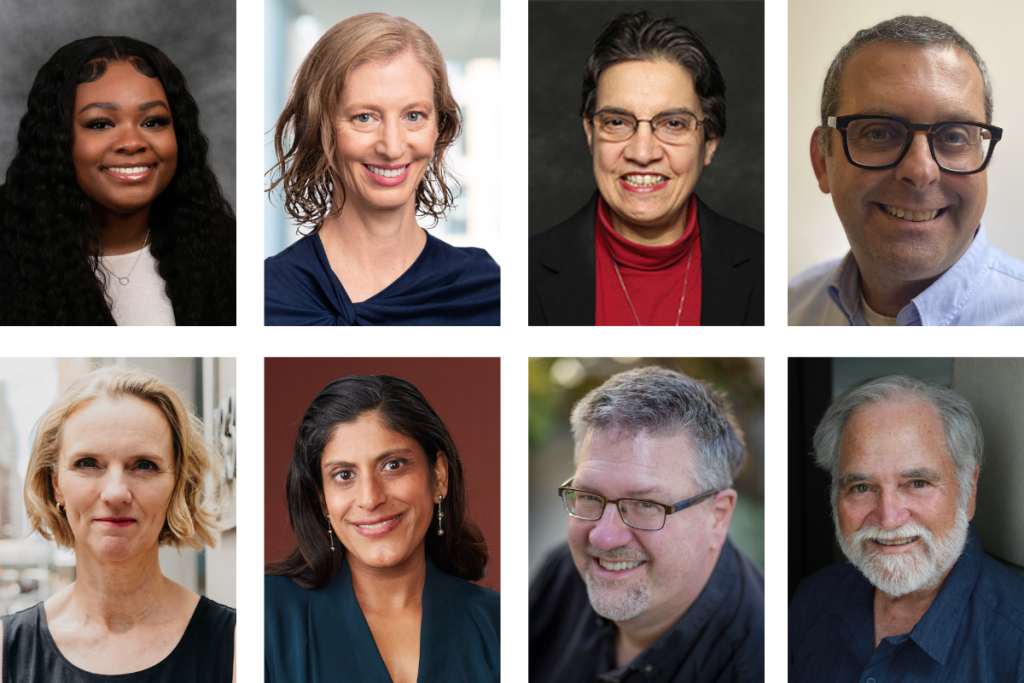
Below are the AHCJ professional members who have declared their board candidacy, listed in alphabetical order.
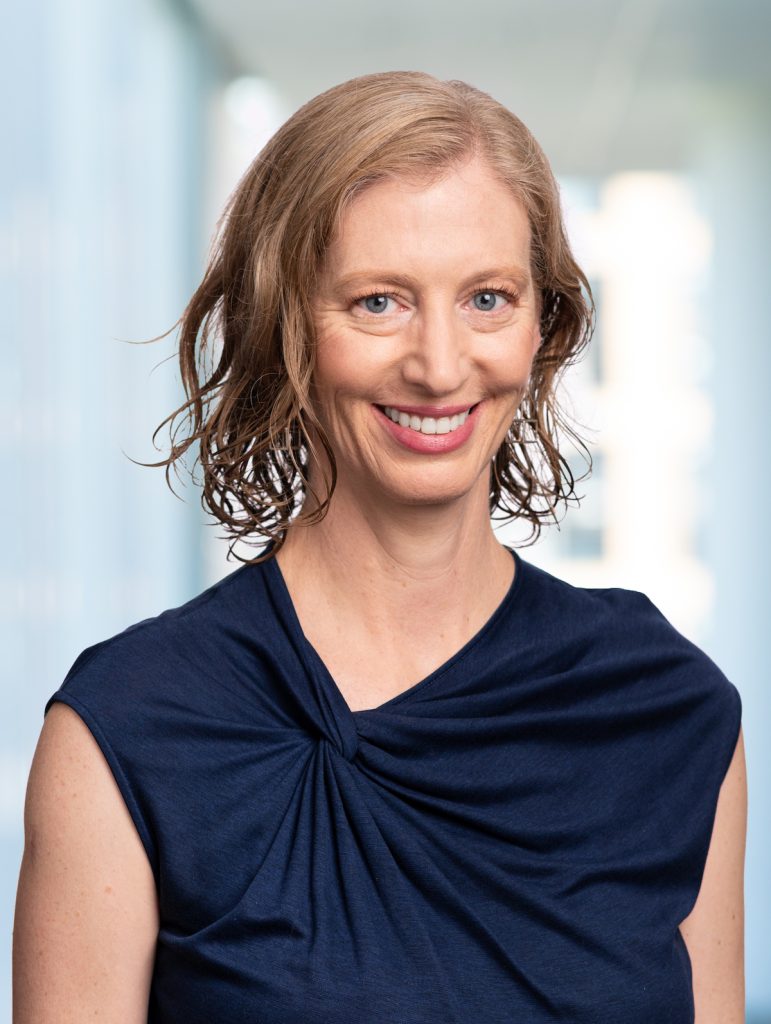
Carrie Feibel
Senior editor, NPR
In my next term on the AHCJ board, I plan to take on some new projects involving the Finance Committee, to help our organization grow and adapt to the new challenges in health care, politics and nonprofit work.
Until recently I was chair of the Contest Committee, and I’m proud to be able to say we accomplished all of the goals I had when I began that work in 2018: We started a Student Category, created the Audio Reporting Category, and completed a clarifying overhaul of our confusing contest rules. Our most recent achievement was updating the contest metric for “large” and “small” journalistic outlets, which leveled the competitive playing field and ensured the contest remains relevant as media platforms evolve.
I’ve now completely handed over the leadership reins to the new chair, fellow board member Christine Herman. I’ll continue to serve on and advise the Contest Committee, but will join Finance to focus more on our organization’s budget, and an update of our fundraising and conference policies.
Politically and fiscally, it’s a challenging time for nonprofits — and journalism. AHCJ is fortunate to now have our first staff development officer. The Finance Committee will be working closely with her. One item on our to-do list involves re-examining policies on who can donate to AHCJ, and who can support and have a presence (often, a table) at our conferences. We want to update the language on our website and materials to make it more welcoming to potential funders, while still holding the line on our ideals of transparency and avoiding conflicts of interest with the health industry.
Foundations remain invested in issues such as accountability and misinformation, but are also keeping a wary eye on the election, which could bring potential changes to nonprofit governance and philanthropy. The Finance Committee, and the entire board, will be key to supporting AHCJ during these transitions.
As a health editor at NPR, I’ve seen first-hand how journalism and nonprofits have been challenged by the workload of the pandemic, unforeseen drops in revenue, the nature of remote work, and the experience of being politically scrutinized. Those are all challenges AHCJ — and its various members — has faced or could potentially face. I’d like to continue to serve on the board as we come together to meet any such challenges — and seek new opportunities along the way.
Service with AHCJ
- Board member: 2018-present.
- Contest Committee (2018-present); Chair (2020-2023).
- AHCJ panel organizer and moderator (multiple years).

Jonathan Rockoff
Health business editor and deputy coverage chief, Health & Science, at The Wall Street Journal
I’m the health business editor at the Wall Street Journal, and I also help oversee all of the newspaper’s healthcare and medicine coverage. As an AHCJ board member, I’d seek to:
- Further our efforts to provide journalists with the resources and support to do accurate, reliable healthcare journalism. We need to make sure we are giving members — young and experienced, full-time and freelance, part of big news organizations and small — everything they need to responsibly and thoughtfully report on healthcare. Our website has tremendous tip sheets, webinars and other aids. I’m hoping, working with AHCJ’s great staff, we can feature that even more.
- Keep streamlining our annual awards. The contest committee has taken big steps towards simplifying the annual awards, such as dropping the requirement for a PDF submission and clarifying whether entries belong in the large or small divisions. (All hail to Carrie Feibel and Christine Herman for leading those efforts.) There’s more work to do. Right now, the contest committee is looking to clarify the trade and student categories.
- Deepen our capabilities to cover AI’s use in healthcare — and apply it, when appropriate, to our own reporting. Insurers, hospitals and others are already using AI, and news organizations are dipping their toes into the AI waters. AI will only become more widely used. It’s a powerful — and potentially dangerous — tool. We should aim to get ahead of it. AHCJ has great tip sheets and other resources on reporting on algorithms, for instance. On the board, I’d work with AHCJ and Center for Excellence in Journalism staff to build up our resources for covering AI in healthcare and for using AI in our own reporting. I’d also push for how-to sessions at our annual conference.
I’m running for the AHCJ board to give back to an organization that has played an important role in backstopping and rewarding my own journalism. As a health care reporter and editor for 18 years, I know how helpful AHCJ and the Center can be in understanding our complicated healthcare system and getting pointers for reporting on it.
A little about me: After starting out at the Providence Journal, I got into healthcare reporting while at the Baltimore Sun, covering the Food and Drug Administration, National Institutes of Health and federal health matters generally. Then I was a WSJ reporter covering pharmaceutical and biotech companies. Among my proudest achievements was winning a first-place award from AHCJ for stories my colleagues and I wrote that revealed how pharmaceutical companies bought drugs and then hiked the prices, and how Pfizer came up with the price for a breast-cancer drug. (The stories were a finalist for a Pulitzer Prize.) As an editor, I oversee a team that reports on drug companies, health insurers, hospitals, pharmacies and their intersection with the federal government.
On the board, I will help make sure AHCJ keeps fulfilling its mission, and provides the resources to students, freelancers and staff journalists to do the highest quality work.
Service with AHCJ
For several years I have served as a member of AHCJ’s contest committee, which oversees AHCJ’s annual awards, and am now co-chair of the committee. During my time on the committee, it has taken steps to simplify the organization of the awards and the process for applying for them. In prior years, I had served as an awards judge.
This year, I volunteered at AHCJ’s annual conference — you might have seen me in the hallway answering questions where to find a room and what the WiFi password was, and helping announce the awards winners.
Joyce Frieden
Washington editor, MedPage Today
I’m running for reelection to continue being a voice for right-to-know issues. As some of you may know, I challenged CDC director Mandy Cohen when she spoke at our annual conference this year, asking her why journalists weren’t hearing more from her and suggesting that she hold regular press conferences so reporters could question her on any subject.
I’m also co-chair of AHCJ’s Right-to-Know Committee, which jumped into the fray recently when the New England Journal of Medicine announced plans to stop giving pre-embargo access to reporters for trade publications. AHCJ’s quick, well-thought-out response — in the form of a letter from AHCJ president Felice Freyer — helped turn the tide and convince the journal’s editor to rescind the policy. I plan to continue working on right-to-know issues if I’m reelected to the board.
I also want to explore more ways to attract early-career journalists to our organization. At our last board meeting, Executive Director Kelsey Ryan noted that although a large portion of our membership is made up of veteran journalists with 21 or more years of experience, the majority of our members are mid-career journalists — a shift from prior years when the majority were veterans.
While this is a positive development, I would like to do more to attract those who are just starting out in journalism, as well as those reporters for whom health care is just one part of their beat. I want to make sure they know all the amazing benefits that AHCJ can offer them, including networking, job opportunities, training, and mentorship. The board is exploring ways to get the word out about AHCJ, including through collaboration with other journalism organizations like the National Association of Black Journalists, the National Association of Hispanic Journalists, and the Asian American Journalists Association. This will also hopefully increase the diversity of our membership, which is another goal of mine.
Finally, I want to focus on helping our chapters to thrive. AHCJ’s webinars and Zoom events are of course quite valuable, but there’s no substitute for being able to meet with fellow journos in person to celebrate as well as commiserate. This is especially important for the large percentage of our members who are freelancers and may not have many such networking opportunities — as well as those working full-time in remote jobs. The board needs to make sure the chapters have the resources and support they need to put on events and keep the communication going.
Thank you to everyone who has supported me in the past; it has meant a great deal to be able to contribute to an organization that has given me so much. I respectfully ask again for your vote, and please know that I’m always interested in hearing your suggestions for ways to improve AHCJ.
Service with AHCJ
I am currently co-chair of AHCJ’s Right-to-Know Committee and also am a member of the Contest Committee. I have participated as an editor in the annual AHCJ PitchFest and helped organize events tor AHCJ’s D.C. chapter.
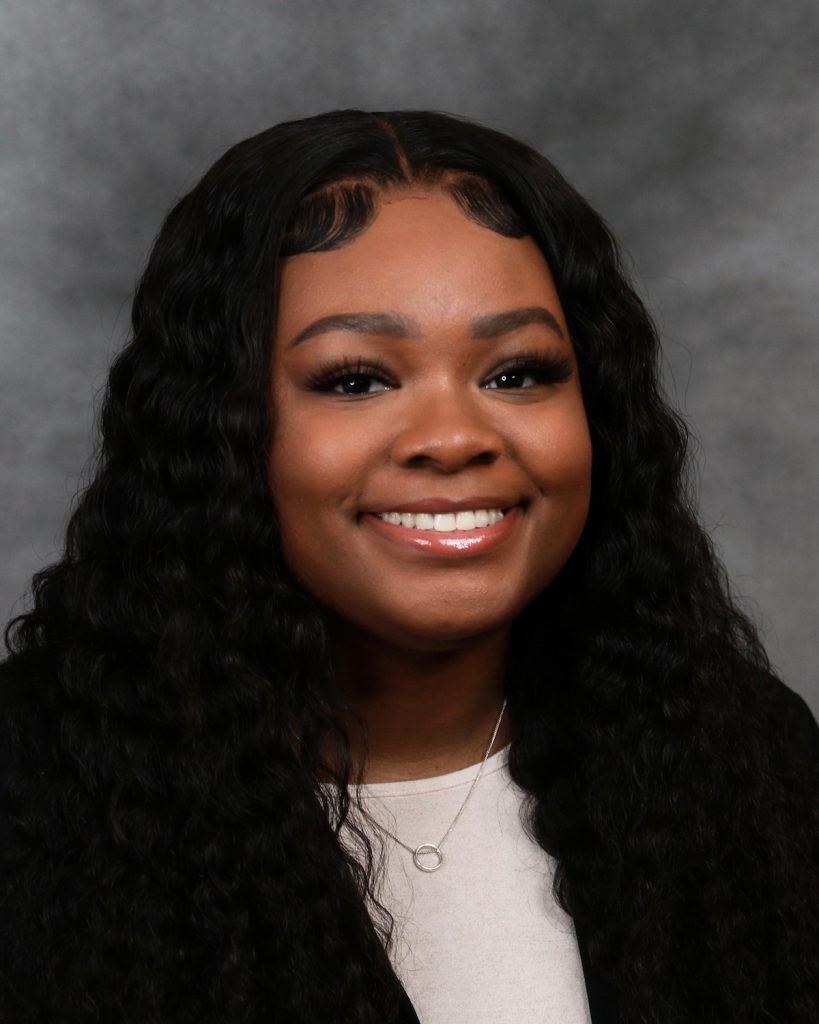
Keshondra Shipp
News producer, KIII-TEGNA
My first AHCJ conference back in 2022 was the start of a journey that will now always be a part of me. Ever since I was introduced to the organization by my former professor and AHCJ board member, Sabriya Rice, I have developed an interest and appreciation for health journalism. I’ve had the chance to cover a couple of different beats so far in my career, but the health beat is one that continuously pulls me in, which is why I am deciding to run for a spot on AHCJ’s board.
I received my bachelor’s degree in English from Georgia Southwestern State University, where I graduated during the COVID-19 pandemic. I obtained my master’s degree in journalism and mass communication from the University of Georgia, with a concentration in health journalism and a certificate in African American studies.
During my time at UGA, I worked as the health and sciences reporter for the Red & Black, using some of AHCJ’s connections and resources to write health-centered stories that were relevant to the students and community I served. These experiences ultimately led me to where I am today in my career, where I currently work as a news producer for KIII-TV in Corpus Christi, Texas.
As a board member, my goal to help make sure AHCJ is focused on moving health journalism forward across all platforms. As a young journalist currently working in broadcast news, I hope to bring this aspect to AHCJ and continue to develop a diverse community of journalists.
Since joining this organization, I have observed that there is a heavy representation for online mediums and freelancers in AHCJ, but not as much for broadcast coverage. I believe this organization has just as much to offer journalists working in television news as it does for freelancers and online reporters. I want to help bridge the gap between these mediums by advocating for ways to reach more television journalists, retaining the journalists and members we currently have, and expanding AHCJ fellowships beyond conference coverage while also continuing to promote the importance of health journalism.
It would be an absolute honor to serve on AHCJ’s board and turn these ideas into a reality to help advance us forward. I kindly ask for your vote and look forward to serving AHCJ in any way that I can. Thank you!
AHCJ Experience
- 2023 Academic Health Journalism Fellowship recipient.
- 2024 Texas Health Journalism Fellowship recipient.
- Mentee in AHCJ’s Mentorship Program since 2023.
Service with AHCJ
No prior service.
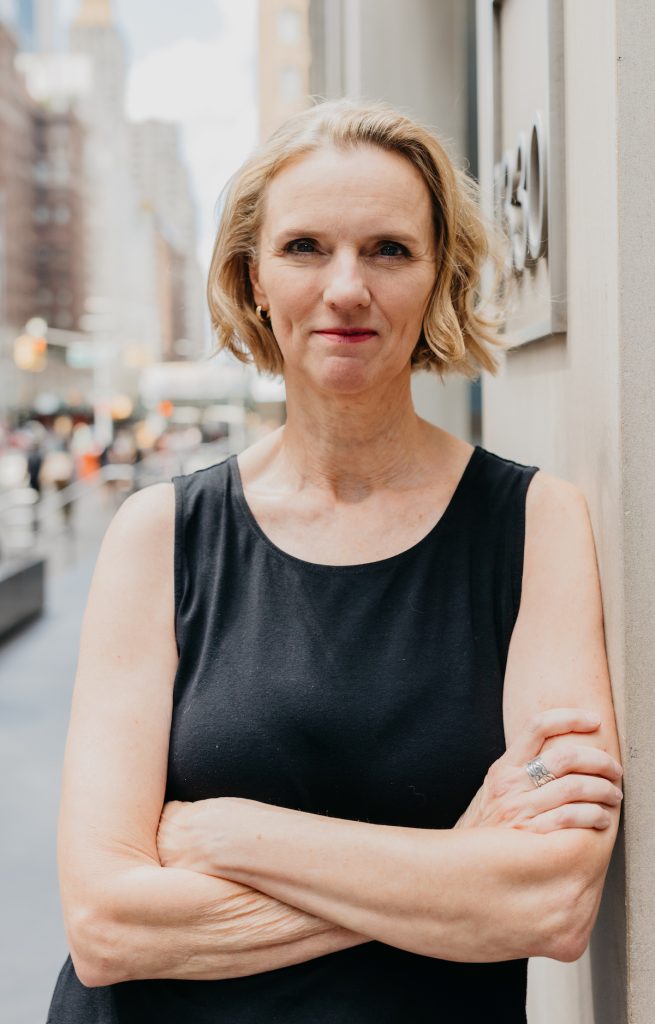
Laura Beil
Independent Journalist
I’m running for re-election to the board because this organization has meant so much to me and my career as a freelancer. I’ve been a member since 2008, when I attended my first conference, in Houston. I had recently quit my job at the Dallas Morning News, and was looking for the sense of camaraderie and support I had always felt in a newsroom.
I have volunteered at almost every recent health journalism conference, and currently serve as co-chair of the freelance committee. Our committee is a voice for issues that particularly affect freelancing — be it legislation that threatens our livelihood, the continual battle for fair pay and fair contracts, or the creation of community where you can learn and grow when your day-to-day work is mostly solitary.
That said, I also work for the broader mission of AHCJ. I am one of the few board members who has held long careers as staff writer and freelancer, and worked extensively in both print and audio. In 2018, I became one of only two freelancers to ever win the Victor Cohn Prize in its 21-year history.
I have gained so much from AHCJ, and would like to continue giving back.
Service with AHCJ
I currently serve as co-chair of the freelance committee. I have also volunteered at numerous conferences, including moderating and serving on panels, assisting with PitchFest and mentoring.
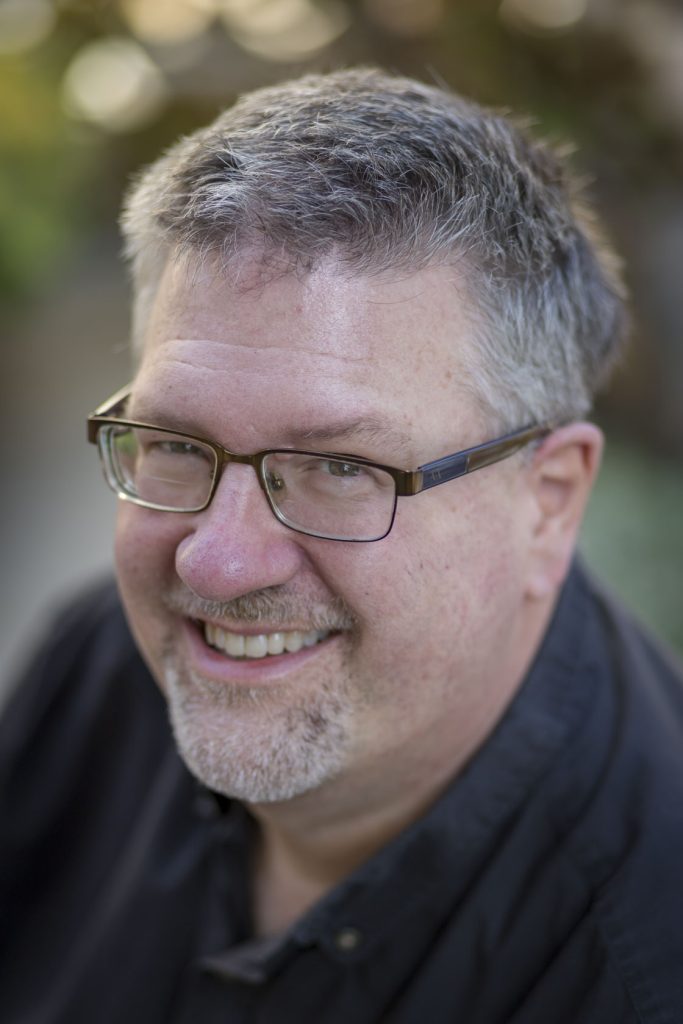
Randy Dotinga
Independent Journalist
I’ve been on the AHCJ board for two years, and I’m proud of the progress that the association is making toward being more responsive to the needs of our members. But there’s still more work to be done.
These will be my priorities if I’m re-elected to the board:
- Expand AHCJ resources for freelance journalists. Freelancers make up 40% of AHCJ’s professional members, but until recently we only had one freelancer on our 12-member board. Now, seven of our board members are freelancers. It’s vital that the board continue to represent all our members.
I’ve been pushing for AHCJ to offer more sessions for freelancers at our conferences and expand our wildly successful PitchFest beyond the annual conferences. PitchFest should be offered virtually and at our mid-year fall meetings so our freelancers have more than a single annual opportunity to meet editors. - Advocate for freelancer rights. In 2020, I successfully spearheaded efforts in California to fight back against state legislation known as AB5 that would have decimated freelance journalism. Our efforts inspired a band of freelance writers in New Jersey, including AHCJ members, to convince state legislators to kill a similar bill there.
Now, new federal labor regulations and the proposed PRO Act are threatening our right to work as freelance journalists nationwide. I’ll help AHCJ continue its advocacy in this area. - Expand access to AHCJ conferences. It’s great that AHCJ offers multiple scholarships to help members in need attend our conferences. But we can do more. I will advocate for more funding for scholarships and an expanded focus on lowering conference costs for attendees.
In addition, I’ll continue to push to make recordings of our conferences available so those who can’t attend will have access to our excellent sessions and workshops. - Boost diversity by improving outreach. I’ll advocate for AHCJ to pay to send our members to speak about improving health/medical journalism at the meetings of other journalism organizations, including those representing African-American, Asian-American, Hispanic, Native American, and LGBTQ+ journalists. Diversity is key to AHCJ’s future, and our recent efforts have paid big dividends. We can do an even better by reaching diverse journalists where they are.
- Serve in a watchdog role. AHCJ is a multi-million-dollar organization. I will continue to advocate for transparency and board oversight.
Details about me: I’ve been a full-time freelance writer for 25 years. I served on the board of ASJA, the leading association of independent writers and non-fiction authors, for 12 years. I was ASJA’s president for two of those years. I also served for eight years on the board of NLGJA, The Association of LGBTQ+ Journalists.
I look forward to helping to make AHCJ better than ever.
Service with AHCJ
I’ve served on the AHCJ board for two years, and I serve on the Finance, Freelance and Contest committees. I have been a conference speaker and moderator.
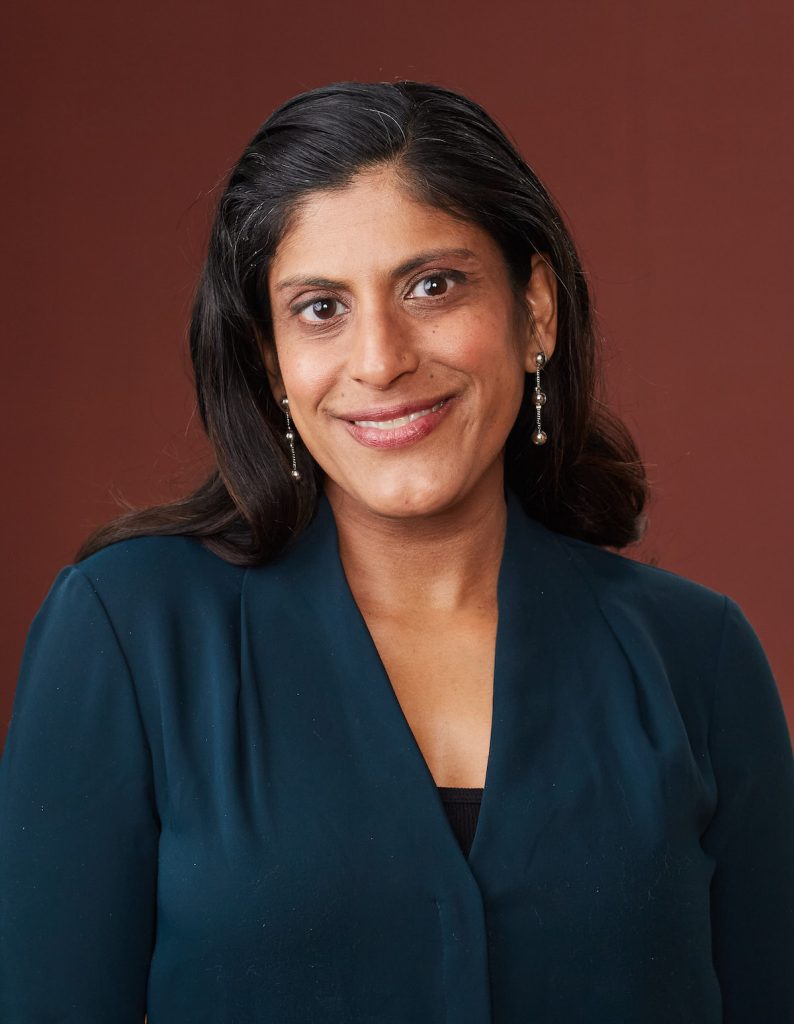
Renuka Rayasam
Senior correspondent, KFF Health News
My career has taken me from Texas to Washington, D.C., from Berlin, Germany, to Atlanta. After two decades in journalism, I have expertise working in different types of newsrooms and cultures, as well as perspective in the challenges of freelancing.
I’m running for the AHCJ board for the first time because of my appreciation for how this organization has helped me grow as a health care reporter, from helping me learn the ins and outs of health care to connecting me with valuable mentors. I’ve benefitted from AHCJ’s resources, tools, and events, and I’ve loved learning from other AHCJ members.
Now I am able to help AHCJ grow and adapt as the media landscape shifts dramatically. I hope to use my seat on the AHCJ board to help journalists cover this crucial beat while navigating their newsrooms.
Currently I am a senior correspondent for the Southern bureau of KFF Health News, based in Atlanta, where I focus on health disparities, including the intersection of incarceration and health. I moderated a panel on the topic during the most recent AHCJ annual conference in New York City.
Prior to my current role, I covered Texas health care for POLITICO and helmed the pandemic newsletter POLITICO Nightly. In addition, I have taught journalism courses at the University of Texas, both in Austin and El Paso. I was a freelancer for many years in Berlin and the U.S. I have also covered business and finance for local newspapers and national magazines. I have degrees in Political Economy and German from the University of California, Berkeley, and a Master of International Affairs from Columbia University.
As an AHCJ Board Member, I would focus on several areas:
- Career development. I want to make AHCJ a place for journalists to turn to when making a leap from reporting to editing, honing freelance pitches, navigating a layoff, or facing any other major career changes. I hope to boost resources, mentoring, local chapter gatherings and other resources journalists.
- Training and tools. Whether you are new to health care reporting, do health care reporting as part of a beat, or are a health care reporting veteran, I want AHCJ to improve resources to help journalists continue to learn. And I would like to make conferences and workshops relevant and accessible to all members.
- Diversity. I hope to boost diversity among AHCJ members, build a pipeline of health care journalists, and ensure that there are opportunities for journalists of color to cover this important beat.
Service with AHCJ
No prior service.
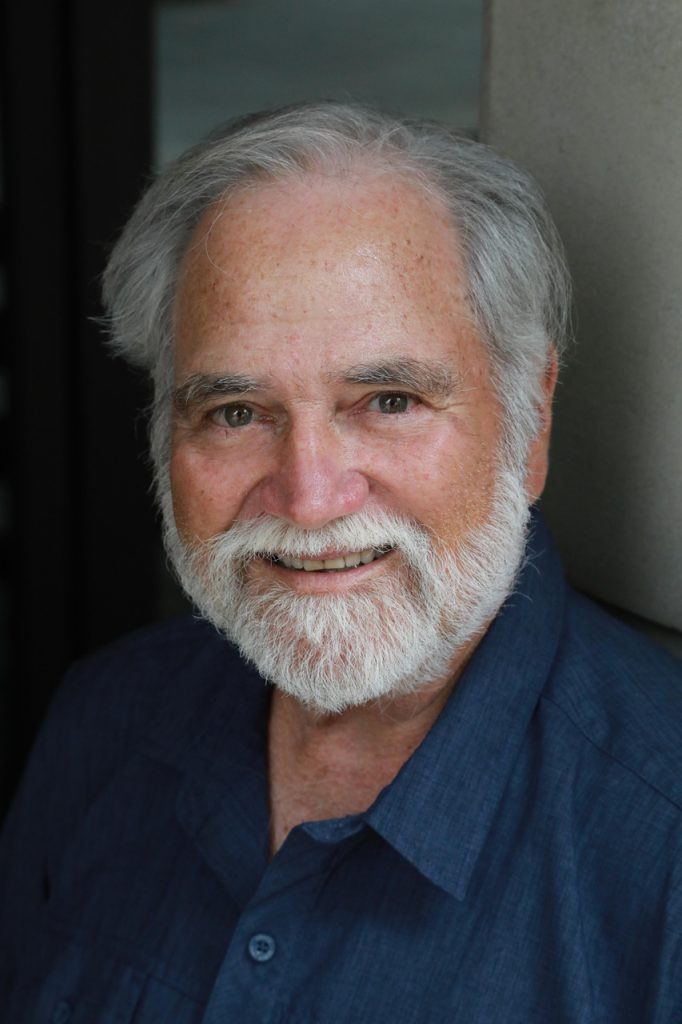
Rick Rader, M.D.
Director of habilitation, Orange Grove Center
I am a physician cross-trained in internal medicine and medical anthropology with board certification in developmental medicine. I have been involved in medical journalism for over 30 years (Editor-in-chief of Exceptional Parent Magazine and editor-in-chief of HELEN, The Journal of Human Exceptionality).
I have published over 300 articles in the area of health and disability and have been a consultant to four former U.S. Surgeon Generals. I have received two Presidential appointments (National Council on Disability/NCD, Presidents Committee on Individuals with Intellectual Disabilities/PCPID). I have received several Gold Medals in Editorial Excellence from FOLIO. I co-authored the Health Equity Framework at the NCD as well as the Sentinel Event Alert on Diagnostic Overshadowing for the Joint Commission.
My focus would be the mentoring of journalists writing about disabilities, health disparities and the need to reform medical education in providing clinically competent care for patients and families with complex disabilities. I am the President of the American Association on Health and Disability and am closely aligned with ongoing legislative proposals related to healthcare innovation and medically underserved populations.
I serve on the board of the Alliance for Disability in Health Care Education. I recently addressed the United Nations at the invitation of World Down Syndrome Day (March 21) on the need for a reform in global medical education (Down Syndrome International). It was the first time that medical education for the disability community was presented at the U.N.
Service with AHCJ
No prior service.