By Jennifer L.W. Fink/Wisconsin Health Fellowship
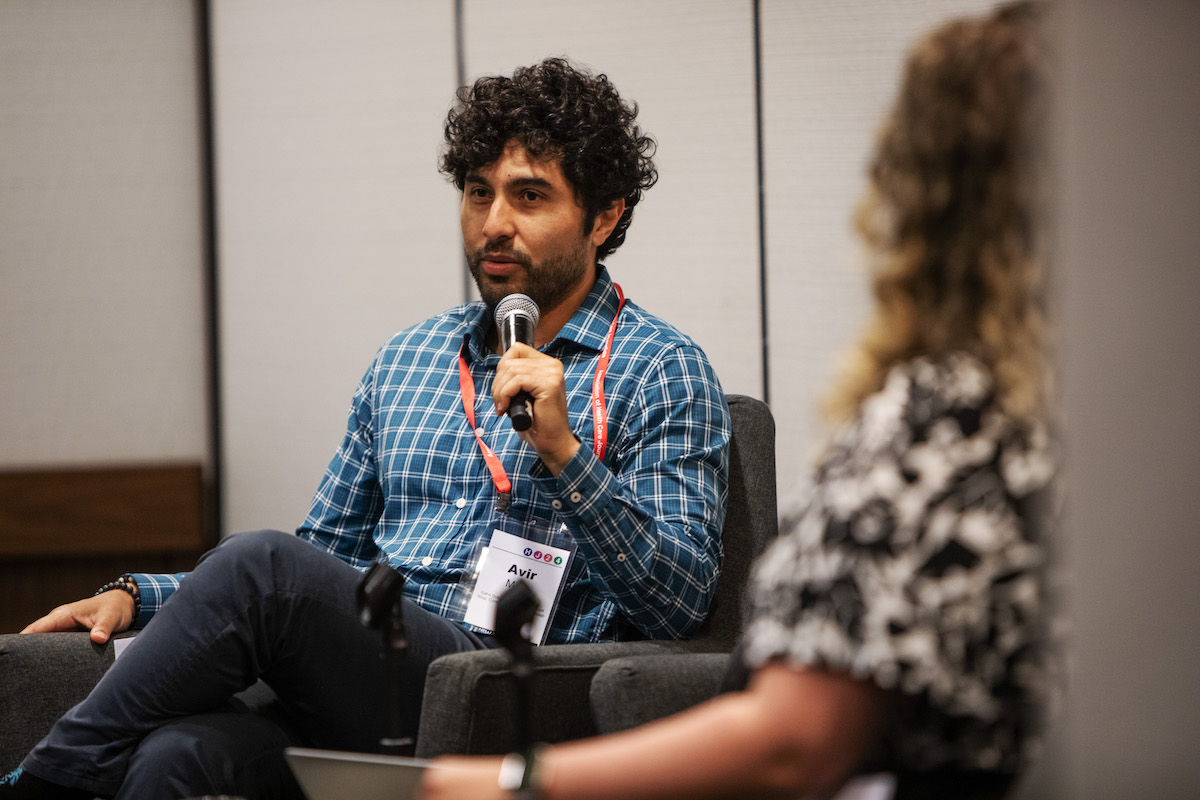
Three experienced podcasters emphasized the power of action and emotion to capture attention during a skill-building session, “What podcasters can teach us all about enlivening health care reporting” at Health Journalism ’24.
The session opened with an audio clip produced by Amir Mitra, an emergency physician and contributing editor at Radiolab. The short clip used sound captured during an Advanced Cardiac Life Support (ACLS) training class to introduce listeners to the ABCs of trauma surgery: airway, breathing, and circulation.
Panelist Jackie Danzinger, vice president of narrative content and production at Lemonada Media, said the clip, which she described as snappy and sound-rich, captured the energy of the active environment. Dan Gorenstein, executive editor and founder of the podcast Tradeoffs, said he “felt an urgency” in response to the clip.
Gorenstein noted that beginning with action is a great way to get audiences engaged in what might otherwise be dry or wonky material.
“Let’s get to the action and let’s go,” Gorenstein said. He told the journalists in attendance that “part of the trick, whether you’re doing audio or print, is listening for the ‘crackle’” — compelling moments that capture attention.
Including the voices of those affected by issues is another way to enhance health care stories.
Danzinger said she “cast a wide net” when looking for sources who had been affected by suicide by firearm for a podcast episode that was part of a larger series on gun violence.
Members of her podcast team made connections with people throughout the northwestern U.S. and found a fantastic source by cultivating relationships at events hosted by a local grief support group.
“Carl [the source] wasn’t just throwing stats out at us; he was telling stories,” Danzinger said.
Getting those stories from sources can take finesse. Danzinger highlighted the value of building rapport with people. “Find that time to be human with the person you’re interviewing,” she said.
To get powerful quotes, don’t simply ask sources for details. Ask them questions to help them describe what they were thinking and feeling at pivotal moments. Ask “and how did that feel? What were you thinking?” Gorenstein said.
If sources don’t offer detailed explanations, ask again. “If someone’s already agreed to do an interview with you, they’re there to help you,” Gorenstein said.
If you’ve re-asked the question and your source responds again with another dry or dense answer, consider going off the record to explain what you need. A journalist, Gorenstein said, might say, “Look, I understand what you said. But it’s not interesting. Can you say it in a more engaging way?”
Jennifer L.W. Fink is an independent journalist based in rural Wisconsin. She was a 2024 AHCJ-Wisconsin Health Journalism Fellow.