When disaster strikes: How will your community meet mental health needs of older adults?

Liz Seegert

About Liz Seegert

Liz Seegert (@lseegert), AHCJ’s topic leader on aging, is writing blog posts, editing tip sheets and articles and gathering resources to help our members cover the many issues around our aging society. If you have questions or suggestions for future resources on the topic, please send them to liz@healthjournalism.org.

Ambulances line up in Moore, Okla., following a deadly tornado in May 2013.

Photo by State Farm.

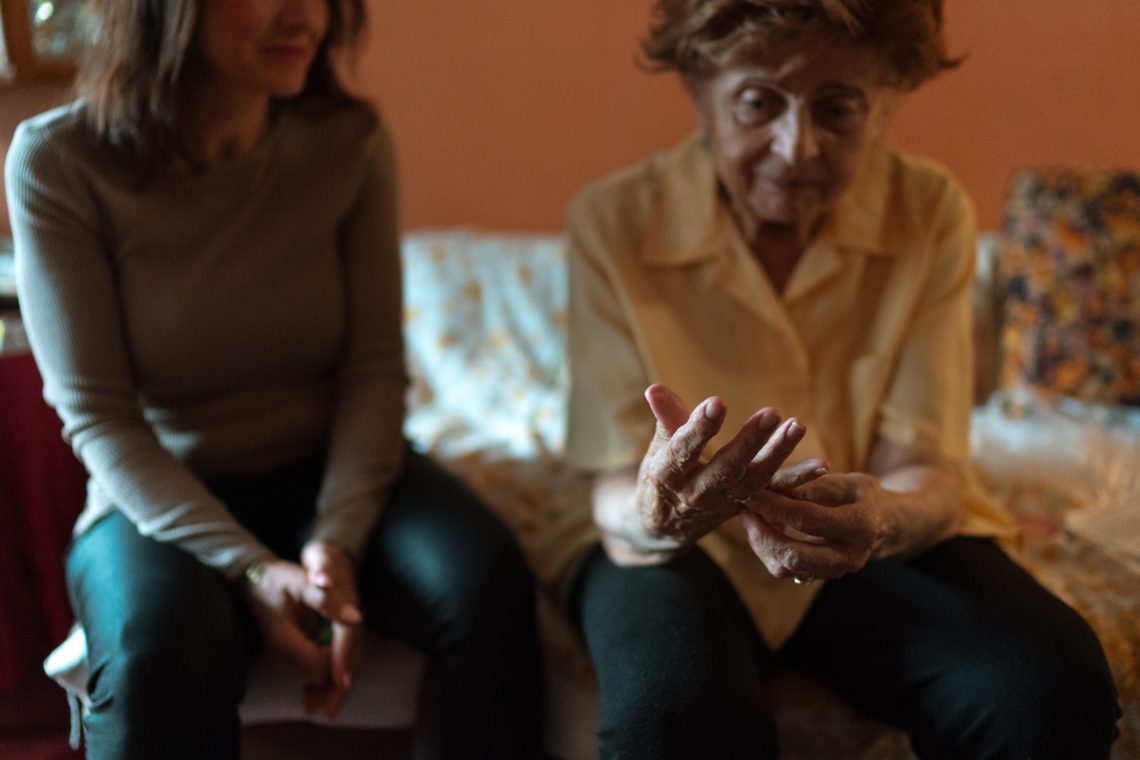
As the residents of Moore, Okla., begin the cleanup and recovery process from the super-tornado that destroyed the town and claimed at least two dozen lives, the physical and mental health of the older population requires special handling. This is especially true for those over age 75 and the frail elderly, who are considered vulnerable and high-risk populations, according to the Substance Abuse and Mental Health Administration (SAMHSA).

Many older adults suffer from multiple chronic conditions – including diabetes, heart disease, arthritis, and dementia – and juggle multiple medications. Access to prescriptions may suddenly be cut off when someone is moved to a shelter or temporary housing. Adherence becomes an issue. Missing medical records, lack of a person’s ability to recall all prescribed medications, delays in refilling prescriptions, and stress contribute to compliance challenges.

Other physical and environmental conditions, ranging from struggles with activities of daily living (ADLs) and instrumental activities of daily living (IADLs), to poor sensory perception, to loss of electricity and water, add to an increased sense of vulnerability, according to researchers. Temporary living conditions may exacerbate these conditions – appetite may be affected and access to some foods may be limited, which impact chronic disease management. Sleep is disrupted, mental and emotional stresses take a toll on the body and mind. Continue reading

Tulsa reporter shares lessons from ongoing coverage of dentist

Mary Otto

About Mary Otto

Mary Otto, a Washington, D.C.-based freelancer, is AHCJ's topic leader on oral health, curating related material at healthjournalism.org. She welcomes questions and suggestions on oral health resources at mary@healthjournalism.org.

Shannon Muchmore

Shannon Muchmore

As many of you know, it can be hard following an ongoing story – keeping up with the latest developments, looking ahead and staying ahead of the competition, finding the larger stories and putting it all into context.

Shannon Muchmore of The Tulsa World has been doing just that since the end of March, reporting on an investigation into a dentist whose clinics have been cited for multiple violations, many related to unsanitary practices. Hundreds of patients are being tested for HIV and hepatitis and officials say as many as 7,000 patients may have been exposed since 2007.

Amid a steady stream of stories, she took the time to share some of her insights into the complexities of the unfolding drama, including how her daily work life has changed, the level of risk faced by patients and some tips for other reporters.

After 5-year FOIA fight, documents show ties between researchers, officials in Lyme wars

Pia Christensen

About Pia Christensen

Pia Christensen (@AHCJ_Pia) is the managing editor/online services for AHCJ. She manages the content and development of healthjournalism.org, coordinates social media efforts of AHCJ and assists with the editing and production of association guides, programs and newsletters.

Documents obtained after a long FOIA battle reveal “behind-the-scenes maneuvers and long-standing connections between the scientists’ group and government officials” in the debate over whether Lyme disease can be chronic.

The debate, and the fight for the documents, are detailed by Mary Beth Pfeiffer in the Poughkeepsie (N.Y.) Journal and by documentary film maker Kris Newby on IRE’s Transparency Watch blog.

In 2007, in doing research for a film, Newby requested emails and resumes pertaining to three employees at the Center for Disease Control and Prevention. She writes that “For five years the agency strung me along with frivolous denials, mysterious delays, shifting explanations and false promises. In essence, the delays became an illegal, off-the-books FOIA denial.” Her account of how the CDC handled – or didn’t handle  her request is alarming.

Newby, whose film had been completed, provided the 3,000 pages of documents to Pfeiffer.

The documents show close connections between the government officials who set disease policy and researchers who have received government funds and written treatment guidelines. “As a result, physicians and scientists with opposing views on Lyme disease believe they have been marginalized in the debate.” This graphic provides a good overview of the connections and issues.

Future of primary care: Who will take care of you?

Amy Jeter

About Amy Jeter

Amy Jeter is a health journalist at The Virginian-Pilot. She attended Health Journalism 2013 on an AHCJ-Rural Health Journalism Fellowship, which is supported by The Leona M. and Harry B. Helmsley Charitable Trust.

The list of problems with primary care today is long and long-standing. Patients are frustrated and confused. Providers feel pressure to see more patients even as their reimbursements go down. Medical schools push students toward hospital-based sub-specialties. And for those who choose primary care, the training neglects important new skills, such as working in a team and engaging patients in their own care.

Resource

A new tip sheet from Felice J. Freyer, a medical writer at The Providence (R.I.) Journal and a member of AHCJ’s board of directors, addresses the changes in primary care and offers a number of story ideas and resources for reporters to cover primary care in their communities.

All this as the nation prepares for a spike in demand for primary care providers – fueled by millions of patients newly-insured through the Affordable Care Act – and a drop in supply due to retirements in the aging physician workforce and the unpopularity of the specialty, according to four panelists at Health Journalism 2013.

“I hate to be a downer,” said Andrew Morris-Singer, M.D., president and principal founder of Primary Care Progress. “We do have profound problems in the primary care pipeline.”

Solving the problem boils down to making essential changes to the way primary care providers do business, the panelists agreed.

These practices of the future – some of which already are operating – emphasize engaging patients, using technology, and distributing patient care across a primary care team. Continue reading

Reporters fall prey to back pain study’s shady PR push

Brenda Goodman

About Brenda Goodman

Brenda Goodman (@GoodmanBrenda), an Atlanta-based freelancer, is AHCJ’s topic leader on medical studies, curating related material at healthjournalism.org. She welcomes questions and suggestions on medical study resources and tip sheets at brenda@healthjournalism.org.

Photo by planetc1

If you follow me on Twitter, you may have noticed several 140-character conniptions I had last week over coverage of a Danish study that used antibiotics to treat low back pain.

I generally feel pretty protective of health reporters. I’m in the trenches with you. I have good days and bad days, too. Deadline reporting on medical studies is tough and sometimes undervalued for the work serious, balanced coverage requires. I’m with you.

Even so, I was dismayed by most of the stories I was reading.

Reporters were trumpeting the results of two studies published in the European Spine Journal, a less influential medical journal. Continue reading

Campaign strives to improve access to care; critics say ADA misses mark

Mary Otto

About Mary Otto

Mary Otto, a Washington, D.C.-based freelancer, is AHCJ's topic leader on oral health, curating related material at healthjournalism.org. She welcomes questions and suggestions on oral health resources at mary@healthjournalism.org.

Give Kids a Smile event

Photo by um.dentistry via Flickr

Advocates for the poor and uninsured have worked long and hard to bring attention to the shortage of dental care for millions of Americans.  On Wednesday, the American Dental Association weighed in on the problem too, announcing a nationwide campaign designed to respond to address what leaders called the nation’s “dental crisis.”

“We’ve made great progress with each generation enjoying better dental health than the one before,” ADA President Robert Faiella, D.M.D., noted. “But there is still a dangerous divide in America between those with good dental health and those without. Our mission is to close that divide. Good oral health isn’t a luxury – it’s essential.”

Yet many go without that care.

While a vast majority of middle- and upper-income Americans reported good access to dental services, nearly half of lower-income adults said they had not seen a dentist in a year or more, according to a Harris poll released by the ADA as part of the campaign’s launch. The poll also found that poor Americans are more than two times as likely to be toothless than their wealthier counterparts and that low-income adults were far more likely to seek last-resort care in emergency rooms than their better-off counterparts. Continue reading

Medicare data shows dangerous prescribing habits, lack of oversight

Pia Christensen

About Pia Christensen

Pia Christensen (@AHCJ_Pia) is the managing editor/online services for AHCJ. She manages the content and development of healthjournalism.org, coordinates social media efforts of AHCJ and assists with the editing and production of association guides, programs and newsletters.

ProPublica’s Tracy Weber, Charles Ornstein and Jennifer LaFleur, in an analysis of Medicare prescription records, found that “some doctors and other health professionals across the country prescribe large quantities of drugs that are potentially harmful, disorienting or addictive,” with no attempt by the federal government to monitor or deter the practices.

“… officials at the Centers for Medicare and Medicaid Services say the job of monitoring prescribing falls to the private health plans that administer the program, not the government.”

Continue reading

Welcome AHCJ’s newest members

Len Bruzzese

About Len Bruzzese

Len Bruzzese is the executive director of AHCJ and its Center for Excellence in Health Care Journalism. He also is an associate professor at the Missouri School of Journalism and serves on the executive committee of the Council of National Journalism Organizations.

Please welcome these new professional and student members to AHCJ. All new members are welcome to stop by this post’s comment section to introduce themselves.

  • Kimberly Alleyne, independent journalist, Sterling, Va.
  • Joyce Flory, independent journalist, Chicago
  • Katharine Gammon, independent journalist, Santa Monica, Calif. (@kategammon)
  • Rose Pike, executive editor, Everydayhealth.com, Brooklyn, N.Y.  (@rosepike0)
  • Amy Trent, health reporter, News & Advance, Lynchburg, Va.  (@amylynnetrent)
  • Moria Byrne Zaaloff, student, New York University, Bronx, N.Y.  (@globalgeek4good)

If you haven’t joined yet, see what member benefits you’re missing out on: Access to more than 50 journals and databases, tip sheets and articles from your colleagues on how they’ve reported stories, conferences, workshops, online training, reporting guides and more. Join AHCJ today to get a wealth of support and tools to help you.

Dates, location of Health Journalism 2014 announced

Pia Christensen

About Pia Christensen

Pia Christensen (@AHCJ_Pia) is the managing editor/online services for AHCJ. She manages the content and development of healthjournalism.org, coordinates social media efforts of AHCJ and assists with the editing and production of association guides, programs and newsletters.

Health Journalism 2014Health Journalism 2014, the annual conference of the Association of Health Care Journalists, will take place in Denver next year, AHCJ has announced.

The conference, which has drawn between 600 and 800 attendees in each of the past three years, will take place March 27-30, 2014, at the Grand Hyatt Denver. The hotel is located just a block from Denver’s popular 16th Street pedestrian mall and features views of the vibrant downtown and the majestic Rocky Mountains.

A local planning committee is being formed by co-chairs Michael Booth ofThe Denver Post and Eric Whitney of Colorado Public Radio. It will be made up of area journalists from print, broadcast and online outlets.

“The local journalists will provide some guidance on local and regional issues, as well as help pinpoint area experts worth including,” said Len Bruzzese, AHCJ executive director. Continue reading

Reclassification impacts access to health care for millions of rural older adults

Liz Seegert

About Liz Seegert

Liz Seegert (@lseegert), AHCJ’s topic leader on aging, is writing blog posts, editing tip sheets and articles and gathering resources to help our members cover the many issues around our aging society. If you have questions or suggestions for future resources on the topic, please send them to liz@healthjournalism.org.

Telemedicine equipment

Photo by Kevin Souza via Flickr

Back in January, the FCC announced $400 million in funding for creating and expanding rural broadband networks to support telemedicine in medically underserved regions.

Their HealthCare Connect program links urban medical centers and rural clinics, providing real-time consults with immediate access to a patient’s electronic medical records. Since adults 65 and older comprise roughly 14.4 percent of rural residents, this would appear to be an ideal use of technology to contain costs, facilitate care and improve preventive services.

However, last month, the U.S. Office of Management and Budget reclassified Metropolitan Statistical area delineations and moving 97 counties from rural to metropolitan designation. That eliminates Medicare reimbursement for telemedicine services in those areas. Yet just the day before, these same seniors were eligible, avoiding long-distance travel for consults or even basic health check ups. Continue reading