Category Archives: Children

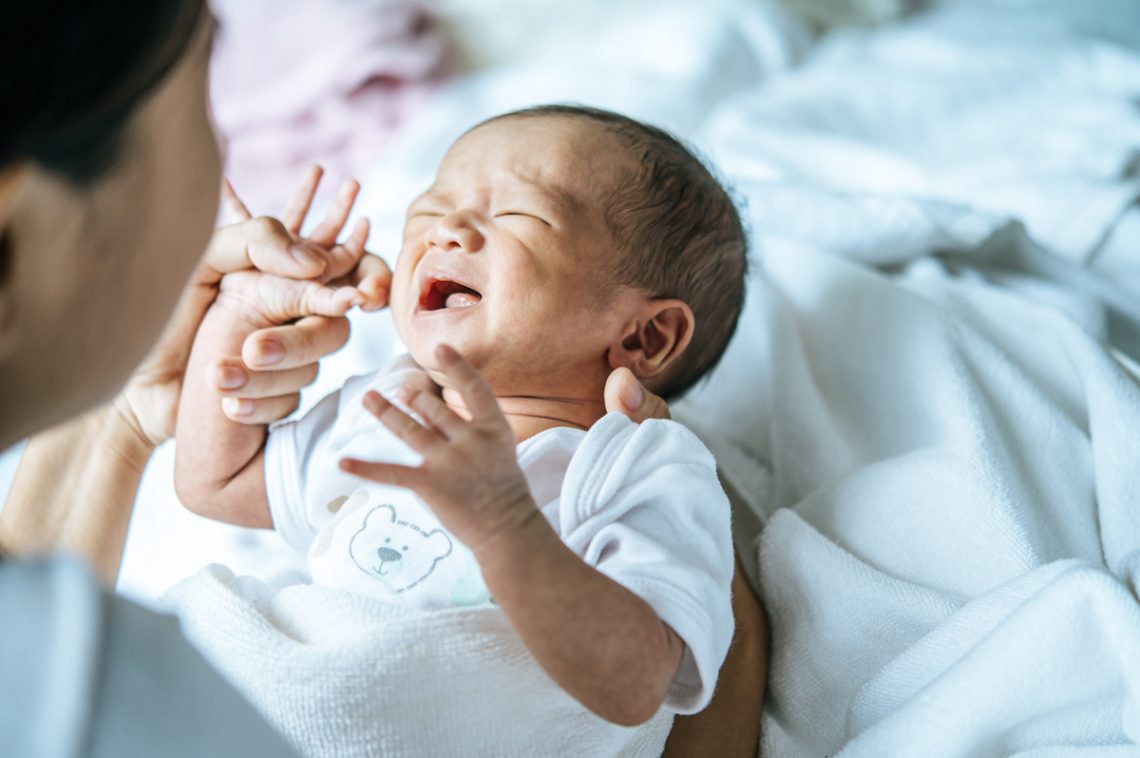
Waiting for children: New stories about infertility #ahcj13

Marcie Fraser

About Marcie Fraser

Marcie Fraser is a health reporter at YNN-Albany. She is attending Health Journalism 2013 on an AHCJ-New York Health Journalism Fellowship, which is supported by the New York State Health Foundation.

According to the CDC, about 10 percent of women age 44 and younger, or 6.7 million, have trouble getting pregnant or staying pregnant. Women account for a third of infertility problems and men for another third.

In a session at Health Journalism 2013, Alice D. Domar, Ph.D., executive director of the Domar Center for Mind/Body Health said, “There is no other medical condition that has a negative impact on so many areas of a person’s life like infertility.” Continue reading

Research into behavioral genetics in its infancy #ahcj13

Jeannette Moninger

About Jeannette Moninger

Jeannette Moninger is an independent journalist based in Highlands Ranch, Colo. She is attending Health Journalism 2013 on an AHCJ-Rural Health Journalism Fellowship, which is supported by The Leona M. and Harry B. Helmsley Charitable Trust.

At the Health Journalism 2013 session on Shaping the Pediatric Brain, independent journalist David Dobbs shared insights on researching and writing his 2009 article for The Atlantic, “The Science of Success.”

The article served as a springboard for a book that Dobbs is working on about behavioral genetics, tentatively titled “The Orchid and the Dandelion.” The book title plays off a new theory of genetics based on the hypothesis that “dandelion” children appear to grow up okay regardless of their environment. That is, they’ll be fine in a garden, a greenhouse or a crack in the sidewalk.

“Orchid” children, on the other hand, thrive under good care (a greenhouse), do okay in a so-so environment (garden), and wilt in a bad environment (crack in the sidewalk). Over the past couple of years, this hypothesis has started gaining momentum among child development specialists and behavioral geneticists interested in how environment and genetics shape who we are.  Continue reading

Experts call for changing culture of youth sports to reduce dangerous injuries #ahcj13

Kevin Vaughan

About Kevin Vaughan

Kevin Vaughan is a senior reporter at I-News Network, Rocky Mountain PBS. He is attending Health Journalism 2013 on an AHCJ-Colorado Health Journalism Fellowship, which is supported by The Colorado Health Foundation.

Organizers of youth baseball leagues learned a simple truth over time – that if they let a pitcher throw without any limits, he was more likely to suffer a devastating tear to a ligament in his elbow.

Related

Panel moderator Kelley Weiss recaps the panel using Storify.

The player would have to undergo a reconstructive operation known as Tommy John surgery, and in many cases, could no longer play competitive baseball. That toll led Little League Baseball Inc. to adopt a pitch limit based on a player’s age. A 10-year old is allowed to throw 75 pitches in a game; an 18-year old, as many as 105.

Now Chris Nowinski, co-director of the Boston University Center for the Study of Traumatic Encephalopathy, advocates a “hit count” for kids playing organized football that would significantly limit the number of blows to the head they can take in practice and games. He believes it should be modeled after the approach taken in Little League Baseball, where guidelines also establish the number of days of rest pitchers must get between games. Continue reading

Delving into the many mysteries of autism #ahcj13

Katie McCrimmon

About Katie McCrimmon

Katie McCrimmon is a health reporter at Solutions. She is attending Health Journalism 2013 on an AHCJ-Colorado Health Journalism Fellowship, which is supported by The Colorado Health Foundation.

Don’t say the word “cure.”

A much-discussed study found that some children who have been diagnosed with autism spectrum disorders can outgrow them. That news has spurred hope among parents desperate for cures and, simultaneously, fears among some on the spectrum who embrace their “quirkiness” and don’t want a fix, thank you very much.

A panel of experts said Friday at Health Journalism 2013 that the causes of autism spectrum disorders remain mysterious and that questions remain about how to minimize the deficits in speech, social behavior and cognition seen in those on the spectrum.

The three experts all agreed that new higher estimates from the CDC that one in 88 children may have autism could be related to increased diagnosis and earlier detection, not just to an increase in cases. They said babies as young as six months can exhibit signs that they might be on the spectrum and that clinicians are diagnosing children who have just turned a year old. Continue reading

Panel will explore how childhood experiences shape the brain #ahcj13

Karen Brown

About Karen Brown

Karen Brown is a mental health writer whose work airs on New England Public Radio and other outlets. She is an AHCJ member and will be moderating a panel on this topic at Health Journalism 2013, coming March 14-17 to Boston.

The notion that what happens to you when you’re young can stay with you for years is a compelling one, but it’s not new.

A look at some of the issues, sessions and ideas to keep in mind for those planning to attend Health Journalism 2013, the annual conference of the Association of Health Care Journalists.

Sigmund Freud became a cultural icon for his theories on early experience and the future psyche. Literature has long weaved childhood memories into adult relationships and mental wellbeing. So have movies. (See: “The Three Faces of Eve,” “Prince of Tides,” “Mystic River”….) The concept simply resonates – both as a psychological construct, and as a metaphorical one.

So why have a conference session now on this seemingly classic idea?

Neuroscience – that’s why. The discipline of brain research has exploded in recent years – largely as a result of beautiful new imaging methods and advanced genetic technology. Scientists can compare the brains of very young children with those same brains years later. They can compare the brains of people who underwent certain childhood experiences (good or bad) with those who didn’t. Or they can seek answers about humans through brain research on animals. All this helps find connections between trauma and brain structure, between genetic make-up and resilience – with a farther-off goal of developing helpful therapies. I think it also feeds into one of the most enduring questions of psychology: which qualities are innate, and which ones are molded by time, development, and experience. Continue reading

Hispanic children bear brunt of poor access to dental care

Mary Otto

About Mary Otto

Mary Otto, a Washington, D.C.-based freelancer, is AHCJ's topic leader on oral health, curating related material at healthjournalism.org. She welcomes questions and suggestions on oral health resources at mary@healthjournalism.org.

The lack of dental care is a big problem for children living below the poverty level and untreated tooth decay hits Hispanic children particularly hard.

Data from one large national survey found a full 26 percent of Hispanic 6- to 9-year olds suffered from untreated tooth decay, compared with 14 percent of non-Hispanic white children of the same age.

February is National Children’s Dental Health Month and oral health advocates from the Maryland Dental Action Coalition just launched a new campaign, Dientes Sanos, Ninos Sanos, (Healthy Teeth, Healthy Children) tailored to reach more of the state’s at-risk kids.

“This started because Hispanic children have more tooth decay than other populations, said Harry Goodman, D.M.D., M.P.H., director of the Office of Oral Health at the Department of Health and Mental Hygiene. He stopped by the Prince George’s County Health Department dental clinic on Feb. 1 to help kick off the effort. It expands on a statewide English-language oral health literacy initiative and includes Spanish language posters for bus and train shelters, brochures, a series of radio spots and a website, DientesSanosNinosSanos.org aimed at raising oral health literacy and helping Spanish-speaking parents find dental care for their children. Continue reading

Report highlights shortcomings in states’ dental sealant efforts

Mary Otto

About Mary Otto

Mary Otto, a Washington, D.C.-based freelancer, is AHCJ's topic leader on oral health, curating related material at healthjournalism.org. She welcomes questions and suggestions on oral health resources at mary@healthjournalism.org.

Dental sealants have long been seen as effective in preventing tooth decay.

Photo by Todd Baker at Flickr.com

Yet when it comes to getting these thin protective coatings onto the vulnerable chewing surfaces of children’s teeth, many states aren’t doing enough, according to a new report from the Pew Center on the States.

In fact, today’s report, “Falling Short,” gives 20 states and the District of Columbia grades of D and even F for their efforts.

To find out how your state did, go to www.pewstates.org/dental-sealants.

Most troubling, according to Pew, is that poor children, who face higher risk of tooth decay, are less likely to have the sealants. Only 26 percent of poor children have sealants, compared to 34 percent of kids from higher income levels, the report found.

States were awarded grades based upon four indicators:

  • whether sealant programs are available in high-need schools
  • whether hygienists in the state are allowed to place sealants on children who have not first been examined by a dentist
  • whether the state regularly collects data about child dental health and submits it to a national oral health data base
  • whether the state is meeting sealant goals set by the federal government’s Healthy People 2010 objectives

Pew found:

Mary OttoMary Otto, AHCJ’s topic leader on oral health is writing blog posts, editing tip sheets and articles and gathering resources to help our members cover oral health care.

If you have questions or suggestions for future resources on the topic, please send them to mary@healthjournalism.org.

  • That 35 states and the District of Columbia lacked sealant programs in a majority of high-need schools.
  • That 19 states, as well as D.C., require a child to be seen by a dentist before a hygienist is allowed to place sealants (a measure that Pew termed outdated.)
  • That 40 states and the District could not confirm they had reached the Healthy People 2010 goal of getting sealants to at least half their children.
  • That 19 states and the District had failed to submit data on child tooth decay and other oral health measures within the past five years to the National Oral Health Surveillance System, a federal database used to assess oral health needs and trends across populations.

Only five states – Alaska, Maine, New Hampshire, North Dakota and Wisconsin -earned grades of A, yet even in those places, Pew determined that thousands of children remain at risk for decay and lack sealants.

“Children’s health isn’t the only thing that suffers when states don’t invest in sealant programs,” summarized Shelly Gehshan, director of the Pew Children’s Dental Campaign. “States that miss this opportunity to prevent decay are saddling taxpayers with higher costs down the road through Medicaid and other programs.”

Pew called on states to expand school-based programs, update rules regarding hygienist supervision, improve data collection and focus on reaching Healthy People 2010 goals.

Resources

For those of you writing about dental sealants in your area, we’ve gathered resources about the topic.

Pediatric MS on the rise in the northwest, drawing research attention

Andrew Van Dam

About Andrew Van Dam

Andrew Van Dam of The Wall Street Journal previously worked at the AHCJ offices while earning his master’s degree at the Missouri School of Journalism, and he has blogged for Covering Health ever since.

As part of a collaboration between KOUW and Investigate West, Carol Smith examined the rise of pediatric multiple sclerosis in the Pacific Northwest, a region that already has one of the highest rates of MS in the world.

Hard numbers are difficult to come by because the diagnosis is so complicated, but Smith writes that “current estimates suggest that between 18,000 and 25,000 children nationally either have MS, or have experienced symptoms suggestive of MS – some as young as age 5.”

Doctors aren’t sure what’s driving the apparent increase. It’s likely partly from improved diagnostic techniques and increasing awareness among pediatricians that MS can occur early in life. But some also think that the growing onslaught of chemical exposures in the environment may be making immune systems more vulnerable to whatever triggers the illness.

And the pivotal role adolescence could have in the shaping of a lifetime’s susceptibility to MS makes studying young MS sufferers a particularly critical task — a task which Smith explores further in a follow-up piece.

Battles over water fluoridation spread across the country

Mary Otto

About Mary Otto

Mary Otto, a Washington, D.C.-based freelancer, is AHCJ's topic leader on oral health, curating related material at healthjournalism.org. She welcomes questions and suggestions on oral health resources at mary@healthjournalism.org.

As the election returns rolled in, armies of reporters across the country went to work exploring the fate of candidates in local state and national races.

Annie Calovich of The Wichita (Kan.) Eagle had the task of exploring the fate of fluoride.

Mary OttoMary Otto, AHCJ’s topic leader on oral health is writing blog posts, editing tip sheets and articles and gathering resources to help our members cover oral health care.

If you have questions or suggestions for future resources on the topic, please send them to mary@healthjournalism.org.

The city’s hotly contested fluoride initiative, backed by local doctors and dentists, but strongly opposed by anti-fluoride activists, went down to defeat on Nov 6. Voters in city of Wichita rejected fluoridated water as they did in 1964 and 1978.

All over the country, jurisdictions are fighting over fluoride. In September, the city council in Portland, Ore., voted to fluoridate city drinking water in an effort to reduce tooth decay. In August, Milwaukee reduced the level of fluoride in its water after a city alderman launched a campaign to completely eliminate it. A year ago, in a decision that also had implications in Nov. 6 elections, Pinellas County, Fla., commissioners voted to stop adding fluoride to drinking water (more about that in a minute.)

Public health officials and state and local dental groups stand up for community fluoridation, which has been hailed by the Centers for Disease Control as one of the great public health achievements of the 20th century. For more than 65 years, communities across the United States have been supplementing naturally occurring fluoride in water supplies to promote oral health. At what are considered optimum levels, numerous studies have shown fluoride reduces cavities.

But too much fluoride can be a bad thing, public health officials have acknowledged. Consumption at excess levels may cause fluorosis and skeletal deformities, research has found. Continue reading

Election could affect ACA’s expansion of dental care

Mary Otto

About Mary Otto

Mary Otto, a Washington, D.C.-based freelancer, is AHCJ's topic leader on oral health, curating related material at healthjournalism.org. She welcomes questions and suggestions on oral health resources at mary@healthjournalism.org.

Dental coverage might not have grabbed top billing in the Patient Protection and Affordable Care Act, but the law does contain provisions that promise to extend dental care to millions of poor and uninsured children as well as to expand the nation’s safety net clinics and oral health infrastructure.

What will happen to those initiatives if Republicans make substantial gains on Nov. 6?

Mary OttoMary Otto, AHCJ’s topic leader on oral health is writing blog posts, editing tip sheets and articles and gathering resources to help our members cover oral health care.

If you have questions or suggestions for future resources on the topic, please send them to mary@healthjournalism.org.

That was the question asked of a panel of experts gathered for the American Public Health Association annual meeting.

“Healthcare could change from night to day in the next three weeks depending on changes in the Senate and presidency,” public health dentist Myron Allukian Jr. said at the meeting, covered by Donna Domino for DrBicuspid.com under the headline “APHA Analyzes Healthcare Reform’s Impact on Dentistry.”

Panelists weighed in on what could be at stake, Domino reports:

The ACA’s pediatric dental care component “is projected to provide care to 3 million children by 2018,” said Herb Schultz, a regional director of the U.S. Department of Health and Human Services. Continue reading